
When a 200-Piece GaN Trial Run Is Enough Evidence — and When It Is Only a Catalogue Sample
When a 200-Piece GaN Trial Run Is Enough Evidence — and When It Is Only a Catalogue Sample
A 200-piece GaN trial is evidence only if it is a production-intent build. For a private label charger MOQ, a catalogue sample is not the same thing.
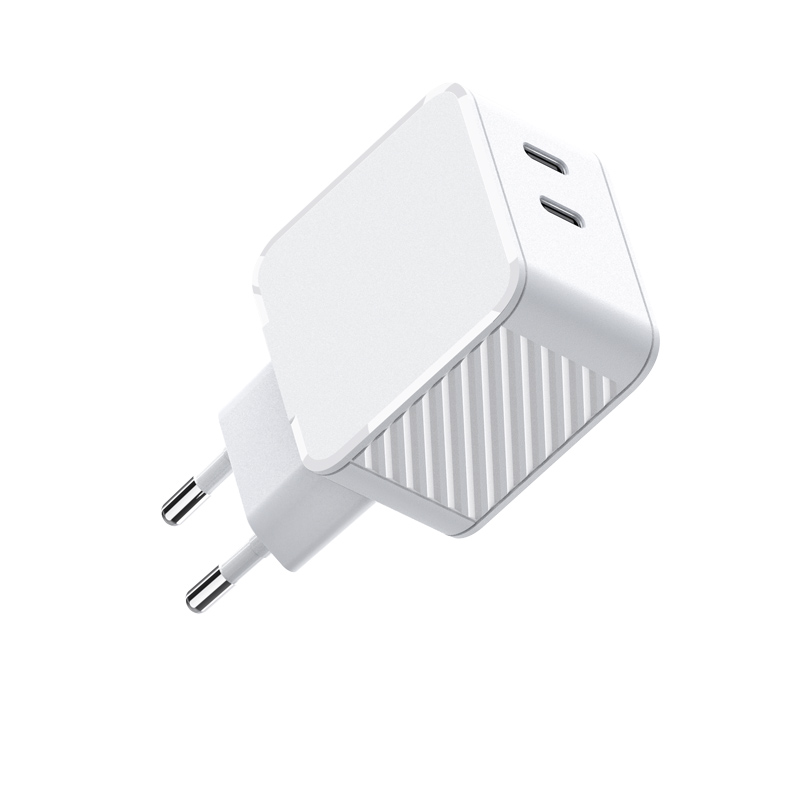
Two hundred units arrived looking retail-ready. The brand treated them as a production trial for a private-label launch. The first laboratory unit carried a different firmware version from the carton photographs, and the factory later described the lot as catalogue samples. The opening quantity had been met. The evidence had not.
Brand owners opening a first charger programme often meet a published private label charger MOQ and ask whether that quantity is enough. This page treats a 200-piece GaN run as a decision about evidence, not as a shortcut. WECENT publishes an opening quantity of 200 pcs for a single model. That figure is a site claim for this factory. It is not an industry standard, and it does not, by itself, make a lot a production-intent trial.
What “trial run” should mean: a production-intent build versus a hand-built sales sample
A trial run is a production-intent build of the quoted bill of materials, firmware, housing and pack, made on the process intended for mass production. A catalogue sample is a unit made to be shown. Both can look finished. Only the first can support a go or no-go on a private-label charger programme.
Ask the factory to write which of the two it is offering at the opening quantity. If the 200 pieces will be built on a temporary tool, a demonstration firmware or a hand-finished housing, they are useful as appearance samples. They are not enough evidence that a mass-production lot will match. The purchase wording should use those terms, so a later disagreement is not about what “trial” was supposed to mean.
The 200-piece opening quantity this factory publishes — and the questions it does not answer by itself
Two hundred pieces is the opening quantity this factory publishes for a single model. That number tells you a trial of that size can be discussed. It does not tell you what will be frozen, which tests the lot can support, or whether a second colour is included.
The published figure also does not set a lead time, a sample fee rule, or a certification path. Those items belong in the written offer. If a programme needs a new tool, a new wireless coil or a new-market radio approval, 200 pcs may still be the first commercial quantity and still be the wrong quantity for the evidence you need. The number is a starting point for a plan, not the plan.
What to freeze before the trial: output table, plug set, labels, carton and firmware version
Before the 200 pieces are built, freeze the items that would make the lot useless as evidence if they later change: the electrical output table, the plug set, the label and language panel, the carton, and the firmware or controller version. Write the frozen list into the trial order. A lot built against a moving list cannot be compared with a later mass-production shipment.
If a item cannot be frozen yet — a final logo shade, for example — mark it as unfrozen and say what the trial will not be allowed to prove. The trial can still run. It simply cannot be used, later, as evidence for the unfrozen item. That honesty is what separates a planned 200-piece run from a catalogue sample that happens to be ordered in the same quantity.
How many units to allocate to the lab, photography, channel pilots and retained goldens
Two hundred pieces disappear quickly once they are allocated. Before the lot ships, write a split: how many units go to a laboratory, how many to photography and listing assets, how many to a channel or internal pilot, and how many are retained as golden samples. Leave a remainder for failures and for a second look.
| Allocation | What this portion is for | What to record |
|---|---|---|
| Laboratory | Agreed electrical, safety or interoperability checks | How many units, which tests, which laboratory |
| Photography and assets | Listings, artwork and sales samples | How many units, whether they remain sellable |
| Channel or internal pilot | A limited real-use check, not a demand test | How many units, who holds them, what will be reported |
| Retained goldens | Reference units for later comparison with mass production | How many units, serials, storage responsibility |
| Reserve | Failures, repeats and disagreements | How many units remain unallocated |
The table is a planning tool, not a required split. The numbers should be written for your programme. A trial with no retained golden is weak evidence, because there is nothing to compare with a later lot.
Tests a 200-piece run can support, and tests that still need a larger lot or a certified lab
A 200-piece production-intent run can support appearance approval, a first electrical check against the frozen output table, a packaging check, and a limited use trial. It can also supply units to a laboratory. It cannot, by itself, replace a test that a regulation or a retailer requires to be done on a defined sample in an accredited laboratory, and it cannot prove long-term reliability or field-return rates.
If a CE, FCC or related file is still required, use the official routes — CE marking, FCC equipment authorisation, and, where a USB or Qi claim is planned, USB-IF compliance and the Wireless Power Consortium — to see what the laboratory path is. Laboratory standing can be considered against the ILAC framework. This article does not invent sample sizes for those programmes. It only says that 200 factory pieces and a certified-lab sample plan are different instruments.
Recording deviations so mass-production BOMs cannot quietly drift
Every deviation found on the 200 pieces should be written down: the serial or lot, the frozen item it affects, the agreed disposition, and whether mass production is allowed to proceed with a change. Without that record, a later shipment can drift and still be called “the same as the trial.”
The record should travel with the golden samples. If firmware is updated after the trial, the new version is a new configuration until it is approved. The same applies to a substitute component. A 200-piece run is evidence only for the configuration it actually contained.
When 200 pieces is not enough: new tooling, a new wireless coil, or a new-market radio approval
Two hundred pieces is not enough evidence when the programme depends on a tool that is not yet the mass-production tool, when a wireless coil or magnet array is still being changed, or when a destination market requires a radio or product approval that the trial lot does not support. In those cases, 200 pcs can still be a useful commercial start, but the go or no-go note should say what remains unproven.
A new tool can change fit, flash and print. A new coil can change alignment, temperature and any Qi-related evidence. A new-market approval can change the label and the legal holder. None of those gaps is solved by ordering the published opening quantity. They are solved by a dated plan, or by waiting.
A go / no-go note the project owner can sign after the trial
After the lot is inspected and the allocated tests are done, the project owner should sign a short note: go, go with named conditions, or no-go. The note should list the frozen configuration, the deviations, the remaining gaps, and what the 200 pieces are allowed to prove. An unsigned pile of photographs is not that decision.
A conditional go is often the honest result: electrical and packaging approved, colour two still open, laboratory file still in progress. That is enough to plan the next step. It is not enough to treat the opening quantity as a completed qualification.
How this sits next to WECENT’s published MOQ and sample-gate articles
This article asks what evidence a 200-piece lot can support; it does not repeat how an opening quantity is set, or how a sample is approved for a bulk run.
WECENT’s page on private label charger MOQ and samples discusses what sets an opening quantity. The sample approval gates page covers how to prevent a rejected bulk run. The wholesale chargers and OEM and ODM programmes pages are the commercial entry points. A separate existing article asks whether 200 pieces is enough to test an Amazon listing; that is a channel question. This page is about whether the 200 pieces are a production-intent trial or only a catalogue sample.
FAQ
Can two colours be mixed in a 200-piece trial?
Only if the quotation says so, and only if you treat the mix as two small populations, not as one evidence set. A split such as 100 black and 100 white may show whether both colours can be moulded and printed; it will not give the same statistical comfort on each colour as 200 of one colour. If a colour uses a different coating or print process, it may need its own checks. Ask for the mix to be written into the trial order, including how each colour will be sampled for the laboratory and for retained goldens.
What is the lead time for a 200-piece trial?
There is no figure in this article, and none should be invented from a general industry habit. The lead time has to be a date in the written offer for that programme, including whether new tooling, a new coil or a new label is on the critical path. WECENT publishes a usual 24-hour response for quotations; that is a site claim about issuing a quote, not a production lead time for 200 pieces. If two factories give different dates, compare the assumptions behind the dates, not only the dates themselves.
Can results from a black trial be applied to a second colour?
Only for the attributes that actually stay the same, and only if that limit is written down. Electrical results may transfer if the board, firmware and coil are unchanged; colour, print adhesion and some coating tests usually will not. A second colour can still use the first trial as a baseline, but it should have its own inspection and, where the certification family requires it, its own laboratory review. Do not treat a passed black trial as a blanket approval for a catalogue of colours.
Is 200 pieces a standard private-label charger MOQ?
No. Two hundred pieces is the opening quantity WECENT publishes for a single model on its site. It is a factory-specific figure, not a standard private label charger MOQ for the industry. Other factories will publish different minimums, and a new tool, a new wireless coil or a new-market radio approval may require a different quantity even in the same factory. Use the published 200 pcs as the starting point for a written trial plan, not as a universal rule.
Conclusion
A 200-piece GaN run is enough evidence when it is a production-intent build of a frozen configuration, allocated to lab, pilots and goldens, and closed with a signed go or no-go note. It is only a catalogue sample when those conditions are missing, however retail-ready the units look. The published opening quantity starts the conversation. It does not finish it.
If you are planning a first private-label trial against the published 200 pcs opening quantity, read the MOQ and samples page and the sample approval gates, then ask for the frozen list and the allocation table to be written into the trial order.