
Custom Cable Assembly Price Guide: What Drives Cost, MOQ and Packaging
Custom Cable Assembly Price Guide: What Drives Cost, MOQ and Packaging
The price of a custom cable assembly is set by four things: the components, the tooling, the assembly time and the testing, with packaging on top. MOQ follows mostly from tooling and minimum material buys. This guide explains each driver so a buyer can compare quotations without relying on a headline unit price. We do […]
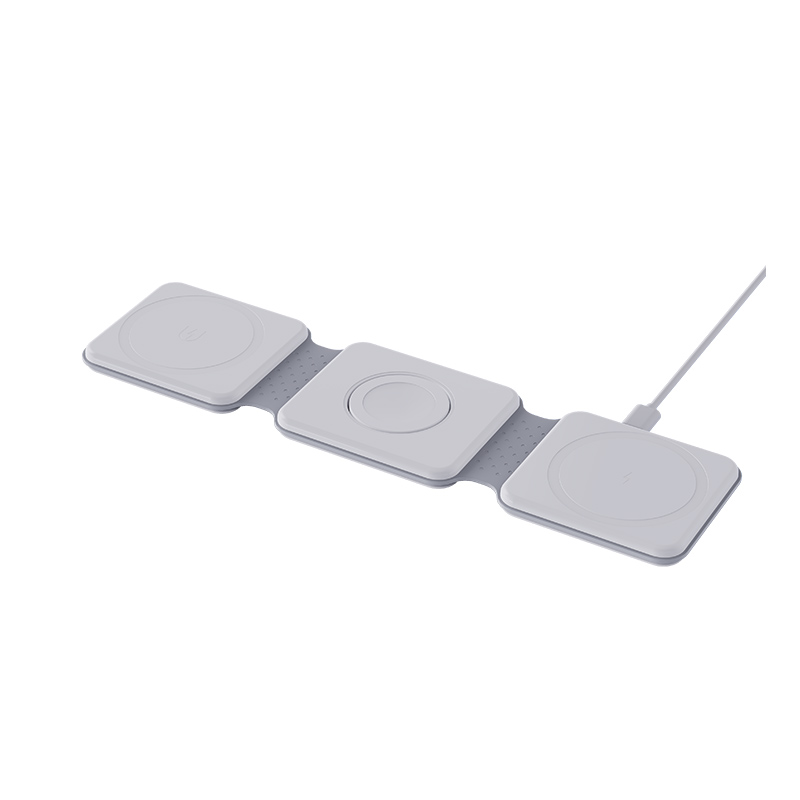
The price of a custom cable assembly is set by four things: the components, the tooling, the assembly time and the testing, with packaging on top. MOQ follows mostly from tooling and minimum material buys. This guide explains each driver so a buyer can compare quotations without relying on a headline unit price.
We do not publish fixed prices, MOQs or lead times here, because they depend on the drawing. What we can do is show what moves them, so you can ask for a quotation that is comparable from the start.
What drives custom cable assembly price
| Cost driver | What moves it | What to ask the supplier |
|---|---|---|
| Components | Conductor gauge and count, connectors, shielding, jacket material, any identification chip | The bill of materials per line, with the connector source named |
| Tooling | Overmould tools, custom connector housings, fixtures | Tool cost, ownership and whether it is shared or dedicated |
| Assembly time | Termination method, number of manual steps, overmoulding, braiding | Which steps are manual and which are fixtured |
| Testing | Continuity, electrical checks, flex or pull tests, sample sizes | Which tests are 100% and which are sampled |
| Packaging | Ties, bags, retail box, inserts, printing, labels | Packaging specification as a separate line |
Cost line one: the components
Components are usually the largest single line, and the connector choice moves it most. A named connector source, a specified jacket and a fixed gauge make two quotations comparable; “equivalent” parts make them incomparable. If the cable needs an identification chip for higher USB-C power levels, that chip and its programming sit in this line as well. See e-marker cables.
Cost line two: the tooling
Overmoulds and custom housings need tools. A buyer can pay for a dedicated tool, share an existing one, or choose a standard moulding to avoid tooling altogether. The choice changes both the unit price and the realistic minimum order, so ask for the tooling position in writing before comparing unit prices.
Cost line three: the assembly time
Every manual step adds time per unit: stripping, soldering or crimping, overmoulding, braiding, labelling. A design that can be fixtured costs less to assemble and varies less from unit to unit. Asking which steps are manual is the quickest way to understand why two quotations differ.
Cost line four: the testing
Continuity and basic electrical checks are normally done on every unit; mechanical tests such as flex and pull are normally sampled. The test list and the sample sizes belong in the quotation, because a cheaper quote that tests less is not a cheaper product.
Custom cable assembly packaging cost
Packaging is often treated as an afterthought and then becomes the reason the order cannot ship. Bulk-packed cables in bags cost far less to pack than retail-boxed cables with inserts and printed sleeves. Printed packaging also brings its own setup and minimums, which can set the MOQ even when the cable itself could be made in smaller runs. Ask for packaging as a separate line, and freeze the packaging specification before the cable drawing is released. More on this: charger packaging cost engineering.
What sets the MOQ on a custom cable assembly
- Material minimums: custom-colour jacket, special wire or a specific connector can carry a supplier minimum.
- Tooling: a dedicated tool is easier to justify across a larger run.
- Line setup: each changeover takes time, which is spread across the run.
- Printed packaging: printed boxes and sleeves often carry their own minimum.
Using a standard colour, a standard moulding or plain packaging for the first order is the usual way to bring the minimum down. More on how factories set minimums: charger MOQ.
How to get a comparable custom cable quotation
Freeze the mechanical drawing, including connector latch and overmould positions, before asking for prices. Approve a moulded sample before the tool is finalised. Define the tests and sample sizes. Then request a quotation that separates components, tooling, assembly, testing and packaging. A quotation that shows these lines can be compared; a single unit price cannot.
Cables for medical devices carry additional requirements that sit with the device maker’s own regulatory file; treat those as a separate project rather than a variant of a consumer cable.
FAQ
Why do two quotations for the same cable differ so much?
Usually because they assume different connectors, different tooling positions, different test lists or different packaging. Ask both suppliers to break the price into the five lines above and the gap normally explains itself.
How can we lower the MOQ?
Use standard materials and colours, a standard moulding or a shared tool, and plain packaging for the first run. Each removes a fixed cost that would otherwise have to be spread across a larger quantity.
Is packaging really a cost driver?
Yes. Retail packaging adds material, printing setup and packing time, and printed items can carry their own minimum. Quote it separately so it does not hide inside the unit price.
When should the tool be cut?
After the drawing is frozen and a moulded sample has been approved. Cutting the tool earlier is the most common cause of rework on custom cable programmes.
Next step
Send the drawing, connector list, test requirements and packaging specification to Wecent Group through the contact page. We reply with a quotation split into components, tooling, assembly, testing and packaging, and with the realistic minimum for each option. Related guides: USB-C cable manufacturer, e-marker cables, charger tooling cost and our factory floor. External references: USB-IF compliance program.