
Charger Thermal Design: Why Chargers Get Hot and What to Ask the Factory
Charger Thermal Design: Why Chargers Get Hot and What to Ask the Factory
Chargers get hot because no power conversion is perfectly efficient: the energy lost in the transformer, the switching stage, the rectifier and the connectors turns into heat inside a small sealed box. Good charger thermal design moves that heat out evenly so the product holds its output and stays comfortable to touch. This guide explains, […]
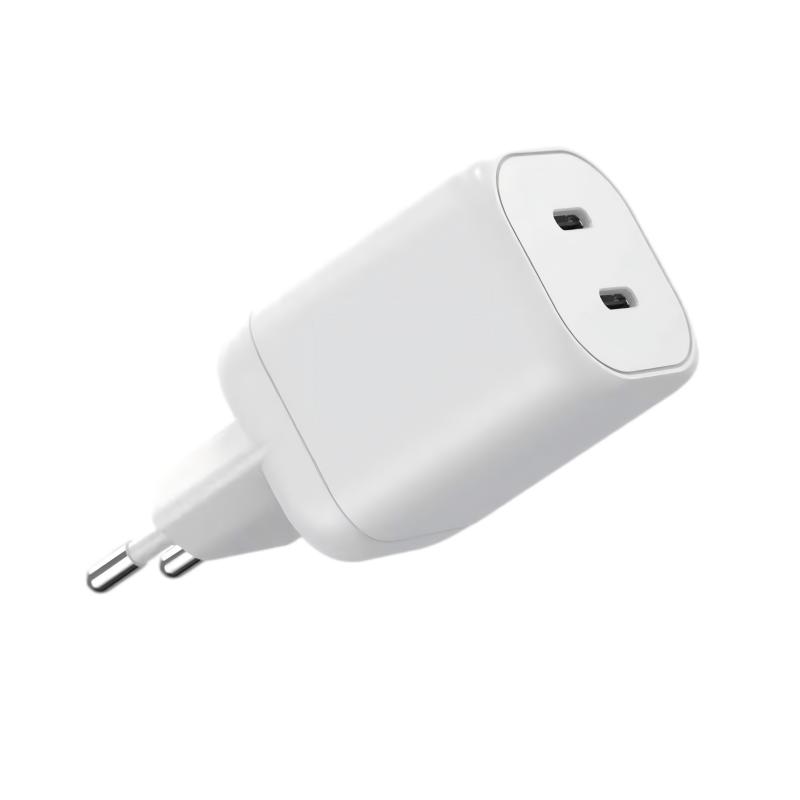
Chargers get hot because no power conversion is perfectly efficient: the energy lost in the transformer, the switching stage, the rectifier and the connectors turns into heat inside a small sealed box. Good charger thermal design moves that heat out evenly so the product holds its output and stays comfortable to touch.
This guide explains, for OEM buyers, where the heat comes from, what a good thermal design covers and what to ask a factory before approving a sample. It contains no temperature or test values; those must come from the factory’s own data for the exact model.
Why chargers get hot
Losses concentrate in a few places: the switching transistors, the transformer, the output rectification and the input stage. A smaller enclosure, a higher rating or more ports all raise the heat per unit of surface. That is why a compact high-power charger needs more thermal engineering than a large low-power one, even with efficient components.
Where the heat goes: four paths
| Path | What it involves | What to ask |
|---|---|---|
| Conduction into the housing | Thermal pads, potting or spreaders between hot parts and the shell | Which parts are thermally coupled to the housing, and how |
| Convection from the surface | Surface area and orientation in use | Whether the result was measured in the real orientation |
| Radiation from warm parts | Hot spots near the shell wall | Where the hottest surface point is |
| Connectors and cable | Heat at the plug pins and the output port | Whether connector temperature was measured at full load |
What a good charger thermal design covers
- Component placement that keeps the hottest parts away from each other and from the user-facing surface.
- A defined heat path from the hot parts to the housing, not air gaps left to chance.
- Documented derating: what the charger does when it reaches its limit, and how it recovers.
- Measurement in the shipping enclosure, at a stated ambient, with realistic loads on all ports.
- Protection that acts before any part exceeds its rating.
Derating is covered in detail in charger derating: how to read the curve.
What to ask the factory
- The temperature-rise result for the exact model in its final enclosure, with test conditions stated.
- Results with every port loaded in the combinations your customers will use.
- Where the hottest surface point is and how it compares with the applicable safety standard limits.
- Whether an enclosure, component or layout change triggers a thermal re-test.
Thermal design and the packaging claim
If the charger reduces output when warm, the packaging claim should state the conditions for the full rating. A claim that only holds in a cool lab will be tested by customers in a warm room. Thermal evidence on file protects the brand when a customer or marketplace asks.
FAQ
Is a warm charger a faulty charger?
Not necessarily. All chargers produce some heat. The questions are whether the temperature stays within the design limits and whether the product behaves as documented when it gets warm.
Does GaN remove the heat problem?
No. GaN can reduce switching losses and allow a smaller enclosure, but a smaller enclosure has less surface to shed heat, so thermal design still decides the result. See GaN vs silicon chargers.
Should we test thermal performance ourselves?
Review the factory’s data first, then confirm on samples in the real enclosure and orientation. Ask for the method so results are comparable.
What changes require a new thermal test?
Enclosure, component, layout or firmware changes that affect power delivery. Agree this in the change-notification terms.
Next step
Send the model, port layout and how customers will use it to Wecent Group through the contact page. We reply with the thermal approach for the proposed platform, how it was measured and how the product behaves at its limit. Related guides: charger derating, charger power density, charger safety design and charger quality control. External references: USB-IF: USB Charger (USB Power Delivery).