
When a supplier tells a charger brand that a platform is “USB-IF certified,” the useful next step is a dossier request: which legal entity holds the listing, which product was tested, which Test ID (TID) was assigned, and whether the buyer’s own brand may put a logo on a retail box. USB-IF certification is a product-and-company result, not a factory atmosphere.
This inspection pack is for compliance and product managers running a charger OEM or private-label program. For a wider document review, use the checklist for evaluating a charger supplier.
What a USB-IF TID actually covers — and what it does not
A USB-IF TID is a Test ID assigned when a USB-IF authorized Independent Test Lab accepts a registered product for testing, and it tracks that product’s test criteria. It is not proof of a pass, a listing, or logo rights. Those require certification, listing under the correct company name, and a Trademark License Agreement.
The USB-IF Compliance Program sets the sequence. A vendor registers the product, selects an authorized Independent Test Lab, and a TID is issued once the lab accepts the product. Lab fees are negotiated with the lab; USB-IF then reviews the data the lab submits. Only products that pass are treated as USB-IF certified, added to the certified product list, and eligible for logo licensing; the company still needs a Trademark License Agreement on file. A TID on a spreadsheet can mean the unit is in the queue, has failed, or has passed and been listed; the dossier has to say which. A TID does not replace a safety report under IEC 62368-1, or an EMC filing.
| Instrument | What it records | What it does not prove on its own |
|---|---|---|
| Test ID (TID) | Test record for a lab-accepted product | A pass, a listing, or logo rights |
| Certified Integrators List entry | Named product passed under a named company | Coverage of a private-label brand or later firmware |
| Trademark License Agreement | Company may license marks for listed products | Coverage of every factory SKU or a customer brand |
Which charger SKUs in an OEM line should enter the USB-IF program first
The first SKU in a charger OEM USB-IF program should be the one the brand will put a logo on or ship in volume — usually the hero wattage and port map on the sell-sheet. Different wattages and port maps are not one program just because they share a GaN marketing name.
Work backwards from the listing you need. If a private-label box will carry the USB-IF logo, the brand’s legal name has to be on the Integrators List for that product; that SKU is first. For a USB Power Delivery claim, the PD-capable configuration that will ship is first, not a USB-A-only sibling. Qualification by Similarity comes later, and only where there are no significant differences. Name multi-plug variants in the registration; do not assume one TID covers every plug. Engineering families on a GaN charger manufacturing page are not a substitute for USB-IF grouping rules.
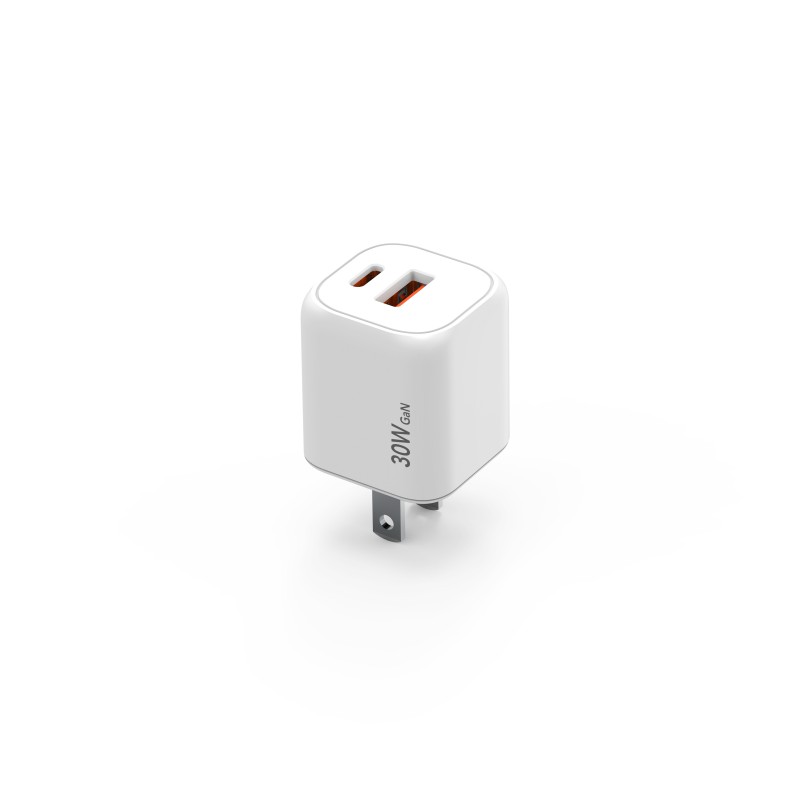
Evidence pack: reports, product photos and firmware freezes a buyer should request
A usable USB-IF evidence pack is specific: the applicant’s legal name, the TID, the Integrators List record under that same name, the marketing name used at registration, photographs of the exact unit tested (faces, ports, and rating label), a bill-of-materials freeze, and a firmware freeze including the PD controller code.
Add the lab identity — an authorized location on USB-IF’s lab list, not an unnamed satellite — and USB-IF’s written review outcome, not only an unofficial lab email. If the buyer will use a logo, add Trademark License Agreement status for the company on the box and, for an OEM arrangement, the confirmation of product identity from the supplier’s USB-IF primary representative. A PD stack change after sample lock is a candidate for “significant differences.” USB-IF requires products seeking certification to use USB-IF certified connectors.
Logo-use rules and how a missed condition shows up at retail
USB-IF states the logo rule in plain terms: the marks may be used only with products that have passed USB-IF compliance testing and are currently on the Integrators List, and the company must have a Vendor ID and a Trademark License Agreement on file. Both the listing under that company’s name and the agreement must be in place before the logo goes on a product.
A missed condition shows up in ordinary places: a box that carries a Certified USB Charger mark for a brand that is not the listed company; a sell-sheet that says “USB-IF certified” next to a later housing; a marketplace listing that uses a specification name as if it were a certified mark. USB-IF’s Integrators List marketing-name guidance exists because inconsistent naming confuses buyers. If legal name, listing, artwork and shipping unit are not aligned, the product is not yet entitled to the mark.
Relating USB-IF work to IEC 62368-1 and EMC filings without repeating every test
USB-IF work and safety or EMC filings answer different questions. IEC 62368-1 is a safety standard for audio/video and ICT equipment; EMC filings address emissions and immunity in a target market. A TID does not stand in for either, and a CB Test Report does not stand in for USB-IF certification.
Keep the USB-IF unit, the IEC 62368-1 unit and the EMC unit traceable to the same firmware and connector freeze, and do not recycle a TID as a safety certificate. The charger compliance and certification overview is the place to map those regimes. For EU-facing USB-C and USB Power Delivery documentation, USB-IF also publishes a EU Conformity to USB-IF Specifications (IEC 62680) path. That path is a subset of USB-IF work, not a substitute for Radio Equipment Directive or eco-design duties. Read the current USB-IF and EUR-Lex pages before naming it on a sell-sheet.
When a private-label brand can and cannot inherit a factory TID
A private-label brand cannot put a factory’s TID on its own box and call the product certified under the brand. USB-IF’s OEM Arrangements path is narrower than that, and it is formal.
If the brand is purchasing and reselling, under its own company name, a product already on the Integrators List under the supplier’s name, USB-IF allows that product to be added under the brand’s name without retesting. The supplier must submit the online confirmation of product identity, and only the supplier’s USB-IF primary representative may apply. Before a logo may appear, the product must be listed under the brand’s name and the brand must execute the Trademark License Agreement; a Vendor ID is part of that setup. Inheritance fails when the shipping product is not the listed product, or when the only document is a factory certificate in the factory’s name. The honest path is then a new registration or a corrected OEM arrangement.
From sample lock to listing: stall points to plan for, without invented lead times
USB-IF does not publish a universal calendar for charger listings, and this page will not invent one. It can name the stalls that actually stop OEM programs.
Registration questions and photographs are often incomplete; a lab cannot be selected until USB-IF has categorized the product. A TID appears only after the authorized lab accepts the product, so delayed acceptance is a delayed identifier, not a delayed “certification.” Lab scheduling is negotiated with the lab, and USB-IF still reviews the data afterwards. A private-label program can also stall if the wrong person submits the OEM arrangement, or if artwork goes to the printer before the brand executes the Trademark License Agreement. Plan those gates rather than a copied number of weeks.
Production change control: the component swaps that void a listing
USB-IF’s similarity rules rest on one idea: production units must not have “significant differences” from the tested samples. The Compliance Review Board has the final judgment on what is significant. The vendor must keep production aligned; audits that find discrepancies can lead to retesting, revocation, or legal action.
This page will not invent a list of part numbers that automatically void a listing. The usual reason to stop and ask, rather than assume similarity, is a change to the USB-C connector (which must itself be USB-IF certified for a product seeking certification), the PD controller and its firmware, the power stage, or the port map and advertised power. A color change may be a simpler similarity request, or it may not; the test is significance under USB-IF rules, not cost. Write the stop-and-ask rule into the OEM contract before tooling is cut.

Contract questions to settle before tooling is cut
Several USB-IF questions are cheaper to settle in the OEM contract than after a mould is paid for. Who is the applicant of record? Who is the USB-IF primary representative, and who will submit an OEM arrangement if the brand needs its own listing? Who owns the listing if the relationship ends? Who notifies a firmware or connector change, and who pays for a required retest?
Add a sample-lock rule: the registered unit is the unit that will be tooled, labelled and photographed. Add a logo rule: no USB-IF mark on packaging or a marketplace image until the brand is listed and licensed. Add a connector rule: only certified connectors will be bought for a product that will seek certification. The charger OEM, ODM and wholesale page is a place to open that program discussion; the contract itself has to name the USB-IF duties.
How to state USB-IF certification honestly on a sell-sheet and a retail box
Honest language is specific. A sell-sheet can say that a named product, under a named legal entity, is USB-IF certified, and can give the TID and point to the certified product record. It should not call a factory or a product family “USB-IF certified” as a blanket status.
If certification is still in progress, say that a TID has been assigned and testing is under way, or that an OEM arrangement has been submitted and is not yet listed — and do not print the logo. If the product was designed against USB specifications but has not been certified, say that, and do not use a licensed mark. USB-IF discourages using specification names as consumer-facing branding. The same wording should appear on the retail box, the inner carton and the online listing.
Red flags in a supplier claim that “we are USB-IF certified”
Several patterns should stop a buyer from closing a USB-IF claim at face value: the factory is described as certified, rather than a named product under a named company; the only number offered is a TID, with no listing record; a logo is already on a brand box while any Integrators List entry is in the factory’s name; the photographs do not match the housing that will be tooled; a “similar” SKU is promised coverage after a PD firmware change; or the lab named is not on the authorized list.
None of these is a reason to abandon a capable factory. Each is a reason to open the dossier above, and to use a charger-supplier due-diligence checklist for the rest of the commercial file.
Conclusion
A charger OEM program uses USB-IF certification as a listing under a named company for a named product, backed by a TID that identifies the test record and by a license required before any logo is printed. Private-label inheritance is a formal OEM arrangement, not a courtesy of the purchase order.
If your team is assembling a USB-IF dossier for a charger OEM or private-label SKU, you can send the intended product scope to WECENT through the charger compliance and certification page. This is a request for a project discussion, not an order.
FAQ
Can a private-label charger use a factory USB-IF TID without a further filing?
Only through USB-IF's OEM Arrangements process, and even then the number is not simply borrowed. If a brand is purchasing and reselling, under its own name, a product already on the Integrators List under the supplier's name, the supplier's USB-IF primary representative may submit a confirmation of product identity so the product can be listed under the brand's name without retesting. The brand still may not display a USB-IF logo until that listing exists under its name and it has a Trademark License Agreement on file. A purchase order or a factory TID printout is not a substitute.
When is a TID assigned, and does that mean the charger is certified?
USB-IF assigns a Test ID after the product has been registered and an authorized Independent Test Lab has accepted it for testing. Assignment happens before the lab completes its work and before USB-IF reviews the results. A TID therefore identifies the test record; it does not, by itself, mean the product passed, appears on the Integrators List, or may carry a logo. Buyers should ask for the listing record and the certification outcome that correspond to that TID, not treat the number as a pass certificate.
What must be in place before a USB-IF logo appears on an OEM charger box?
Two conditions, both stated by USB-IF: the product must be on the Integrators List under the company whose name is on the box, and that company must have a valid USB-IF Trademark License Agreement on file. Logo artwork is released after the agreement is executed; the right to use a logo on a given product follows the listing. A factory's agreement does not automatically cover a private-label brand. Marketing names on packaging should also follow USB-IF's Integrators List naming guidance, which discourages loose use of specification terminology on consumer-facing materials.
If two charger SKUs look similar, can one test cover both?
USB-IF's Qualification by Similarity program allows similar products to be added to the Integrators List without retesting when there are no significant differences from the product that was tested. The Compliance Review Board has the final judgment on what is significant, and the vendor remains responsible for production units matching the tested sample. Audits that find discrepancies can lead to retesting, revocation of certification, or legal action. A color change and a firmware or power-stage change should not be treated as the same kind of request.