
The short name EU common charger directive leads many accessory catalogues in the wrong direction. Directive (EU) 2022/2380, as published in the Official Journal on EUR-Lex, amends the Radio Equipment Directive. Its USB Type-C and USB Power Delivery obligations, unbundling option, pictogram and charging-capability label attach to listed radio equipment in Annex Ia, not to every wall charger on a wholesale price list. Accessory and device brands still have catalogue work to do.
This page is a regulatory briefing for EU-facing brand and product managers, about in-box and separately sold accessory implications, not a news recap. A charger compliance and certification plan should keep this directive and later eco-design rules in separate columns.
What Directive 2022/2380 actually requires of device and accessory brands
Directive (EU) 2022/2380 amends the Radio Equipment Directive. For listed radio equipment that can be recharged by wired charging, it requires a USB Type-C receptacle, USB Power Delivery above stated thresholds, an unbundling option, and specified charging-capability information. Those duties attach to the device, not automatically to every accessory brick.
Article 2 dates are in the table below. Annex Ia, Part I, points 1.1 to 1.12 name the twelve portable-device categories; point 1.13 is laptops. The USB Type-C receptacle must remain accessible and operational, and the device must be chargeable with cables complying with the referenced EN IEC 62680-1-3 standard. Where wired charging is at voltages higher than 5 volts, currents higher than 3 amperes or powers higher than 15 watts, USB Power Delivery as described in EN IEC 62680-1-2 is required, and any additional protocol must still allow full USB PD functionality. Those figures come from Annex Ia and should be re-read on EUR-Lex after any amendment. Commission Delegated Regulation (EU) 2023/1717 has already updated the technical-specification references.
| Instrument | Official date | What the official text applies it to |
|---|---|---|
| Directive 2022/2380, Article 2 | 28 December 2023 | Member States adopt and publish measures |
| Directive 2022/2380, Article 2 | 28 December 2024 | Application for Annex Ia, Part I, points 1.1 to 1.12 |
| Directive 2022/2380, Article 2 | 28 April 2026 | Application for point 1.13, laptops |
| Regulation (EU) 2025/2052 (separate) | 14 December 2028 | Interoperable AC-DC external power supplies, subject to listed exemptions |
In-box chargers versus separately sold accessories: two different catalog problems
An in-box charger is part of how a listed device is offered. Article 3a requires that if an economic operator offers consumers the radio equipment together with a charging device, it must also offer that radio equipment without any charging device. The Commission’s guidance on the Common Charger Directive treats a “charging device” as the external power supply. Selling a device with a charger in the box is still allowed; what is not allowed is making the bundled offer the only offer.
A separately sold accessory lives on a different catalogue line. Directive 2022/2380 does not, in its own articles, set the USB-C receptacle duty on that accessory. The commercial problem is still real: devices that must take a USB-C cable and, above the thresholds, USB PD, will be sold with or without a brick, and the accessory line has to remain usable with those devices. Treat the two problems as two SKU lists, two artwork lists and two evidence packs, not as one slogan.

USB-C and PD interoperability obligations a specification must name
A device specification for listed radio equipment has to name more than “USB-C.” It has to name the USB Type-C receptacle described in the referenced EN IEC 62680-1-3 standard, that the receptacle remain accessible and operational, and that the device can be charged with cables complying with that standard. If the device charges above 5 V, 3 A or 15 W, it has to name USB Power Delivery as described in EN IEC 62680-1-2, and say that any additional protocol leaves full USB PD functionality available.
The Commission guidance also records that a proprietary receptacle is not prohibited so long as the USB-C receptacle is also present, and that USB PD must still be supported up to 240 W where a device’s maximum charging power is above that figure, following the updated standard references. Those points belong in the specification and in the technical file, with a citation to the current EUR-Lex text, not in a marketing line that merely says “common charger ready.”
What the rule does and does not say about wireless-only accessories
On wireless-only radio equipment, the Commission guidance is direct. If the equipment can be recharged only via wireless charging, it does not need to incorporate the harmonised wired charging solution, because the wired-charging condition in Annex Ia is not met. The same guidance records that the Commission is to promote harmonisation of wireless charging, including technologies other than inductive, in order to avoid later fragmentation.
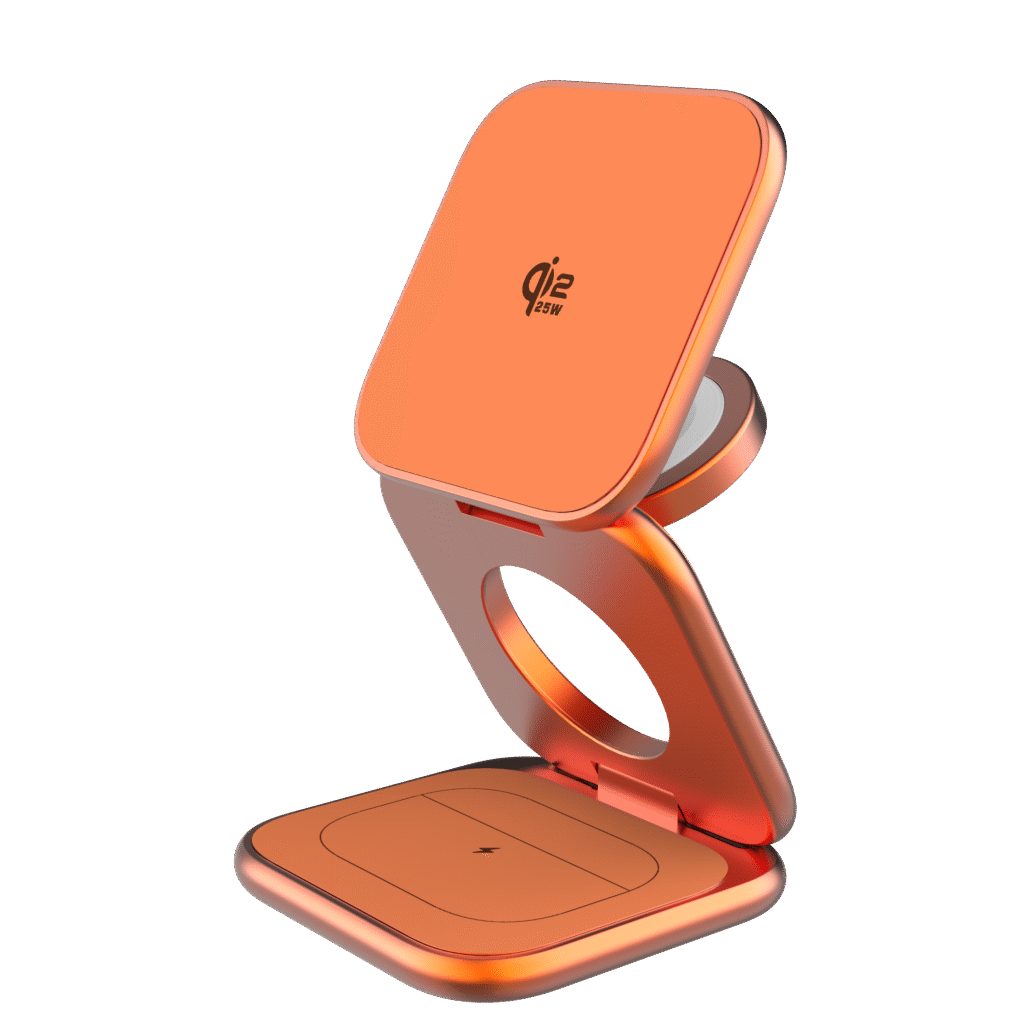
A standalone wireless charging accessory is a different object. It is not one of the device categories listed in Annex Ia, Part I, of Directive 2022/2380. Whether a particular wireless pad is itself radio equipment under other RED duties is a separate question, and it should be answered against the product’s actual construction. A later eco-design regulation, discussed below, has its own rules for certain wireless chargers and pads from a later application date. Do not collapse those instruments into one “wireless is exempt” or “wireless is included” sentence.
Information and labeling duties that sit alongside the connector mandate
The connector is not the only duty. Article 3a requires a pictogram, set out in Annex Ia, Part III, showing whether a charging device is included, on the packaging, visible and legible, and, in distance selling, close to the price. The dimension “a” shall be at least 7 mm. Article 10(8), as amended, requires instructions to contain the Part II charging-capability information, and a Part IV label, including minimum and maximum power in watts and “USB PD” where that protocol is supported. The official Part II sentence begins: “the power delivered by the charger must be between min [xx] Watts required by the radio equipment, and max [yy] Watts in order to achieve the maximum charging speed.”
Those information duties sit on the listed radio equipment and on the economic operators who make it available. An accessory brand that only sells a separate brick is not the addressee of this particular pictogram and Part IV label. The device brand is.
How an OEM catalog should treat USB-A ports after the mandate — decision, not slogan
Directive 2022/2380 does not, in the official text, require accessory manufacturers to retire USB-A ports on separately sold chargers. The USB-C and PD obligations are written for listed radio equipment. A catalogue that deletes every USB-A port “because of the common charger directive” is making a commercial decision and attributing it to a legal clause that is not there.
A later instrument does speak to external power supplies. Commission Regulation (EU) 2025/2052 applies from 14 December 2028 (Article 9(3) from 14 December 2025). For interoperable AC-DC external power supplies, subject to listed exemptions including a nameplate output power greater than 100 W, it requires at least one USB Type-C or USB-PD port, and that a single output’s maximum nameplate power be supplied at such a port. That is not a USB-A ban, and it is not Directive 2022/2380. The USB-IF EU Conformity (IEC 62680) page is a documentation path some OEMs use; it is not a substitute for either legal text.
Evidence a brand should keep for market-surveillance questions
Market-surveillance questions will land on the device brand and on the economic operators who made the radio equipment available. The useful evidence pack is the technical file that shows the USB-C receptacle and, where applicable, USB PD; the unbundling offer actually made to consumers; the pictogram and Part IV label as shipped, including the 7 mm dimension; the instructions with the Part II sentence; and the dates on which a model was first placed on the Union market.
The Commission guidance is explicit that the new rules apply to devices first placed on the market on or after the application dates, and that existing stock already placed on the market before those dates may still be sold. “Model” is a commercial term the RED does not use in that way. Keep placement records, not only a marketing model name. A supplier-document evaluation helps when the brick is sourced; it does not replace the device brand’s own file.
Coordination with USB-IF, IEC 62368-1 and energy filings so work is not duplicated
USB-IF work, IEC 62368-1 safety work and energy-efficiency filings are not performed by Directive 2022/2380, and a completed USB-IF listing is not a declaration of conformity to the Radio Equipment Directive. What a program can do is lock the same receptacle, firmware and power profile across those files, and record where each file stops.
Energy-efficiency and interoperability duties for external power supplies sit under eco-design rules, now headed for Regulation (EU) 2025/2052 from the date stated above, and they should be planned as such. IEC 62368-1 remains a safety standard. The Commission page on the EU common charger is a useful official summary; the binding dates and scope remain those on EUR-Lex. A charger-supplier due-diligence checklist can keep these columns visible during sourcing.
Questions for a factory when a current SKU family predates the mandate
If a device family was already on the market before the relevant application date, the useful factory questions are about placement, not a vague “grandfathering.” Which units were first placed on the Union market before 28 December 2024, or before 28 April 2026 for laptops? Which units will be placed after those dates and must meet Annex Ia? Does the housing still allow a USB-C receptacle to remain accessible? Can the factory produce the two offer variants, with and without a charging device, and the matching pictograms?
A factory answer that only says “this is an old model” is not enough: the Commission guidance does not treat “model” as a legal escape. The question is when the individual equipment is placed on the market. Put that in the OEM or ODM project brief before a new run is authorised.
What writers must verify on EUR-Lex before stating dates or scope
Anyone writing a catalogue line, a specification or a customer letter about this mandate should open the official texts before stating a date, a product category, a voltage, a current or a wattage. The starting documents are Directive (EU) 2022/2380 on EUR-Lex, any delegated update to Annex Ia, and the Commission notice on interpretation. If an eco-design rule for external power supplies is mentioned, it should be cited under its own number and its own application date, currently Regulation (EU) 2025/2052 from 14 December 2028 for its main provisions.
This page follows that discipline and will be wrong the moment a later official amendment changes a date or a category. Re-read the consolidated text before a new print run. Do not fill gaps from memory or from a news summary.
Conclusion
Directive 2022/2380 reworks the listed device: its port, its PD behaviour, its unbundling offer and its labels, on the dates in Article 2. Accessory catalogues have to follow those devices, and they have a later eco-design rule to plan for, but they should not treat the directive as if it had retired every USB-A brick on 28 December 2024. Re-open the official texts before printing a date or a scope.
If your team is reworking an EU device or accessory catalogue against Directive 2022/2380, you can send the intended device list and charger SKUs to WECENT through the charger OEM, ODM and wholesale page. This is a request for a project discussion, not an order.
FAQ
Does Directive 2022/2380 prohibit selling a listed device with an in-box charger?
No. Article 3a requires that where an economic operator offers consumers the listed radio equipment together with a charging device, it must also offer that radio equipment without any charging device. Selling a device with a charger in the box remains possible; making the bundled offer the only offer does not. A pictogram, set out in Annex Ia, Part III, must show whether a charging device is included, and in distance selling it must appear close to the price. The Commission guidance treats the charging device as the external power supply.
Must a wireless-only device include a USB-C receptacle under the Common Charger Directive?
Not if the radio equipment can be recharged only via wireless charging. The Commission's guidance answers this directly: such equipment does not need to incorporate the harmonised wired charging solution, because it cannot be recharged by wired charging. The same guidance records that the Commission will promote later harmonisation of wireless charging. A standalone wireless accessory is a different product and is not listed in Annex Ia, Part I; any duty that applies to it must be read from the instrument that actually names it, including later eco-design rules where they apply.
Does the directive require accessory brands to remove USB-A ports from separately sold chargers?
Directive 2022/2380 itself does not. Its USB Type-C and USB Power Delivery obligations are written for listed radio equipment capable of wired charging, not as a retirement rule for USB-A on accessory external power supplies. A later eco-design rule, Commission Regulation (EU) 2025/2052, applies from 14 December 2028 and requires interoperable AC-DC external power supplies, subject to listed exemptions, to have at least one USB Type-C or USB-PD port and to supply a single output's maximum nameplate power at such a port. That is a separate instrument with a later date, and it still is not a ban on USB-A.
Which application dates does Article 2 of Directive 2022/2380 set?
Member States had to adopt and publish the necessary measures by 28 December 2023. They must apply those measures from 28 December 2024 for the categories in Annex Ia, Part I, points 1.1 to 1.12, and from 28 April 2026 for point 1.13, which is laptops. The Commission guidance adds that the rules apply to equipment first placed on the Union market on or after those dates, and that stock already placed on the market before the relevant date may still be sold. Those dates should be re-read on EUR-Lex before they are printed in a catalogue.