
For charger SKUs bound for India, BIS certification is a Compulsory Registration under Bureau of Indian Standards Scheme II, issued against a notified product category and a notified Indian Standard. It is not a CE dossier with a new mark, and it is not a factory atmosphere. On the current Scheme II list, Power Adaptors for IT Equipments and Power Adaptors for Audio, Video & Similar Electronic Apparatus are both listed against IS/IEC 62368: Part 1: 2023. Gazette S.O. 4997(E) of 29 October 2025 permits concurrent running of IS 13252: Part 1: 2010 and IS 616:2017 with IS/IEC 62368: Part 1: 2023 until 1 November 2028 for those goods and the other non–serial-no. 65 entries; after that date the two older standards stand withdrawn.
This page is a factory-evidence and test-planning briefing for export-compliance and sourcing teams. For the wider certification file a program may also need, see charger compliance and certification.
Which charger and adapter categories currently fall under BIS — and how to verify the list
A BIS certification charger filing must name a product category on the current Scheme II list. Power Adaptors for IT Equipments and Power Adaptors for Audio, Video & Similar Electronic Apparatus are the usual rows for USB chargers. The official list, not a supplier spreadsheet, is what to re-read before a shipment is planned.
The live list is the BIS page for Scheme II (Registration Scheme), last updated on that page on 26 October 2026 at the time this article was prepared. The Bureau also maintains a Compulsory Registration overview. Adjacent rows are easy to confuse with a charger filing: Adapters for household and similar electrical appliances are listed against IS 302 (Part 1): 2008; Power Banks for use in portable applications, and UPS/Inverters, are separate categories. MeitY’s FAQ states that mobile phone chargers are covered under the Order. Record the serial number and exact category title, and re-open the list after any Gazette amendment.
| Scheme II category (current list) | Indian Standard as listed | What a charger program should not assume |
|---|---|---|
| Power Adaptors for IT Equipments | IS/IEC 62368: Part 1: 2023 | That the same registration covers a power bank or a UPS |
| Power Adaptors for Audio, Video & Similar Electronic Apparatus | IS/IEC 62368: Part 1: 2023 | That an IT-adaptor registration automatically covers this row |
| Adapters for household and similar electrical appliances | IS 302 (Part 1): 2008 | That every wall adaptor is filed on this household row |
| Power Banks for use in portable applications | IS/IEC 62368: Part 1: 2023 | That a charger registration includes a power bank |
| UPS/Invertors of rating ≤5kVA; UPS/Inverters of rating ≤10kVA | IS 16242 (Part 1) / IS 16242 (Part 1):2014 | That an inverter filing is a charger filing |
Those titles and standard numbers are taken from the Scheme II page and will be wrong the moment a later official amendment changes them. Verify on the current BIS list, not from this table alone.
IS 62368 / IS 13252 and the standard edition a filing should name
The standard a filing should name is the edition on the current official list, read together with the concurrent-running periods in S.O. 4997(E). IS 13252: Part 1: 2010 has been superseded, but it is not yet unusable for every goods row: for goods other than serial no. 65, concurrent running with IS/IEC 62368: Part 1: 2023 is permitted until 1 November 2028. Serial no. 65, Extended Reality Products, has a shorter concurrent period, until 1 May 2026, and is not a charger category. After 1 November 2028, IS 13252: Part 1: 2010 and IS 616:2017 shall stand withdrawn. A test plan that still cites only IS 13252 should record why that is still permitted for that SKU, and when it will no longer be.
Factory evidence and inspection points Indian filings typically require
MeitY’s Compulsory Registration FAQ dated 19 October 2026 is explicit: the unique registration number is issued to the manufacturer and is linked to the manufacturer, the product, the brand and the location of the factory. A second factory making the “same” charger needs a separate application and a test report for the product manufactured at that location. The evidence a buyer should inspect in the file is therefore the named factory address, the brand and model on the registration, and photographs and labels that will match the units that will actually ship.
This article does not treat a Scheme I or FMCS factory-audit procedure as if it applied to Scheme II. Current Registration Process pages on the BIS and CRS portals should be re-read for any surveillance or inspection duty that applies at the time of filing. What a sourcing team can already demand is consistent factory identity: the manufacturing location on the application, the origin of the test sample, and a walk-through of the factory file so that a second site is not quietly substituted.
Local representative and labeling duties an exporter should not leave informal
Where the manufacturing plant is outside India, the same MeitY FAQ requires the foreign manufacturer to authorize an Authorized Indian Representative (AIR) under the scheme. Communications from BIS or MeitY are addressed to the registered entity and its AIR, and the AIR is responsible for legal implications in India for products sold under that registration. That is a Compulsory Registration duty stated by MeitY. It should not be confused with the separate FMCS nomination, fee or bank-guarantee rules, which are a different BIS scheme and are not applied here.
Marking is equally formal. The FAQ states that marking requirements shall be as per the applicable standard, Scheme II of the BIS Conformity Assessment Regulations, and implementation guidelines issued by BIS. The Standard Mark is mandated only on products notified under the 2021 Order. A buyer should ask to see the proposed product label, the registration number as it will be marked, and the current BIS implementation guidance, rather than accepting a mark that has been copied from another market.
Test-plan choices when a family already has a CB report
A CB test report is useful planning evidence. It is not, on MeitY’s stated rule, an acceptable substitute for the registration test. The FAQ answers a direct question about CE, UL, FCC or CB testing in an overseas laboratory: only test reports issued by BIS recognized labs, as per the notified Indian Standards, are accepted for registration. The validity period of that report is as specified in the BIS Conformity Assessment Regulations. A supplier’s own test report is not acceptable for a trader’s self-declaration.
The practical use of an existing CB file is therefore to scope the work: which IEC 62368-1 edition was tested, which national differences were already covered, and which Indian Standard edition the BIS laboratory must now report. BIS publishes common Test Report Formats for each standard and edition; they are available on the Uniform Test Report Formats page. The list of recognized labs is maintained on the CRS portal named in the FAQ; that portal should be opened at the time of filing, because lab recognition changes.
Plug, voltage and incoming-inspection implications for India-bound SKUs
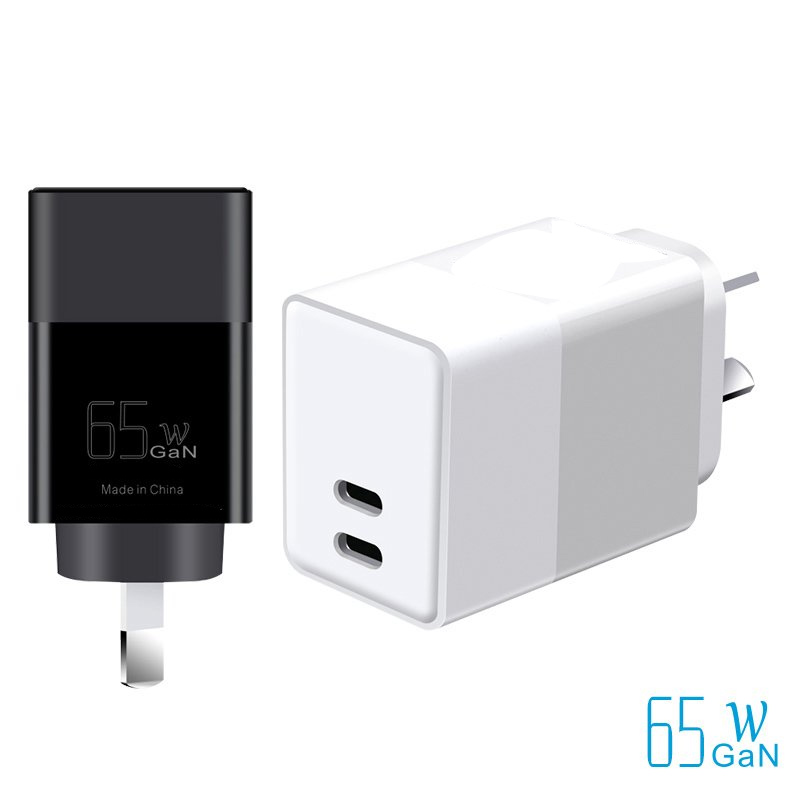
Plug identity is not a cosmetic option. MeitY’s FAQ records that plugs and sockets have been notified by DPIIT under Scheme I of the BIS Conformity Assessment Regulations, by Gazette S.O. 2166(E) dated 7 June 2021, and that plugs and sockets shall comply with IS 1293, as amended from time to time. An India-bound charger SKU should therefore be specified, sampled and inspected with that plug rule in mind, and not with a European or US plug left in the carton as a temporary stand-in. Incoming inspection should compare the landed unit with the registered model’s photographs, ratings and label, including the plug face.
Common stall points: photographs, packing, and model-difference tables
Filings and first shipments often stall for documentary reasons that the official FAQ already hints at. Different brands must be registered separately; a common test report is feasible only if the product and the manufacturing location are the same, and product labels for each brand must be placed in the test report. Series formation requires documentary support for every model to be included; samples of every model need not all go to the lab, but the sample with the highest configuration, as defined in MeitY’s series guidelines, must be tested. Photographs and packing that do not match those labels, or a model-difference table that omits a colour, a plug or a housing change, leave the file unable to explain what was actually tested.
How a private-label brand should appear on marks and documents
The registration number is linked to a brand as well as to a manufacturer and a factory. A private-label charger that will ship under the buyer’s brand needs that brand to appear in the registration and in the test report, with the product labels for that brand placed in the report. MeitY allows a common test report across brands only when the product and the manufacturing location are the same, and when the laboratory can record coverage of the additional brand and model numbers on the basis of a representative model and the manufacturer’s declaration. A factory registration in only the factory’s house brand does not, on that rule, put the buyer’s brand on the Standard Mark. The OEM and ODM scope of the program should say which brand will be marked before samples are labelled.
A document checklist to request from the factory before the first shipment
Before the first India-bound shipment, a buyer can reasonably request: the current Scheme II category and standard edition named on the application; the unique registration number and the legal name, brand and factory location to which it is linked; the AIR nomination, where the plant is outside India; the BIS recognized-lab test report, in the current TRF, to the notified Indian Standard; the product labels that appear in that report; photographs of the unit and of the packing that will ship; a model-difference or series table, with documentary support; and, where a second site or a second brand is involved, the separate applications those cases require. An existing CB report may be attached as supporting context. It does not replace the BIS laboratory report. Broader document review can follow the certifications page and the factory file already cited.
What must be re-verified on current BIS pages before publication
The Scheme II list, the concurrent-running dates in S.O. 4997(E), the MeitY FAQ, the recognized-lab list and the marking guidelines all change by official amendment. A later Gazette can add a category, shorten a concurrent period, or change a standard edition. Writers and program teams should re-open the current BIS Scheme II page, the Gazette text, and the current MeitY FAQ before reprinting any date, category title or standard number from this page. Do not fill a gap from memory, from a consultant’s slide, or from a previous year’s registration.
Conclusion
A charger exported to India is registered under Scheme II against a named category, a named Indian Standard, a named brand and a named factory. A CB report helps plan the test; a BIS recognized-lab report is what the registration accepts. Private-label marks and a foreign manufacturer’s AIR are formal steps, not informal courtesies of the purchase order. Re-read the current official list before the first shipment leaves.
If your team is planning BIS registration evidence and test work for an India-bound charger SKU, you can send the intended product scope to WECENT through the charger compliance and certification page. This is a request for a project discussion.
FAQ
Who provides the BIS certificate?
The Bureau of Indian Standards issues the unique registration number. MeitY's Compulsory Registration FAQ dated 19 October 2026 states that the manufacturer is eligible to apply and to receive that number, and that the number is linked to the manufacturer, the product, the brand and the location of the factory. It is the manufacturer's responsibility to get imported products registered. An importer does not obtain the number in its own right by submitting a supplier's test report; that report is not acceptable. The current Scheme II pages and the FAQ should be re-read if the application path is later amended.
What is the BIS certification for lithium batteries?
Lithium and other secondary cells and batteries are not registered on the Power Adaptors rows. MeitY's FAQ states that the scope of coverage is as defined in IS 16046 (Part I and II), and that secondary cells and batteries notified under the Order for compliance to IS 16046 (Part II and III) must be independently registered. On the current Scheme II list, sealed secondary cells and batteries for portable applications appear as their own category, against IS 16046. A charger registration does not stand in for a cell or battery registration. Re-read the current list before a filing is described.
What is a BIS certified power bank?
A power bank is a separate Compulsory Registration category, not a side-effect of a charger registration. The current Scheme II list includes Power Banks for use in portable applications, against IS/IEC 62368: Part 1: 2023. MeitY's FAQ states that power banks with USB are covered for compliance to IS 13252 (Part 1)/IS/IEC 62368, which is consistent with the concurrent-running period in Gazette S.O. 4997(E). A program that ships both a charger and a power bank should treat them as two categories on the official list, and should re-read that list before a filing is named.
Which inverter type is BIS certified?
This page does not recommend an inverter product. MeitY's FAQ states that only standalone UPS/Inverters are covered under the 2021 Order, and that a UPS or inverter incorporated in a host system is not covered where the host itself is not covered, unless later imported as a standalone product. The current Scheme II list has two electronics-and-IT rows: UPS/Invertors of rating ≤5kVA, and UPS/Inverters of rating ≤10kVA, both against IS 16242. Photovoltaic inverters appear on a separate MNRE list. Those titles should be re-read on the current official pages before a filing is named.
