
What a 20-Minute Factory Video Call Should Prove Before You Pay a Tooling Deposit
What a 20-Minute Factory Video Call Should Prove Before You Pay a Tooling Deposit
Before paying a tooling deposit, use a 20-minute live call with a charger manufacturer in China to see named stations, a live unit, and batch-card serials.
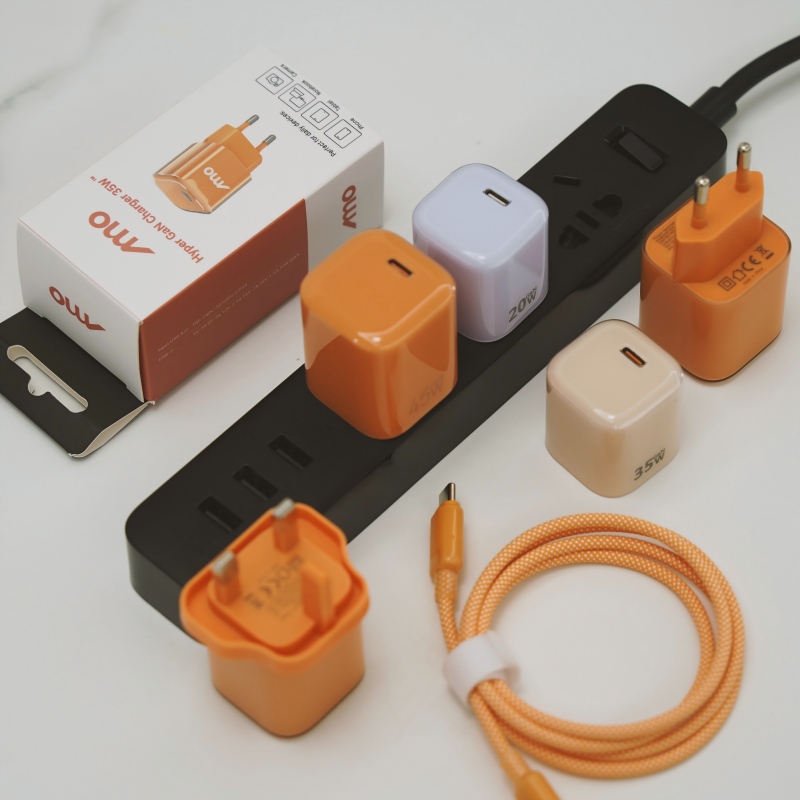
Twenty minutes is long enough to walk surface-mount, assembly, aging, electrical test and packing at a charger manufacturer in China if the call is live and your team directs the camera. It is not long enough if the factory plays a pre-cut showreel and takes questions at the end. The number that matters is how many stations you were allowed to choose, not the length of the recording.
Brand buyers who cannot visit Shenzhen on the first cycle still have to decide whether a tooling deposit should move. This article is about a directed video call with a GaN or wireless charger factory before that money is paid. It is not a substitute for an in-person audit, and it does not treat a recording as proof of an exporting entity. Directory results for this search often describe electric-vehicle equipment, which is a different product.
Why a recorded walk-through is not the same as a live, directed video call
A live, directed 20-minute video call with a charger manufacturer in China should let your team choose the stations, see a unit from that day’s line, and match serials to a batch card. A recording cannot answer an unfilmed question, or prove that the showroom and the exporting entity are the same.
Ask at the start who is walking, whether you may direct the camera, and whether the call may be recorded under an agreed non-disclosure term. If the answer is that a video file will be sent instead, treat that file as preparation, not as the call. The difference is the same one a quality lead already uses on a visit: can you point at something that was not staged for you?
Stations a buyer should ask to see: SMT, assembly, aging, electrical test and packing
A short call is useful only if the route is agreed in advance. Five stations are enough for twenty minutes: surface-mount or the equivalent board-loading area, final assembly, aging or burn-in if the factory claims it, electrical test, and packing. For each station, ask what a batch looks like today, not what it looks like in a brochure.
| Station | What to ask on a live call | What a recording can hide |
|---|---|---|
| SMT or board loading | A running line, a current work order, how a change of SKU is controlled | A tidy line filmed on another day, with no work order in view |
| Assembly | The housing, cable or plug being fitted to the quoted platform | A generic assembly bay that is not the quoted product |
| Aging or burn-in | Whether the quoted offer includes this step, and for how long | Racks shown without a link to the quoted test time |
| Electrical test | A live test of a unit from that day, with the fixture and the limit visible | A demonstration on a prepared golden sample |
| Packing | The carton, label and language panel being used for an export lot | An empty packing table or a retail box from a different brand |
If a station is not on site, the honest answer is to say so and to name the subcontractor. That is a fact for the deposit decision, not automatically a reason to end the call.
How to request live serials, a batch card and a unit taken from that day’s line
Before the call, ask the factory to have one unit that is already in production that day, not a display sample, and to have the batch card or lot record for that unit at the same bench. During the call, ask the camera to show the serial on the unit and the corresponding line on the card, and note both in your minutes.
If no unit is in production that day, say so in the record and agree a second slot. A shelf unit can be opened to show construction, but it does not prove that today’s line is running the quoted product.
Questions that expose a showroom that is not the exporting entity
The commercial risk is not only a tidy factory. It is paying a deposit to a name that does not own the line you just watched. Ask, on camera, for the legal name of the exporting entity, and ask where that name appears on the business licence, the quotation and, if a test report was already sent, the report holder field.
Ask who issues the commercial invoice and who would receive the tooling deposit. If the people on the call cannot show a match, or if they defer the question to a later email with no document, treat the call as incomplete. A trading office can arrange a walk-through of a factory it does not operate. The questions above are how a 20-minute slot begins to separate those cases.
What “own building” evidence can reasonably be shown on camera
A factory can reasonably show the entrance, a floor plate or directory, the production area you asked to see, and a consistent address on a nameboard or a licence. WECENT publishes its factory address as 2F, JuJi Technology Building, Shajing, Bao’an, Shenzhen, says the building is its own, and welcomes visits. Those are site claims. Ownership papers and capacity figures have not been independently verified here, and a video call should not be used to invent them.
What a camera can support is consistency: the address spoken on the call, the address on the quotation, and the address on a licence held up to the lens. A tour that never leaves a meeting room, or that refuses any exterior or directory shot without a specific reason, leaves “own building” as a sentence rather than as evidence.
NDA, recording and time-zone practicalities for a short slot
Agree the legal and practical terms before the twenty minutes start. If an NDA is required, send it early enough to be signed, and state whether the call may be recorded and by whom. Time zones should be in the invitation, with a named spare slot if a line is down. Twenty minutes of a directed walk is the content; waiting for a connection or an interpreter should sit outside that slot, or the shot list will be cut.
Share the station list and the serial request the day before. A factory that is ready will have a walker, a live unit and a batch card at the first station.
Documents to request the same day: entity papers, ISO scope and a sample itinerary
The call should close with a short document request, dated the same day: the business licence of the exporting entity, the scope page of any ISO 9001 certificate if one is claimed, and a one-page itinerary for an in-person visit. If an ISO certificate is sent, its scope and the certified site can be checked with the issuer and, where the certificate is accredited, against IAF CertSearch. A homepage claim is not that file.
If test reports were discussed, ask for the holder page and the model list, not a logo sheet, and consider laboratory standing against the ILAC framework. Marks discussed on a wall or in a slide can be compared later with official routes such as CE marking, FCC equipment authorisation, the FCC ID search, and, if a USB logo is claimed, USB-IF compliance. The same-day note should list what was promised, not what was implied.
When a video call can release a trial — and when a visit should still be booked
A video call can support a small trial when the live stations, the serial and batch card, and the entity documents line up, and when the tooling at risk is limited and reversible. It should not, on its own, release a large dedicated tool or a deposit the programme cannot afford to lose if the line you saw is not the line that ships.
Book a visit when the camera was refused at a named station without a clear reason, when names do not match, when a safety-critical process is subcontracted and unseen, or when the first order depends on a new tool. The call then becomes preparation for that visit, which is its proper role.
How WECENT’s published factory-floor and video pages prepare a visitor, and what a live call still has to show
Published pages prepare the shot list; they do not replace a directed live call.
WECENT’s factory page, factory-floor notes and factory videos describe stations and show recorded clips. They are useful before a call, and they are still recordings. The factory audit checklist covers what to verify in person and remotely; this article adds the 20-minute directed slot before a tooling deposit. A live call still has to show a unit from that day, a batch card, and a consistent exporting name.
FAQ
If some processes are subcontracted, what should the video call still show?
The call should still show the processes the exporting factory claims to run, and it should name, in writing that day, any process that is subcontracted: plating, a specialised coil, or a test that is sent out. Ask to see how subcontracted lots are received, identified and released. A subcontract is not automatically a reason to walk away. An unnamed subcontract, or a refusal to say where a safety-critical process is done, is a reason to hold a tooling deposit until the map is written down.
Can the factory refuse a camera in certain areas?
Yes. Some areas may be restricted for other customers’ tools, for personal data, or for safety. A refusal should be specific: which station, and why. A general ban on pointing the camera at serials, batch cards or the building exterior is a different matter. Agree in advance that your team may direct the camera at the named stations and at one unit taken from that day’s line. If a limit is reasonable, record it in the same-day note and decide whether a visit is still required before a deposit.
Should a tooling deposit be paid after a successful video call?
Only if the call answered the questions that matter for that deposit: the stations exist, a live unit and batch card were shown, the exporting entity matches the name on the quotation, and the same-day documents were promised with dates. A smooth call is not by itself a reason to pay. If the showroom, the legal name and the production floor cannot be tied together, or if the factory will only play a recording, hold the deposit and book a visit or a second directed call.
Does a recorded factory video replace a live call?
No. Published or pre-recorded clips are useful preparation. They show how a factory wants to be seen. They cannot respond to a station you name on the day, and they cannot produce a serial that was assigned that morning. Use recorded material to write your shot list. Use the live call to work through that list, then decide whether a visit is still needed before tooling money moves.
Conclusion
A 20-minute video call earns its place when it is live, directed and tied to a serial, a batch card and a legal name. It can support a limited trial. It should not, by itself, release a tooling deposit the programme cannot afford to lose.
If you want to prepare a directed factory call, start with the published factory videos and the audit checklist, then ask for a live slot against the station list in this article.