
Isolating the Real Cost Drivers When Two GaN OEM Quotes Sit Only a Few Cents Apart
Isolating the Real Cost Drivers When Two GaN OEM Quotes Sit Only a Few Cents Apart
When two wholesale GaN charger quotes sit a few cents apart, compare test time, packaging, tooling amortisation and payment terms, not only the unit line.
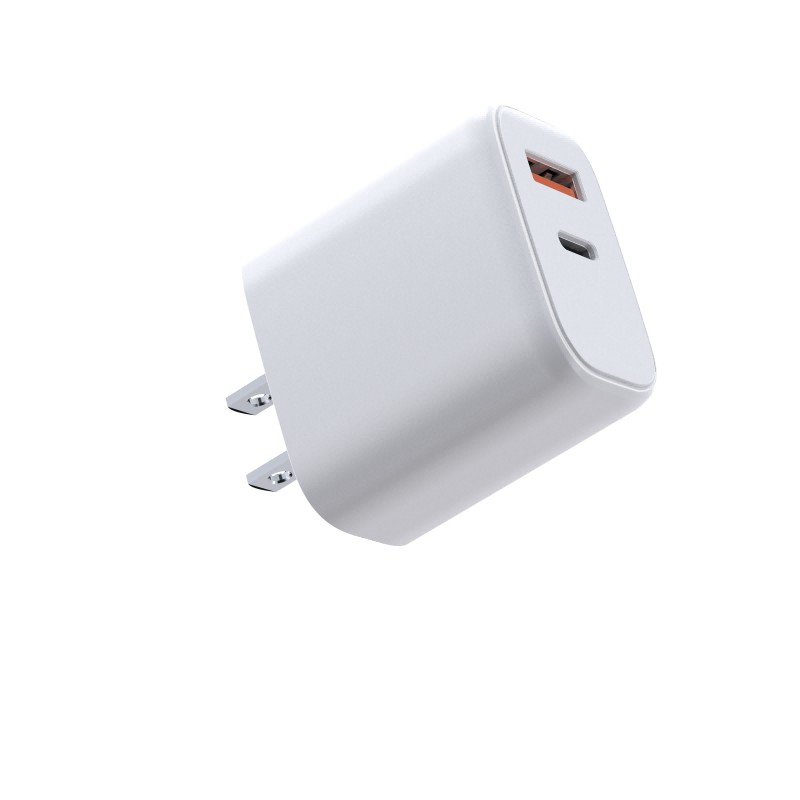
Two wholesale GaN charger quotations arrive on the same afternoon. The unit prices sit a few cents apart. The cheaper offer omitted a burn-in step the other had priced, used a lighter export carton, and quoted a different payment term. The cents on the unit line were never the commercial difference. The difference was in the drivers that had not been written down.
This page is for sourcing and cost-engineering leads who already have two near-identical GaN OEM offers and need to isolate those drivers. It is a companion to, not a repeat of, a quotation-normalisation exercise: the prices already look close. It does not publish unit prices, and it does not treat a wholesale gan charger headline as a complete cost.
Why a few cents on the unit price is rarely the whole commercial difference
When two GaN OEM quotes sit a few cents apart on the unit line, the commercial difference is usually elsewhere: device grade, test and burn-in time, packaging and freight, tooling amortisation at the opening quantity, and payment terms. A wholesale GaN charger price is comparable only after those drivers are written onto the same worksheet.
A unit price is a remainder. It is what is left after components, labour, test time, packaging, tooling recovery and a commercial term have been bundled, or left out. If two factories bundle those items differently, a tight unit-price gap is a warning to open the bundle, not a reason to close the comparison.
Components and GaN device grade: what to ask when the BOM is not printed
Most first quotations will not print a full bill of materials. That does not prevent a buyer from asking which items are allowed to move the price. Ask whether the GaN power device is a named grade or a “or equivalent” line, whether a second source is already qualified, and whether a capacitor, inductor or USB controller is similarly allowed to change without a notice.
You do not need the factory’s supplier prices. You need to know whether two close offers are built on a frozen list or on a list that can be substituted after the order. A cheaper unit that is free to change a power device after signing is not a few cents cheaper. It is a different risk. Put the freeze rule, or the lack of one, on the worksheet next to the cents.
Test time, burn-in and AQL treated as cost, not as a free extra
Electrical test time, burn-in or aging, and the inspection level used to release a lot all have a cost, whether or not they appear as a line. An offer that is a few cents lower may simply have omitted a step the other offer included. Ask each factory to state, as numbers, the test time per unit, whether burn-in is included and for how long, and the AQL or equivalent release plan.
If one factory cannot state those numbers, treat them as unknown, not as equal. A trial can still proceed, but the comparison should show that one price includes a named test plan and the other does not. Do not convert a missing figure into an assumed industry default. There is no default in this article, and none should be invented on the worksheet.
Packaging board weight, inserts and carton utilisation — freight hiding in the quote
Freight often sits inside a “free” unit price as carton weight, inner trays and how many pieces fit on a pallet. Two offers that sit a few cents apart at the factory gate can change order once a buyer looks at board weight and carton utilisation. Ask for the export carton dimensions, the gross weight, the pieces per carton and the packing method being priced.
A lighter carton is not automatically better. It may mean a missing insert that will be added later, or a pack that will not survive the same route. The question is whether both offers are pricing the same pack, not whether one number is lower. Write the carton data on the worksheet before anyone treats the unit cents as landed cost.
Tooling amortisation and how opening quantity changes the apparent unit price
If a new shell, a new logo tool or a new carton is required, the way that cost is recovered will move the apparent unit price when the opening quantity changes. Two offers can sit a few cents apart at one quantity and diverge at another, once amortisation is visible. Ask what is included in the unit price, what is a separate tooling charge, and at which quantity the charge is assumed to be recovered.
WECENT publishes an opening quantity of 200 pcs for a single model. That figure is a site claim for this factory, not a universal MOQ, and it is not a reason to assume that two quotations amortise tooling in the same way at 200 pcs. If one offer recovers a tool over a larger forecast, the close unit price at a small opening quantity may simply have deferred a cost.
Payment terms, currency and warranty reserves that move landed cost
Payment terms, currency and any warranty reserve are commercial, but they move cash and landed cost as surely as a carton does. A few cents on a unit line can be smaller than the effect of a deposit, a longer payment term, or a different currency risk. Ask each factory to state the currency, the payment schedule and the Incoterm, using the official Incoterms 2020 vocabulary rather than a local shorthand.
WECENT publishes a two-year warranty on its site. That is a site claim to be confirmed in the written offer, including what the warranty covers and whether a reserve is already in the unit price. Do not invent a reserve percentage. Put the published term, or the term actually quoted, on the worksheet next to the cents.
A side-by-side worksheet for two quotes that look almost the same
The worksheet below is for offers that already look close. It is not a scoring model. Fill every row for both offers. An empty cell is an unknown, not a match.
| Driver | What to record for each offer | Offer A | Offer B |
|---|---|---|---|
| Unit price and quantity | Currency, unit price, quantity at which it applies | ||
| BOM freeze and device grade | Named grade or “equivalent,” notice rule for substitutions | ||
| Test and burn-in | Test time, burn-in duration if any, release plan | ||
| Packaging and freight | Carton size, gross weight, pieces per carton, Incoterm | ||
| Tooling recovery | Separate charge or amortised, quantity assumed | ||
| Payment and warranty | Schedule, currency risk, warranty term actually quoted | ||
| Certification in the price | Which files are included, which are options |

When the cheaper quote is genuinely cheaper — and when a test has simply been omitted
A cheaper quote is genuinely cheaper when the worksheet is complete and the lower price still holds: the same output table, the same test plan, the same pack, the same tooling recovery, and the same commercial terms. It is not genuinely cheaper when the gap is an omitted burn-in, a missing certification file, or a carton that will be upgraded later.
Certification scope is one of the usual omissions. Whether a CE marking file, an FCC route, RoHS documentation, or a USB-IF programme is included in the price should be a row, not an assumption. A file that still has to be bought is not a few cents; it is a project cost.
How this article sits next to WECENT’s existing quotation-normalisation guide
This article starts where a normalisation exercise has already brought two offers onto a comparable scope, and the unit prices still sit only a few cents apart.
WECENT’s page on how to normalise three charger quotations deals with offers that are not yet comparable because packaging, certification or delivery terms differ. Pages on wholesale price composition, what changes a unit price and tooling and MOQ economics explain individual drivers. Use those pages first if the scopes are still misaligned. Use this worksheet when the scopes look aligned and a tight unit-price gap still needs an explanation.
FAQ
Are sample fees usually credited against a production order?
There is no single rule. Some factories credit a sample fee against a later production order; some treat it as a separate engineering charge; some waive it for a named opening quantity. The quotation should say which of those applies, in a number and a condition, not in a verbal assurance. If two offers sit a few cents apart on the unit line but treat sample fees differently, put the fee on the same worksheet and decide after you can see the cash effect, not after the sample has already been paid.
Who pays for an engineering change after the first quote?
The quotation should say how a change to the housing, the board, the firmware or the packaging is priced, and who approves it. If that clause is missing, two close unit prices can diverge as soon as a logo, a plug or a label is revised. Ask for a written rule: which changes are included, which are quoted again, and whether a change that affects certification is a separate project. Do not invent a standard industry split. Record the rule next to the unit price.
Should we compare quotes in USD or in RMB?
Compare them in a single currency, and write down who carries the exchange-rate risk through the delivery date. A few cents on a USD unit line can be larger or smaller than they appear if one offer is a USD conversion and the other is an RMB offer with a different payment term. The quotation should state the currency, the payment term and the Incoterm. Convert for comparison only as a worksheet step, and keep the contractual currency visible on the same row.
Conclusion
When two GaN OEM quotations sit a few cents apart, the useful work is to write the hidden drivers onto one worksheet: device grade, test time, packaging, tooling recovery, payment and certification scope. The cheaper offer is genuinely cheaper only when those rows match. A close unit price without that worksheet is not a result. It is an incomplete comparison.
If two offers already look close and you want the drivers set out in a written quotation, start from the quotation-normalisation page and ask for the worksheet rows in this article to be completed on the next reply.