
Home-Use Healthcare Accessories: Where a Consumer Charger Must Stop Being Specified
A common assumption in home-use accessory sourcing is that if a compact charger already sits in the same bag as a phone, it can be written onto the accessory’s bill of materials as well. That is the assumption this article is written to retire. For some accessories the charger is an ordinary consumer product, and a consumer specification is the honest one. For a regulated medical electrical device, that assumption stops being a specification and becomes a risk the device’s responsible person has to close — not a marketing line on a charger page.
The decision boundary: when a consumer charger must stop being specified for a home-use healthcare accessory
A consumer charger must stop being specified when the accessory is, or may be, a regulated medical electrical device. IEC 60601 rules belong to that device, not to charger marketing. This article will not recommend a consumer charger for a regulated medical device, and it gives no clinical advice.
The boundary is a classification and a responsibility question, not a wattage question. If the accessory is a consumer wellness or convenience product that is not a medical electrical device in the market where it will be placed, a consumer charger may still be the right product family — decided by the accessory maker’s own regulatory counsel, not by this article. If the accessory is, or may be, medical electrical equipment, the charger question moves with the device: which standards apply, who is the legal manufacturer, and what evidence a laboratory will accept. A published consumer compact charger, such as the 65W WET-67-C GaN adapter shown below, remains a consumer catalog product in that conversation. It is not, in this article, a medical-certified supply.
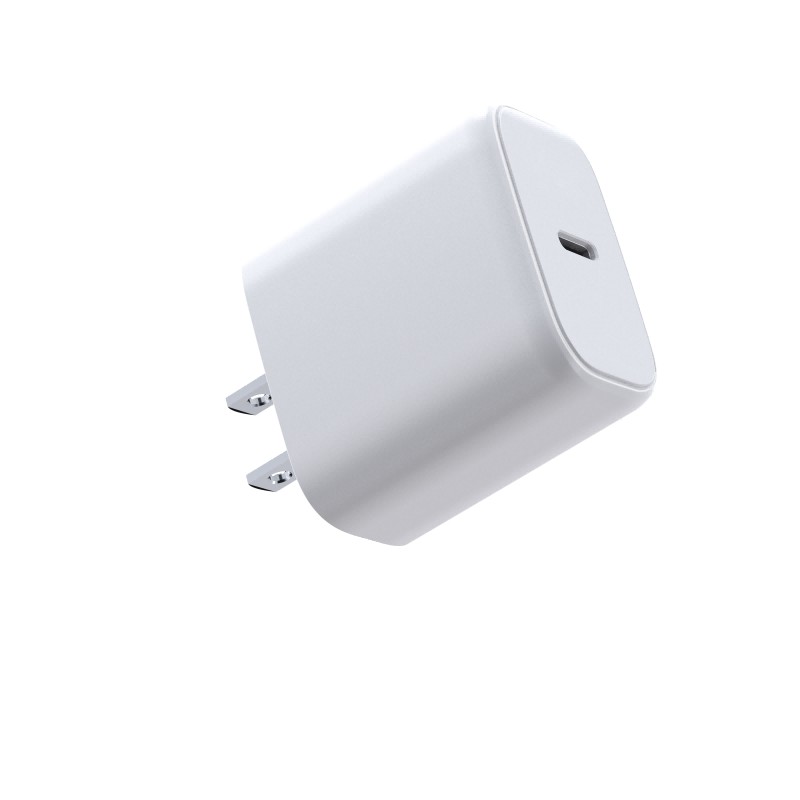
IEC 60601 and medical-device rules belong to the device, not to charger marketing — extra care, as the brief requires
Medical claims on this site need extra care, and this paragraph is written with that in mind. The IEC webstore listing for IEC 60601-1:2005+AMD1:2012+AMD2:2020 CSV (publication 67497, publication date 2020-08-20, Edition 3.2, stability date 2028) describes “requirements concerning basic safety and essential performance that are generally applicable to medical electrical equipment.” For certain types, those requirements are “supplemented or modified by a collateral or particular standard.” The same abstract states: “Where particular standards exist, this standard should not be used alone.” The base listing for IEC 60601-1:2005 remains the 2005 Part 1 publication on the same webstore. Applicability of IEC 60601, including any home-healthcare collateral, is to be verified per device by the device’s responsible person and laboratory. It is not a conclusion that follows from a charger’s marketing page, a category title, or a wattage figure.
A related listing, IEC 60601-1:2026 SER, has a publication date of 2026-07-10 and is titled as a series pack, “Medical electrical equipment – ALL PARTS.” The pack listing opened for this article contains listed CSV parts, including the 2005+AMD1+AMD2 CSV of Part 1 and IEC 60601-1-11:2015+AMD1:2020 CSV. This article treats that 2026 SER listing as a series pack. It does not treat it as a new edition of Part 1, and it does not invent clause numbers from a pack contents list.
Link medical 60601 hubs and existing CPAP / hearing-aid articles; do not repeat their clinical or 60601 clause content
This site already has a medical and healthcare cluster that a buyer should read as the home of programme-level medical-power discussion: the medical power supplies category, the healthcare device charging page, the article on what 60601-1 does and does not mean for medical-grade USB-C chargers, and the existing charging-for-healthcare-devices sourcing guide. Those pages, not this article, own clinical-adjacent programme content and any clause-level discussion they already contain. This article will not repeat that clause content, will not give CPAP or hearing-aid clinical advice, and will not extend those articles into a recommendation that a consumer charger is acceptable on a regulated device.
Do not recommend a consumer charger for a regulated medical device
The decision this article will state once, plainly: this article will not recommend a consumer charger for a regulated medical device. A consumer compact adapter, a desktop multi-port from the desktop and multi-port line, or any other published consumer SKU in the product catalog, may be a legitimate consumer product. That fact does not make it the right power part for a device that is medical electrical equipment in its intended market. If a buyer is tempted to write a consumer SKU onto a medical bill of materials because it is already in the warehouse, the honest next step is to stop and involve the device’s responsible person and a laboratory — not to look for a reassuring sentence here.
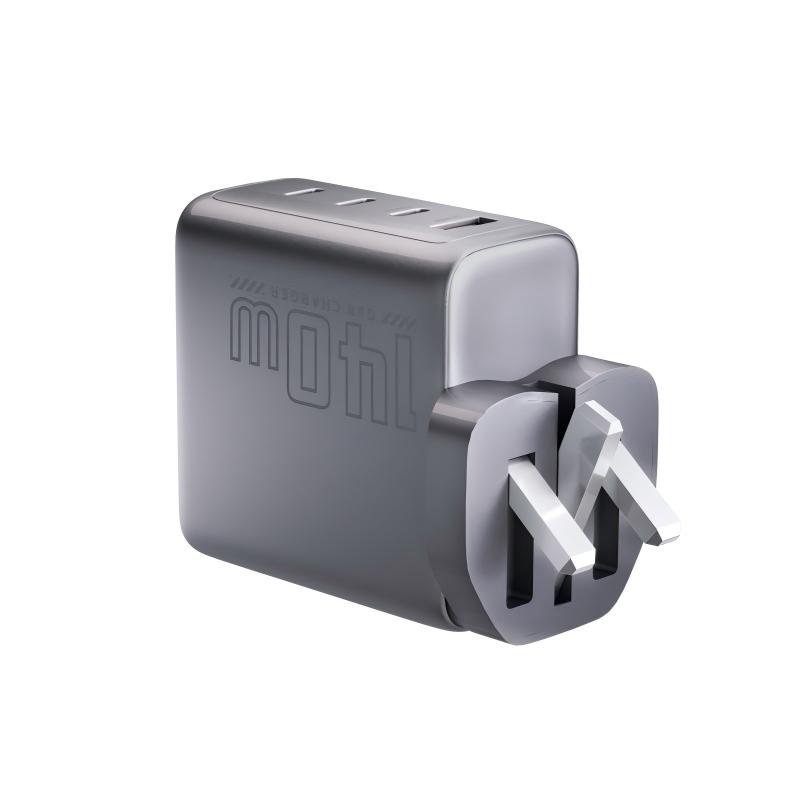
Home-use accessory versus medical-device power: a questions list for the device’s responsible person
The useful work, at the boundary, is a short list of questions the accessory maker’s responsible person can take to counsel and to a laboratory:
- Is this accessory medical electrical equipment in each market where it will be placed, or is it a consumer product that happens to be used in a home?
- If it is medical electrical equipment, which general, collateral and particular standards apply to this device, and does the IEC abstract’s warning — that Part 1 should not be used alone where particular standards exist — apply here?
- Who is the legal manufacturer of the device, and who is the legal manufacturer of the power part if the power part is placed on the market with it?
- Is the charger part of the medical electrical system, a specified accessory, or a consumer product the user might pick up independently — and what evidence does that choice require?
- What evidence will the laboratory accept, and what evidence is still missing?
This article will not answer those questions for a named device. It will not invent 60601 coverage.
Travel and “the same brick I use for my phone” as a risk conversation, not a product opportunity
“I already carry the same brick I use for my phone” is a sentence a traveller says, not a specification a healthcare-accessory buyer should write. When the accessory may be a regulated medical device, treating a consumer travel charger as a drop-in spare is a risk conversation for the device’s responsible person: what happens if the substitute charger is a different model, a different protocol, or a different construction from the one that was evaluated with the device. This article will not turn that conversation into a product opportunity, will not suggest a consumer kit as a medical travel spare, and will not design a “healthcare travel brick” that this factory has not qualified as such.
What a charger factory can and cannot honestly say in this adjacent market
A charger factory can honestly describe a published consumer product as a published consumer product: its current product-page figures, its ordinary product-safety family such as IEC 62368-1:2023, and its USB documentation as cited from USB-IF compliance materials, all as published and all subject to a current page and document check. It can point a buyer at the medical-power pages on this site and at the IEC listings above. It cannot honestly say, from charger marketing alone, that a consumer SKU is acceptable on a regulated medical device, that IEC 60601 applies or does not apply to a named device, or that a category titled “medical” on a website is a certificate. Whether any WECENT SKU is certified to IEC 60601 is a laboratory and documentation question. This article will not state that certification as a fact.
A referral path: when to involve a medical-power specialist (the medical hub, not this article, owns that program)
When the questions list above cannot be closed with “this is an ordinary consumer accessory,” the referral is to the device’s responsible person, to a laboratory that works on the applicable medical-electrical standards, and, on this site, to the medical power supplies hub — which owns the programme-level discussion, not this article. This article is the decision boundary that tells a buyer when to make that referral. It is not itself a medical-power programme, and it does not expand WECENT’s medical scope beyond what current evidence supports.
No clinical advice, no patient-safety slogans, no invented 60601 coverage
This article gives no clinical advice, no patient-use instructions, and no patient-safety slogans. It does not invent 60601 clause coverage, does not treat the 2026 SER pack as a new Part 1, and does not recommend a consumer charger for a regulated medical device. A reader looking for clinical or clause-level content should not look for it here.
A one-page decision aid for a healthcare-accessory buyer
| Question | If the answer points to a consumer accessory | If the answer points to a medical electrical device |
|---|---|---|
| What is the product, in each intended market? | A consumer specification may still be the honest path — confirmed by the maker’s own counsel, not by this article | Stop specifying a consumer charger; involve the device’s responsible person and a laboratory |
| Which standards are claimed? | Ordinary consumer product safety, for example IEC 62368-1 as applicable, cited from current official listings | IEC 60601 and any collateral or particular standard the laboratory names for this device; Part 1 is not used alone where particular standards exist |
| What may a charger factory honestly say? | Published consumer figures, after a product-page check | That it will not recommend a consumer charger for a regulated medical device, and that 60601 applicability is per device |
| Where does the reader go next? | The product catalog and a consumer RFQ | The medical-power hub on this site, and the device’s own regulatory path |
The table is a decision aid. It is not a regulatory opinion, and it is not a certificate.
If you need a sourcing discussion at this boundary, start from the medical power supplies page or the healthcare-devices sourcing guide with a description of the accessory and the markets, and ask for a quote or a sample only for a product family that matches that classification. This is a sourcing request, not clinical advice and not a 60601 claim.
FAQ
What is IEC 60601-1, according to the IEC webstore listing opened for this article?
The listing for IEC 60601-1:2005+AMD1:2012+AMD2:2020 CSV (publication 67497, publication date 2020-08-20, Edition 3.2, stability date 2028) describes requirements concerning basic safety and essential performance that are generally applicable to medical electrical equipment. For certain types of medical electrical equipment, those requirements are supplemented or modified by a collateral or particular standard.
Should IEC 60601-1 be used alone when particular standards exist?
The same IEC abstract states: “Where particular standards exist, this standard should not be used alone.” Applicability is for the device’s responsible person and laboratory to determine for that device. This article will not invent clause-level coverage, and it will not recommend a consumer charger for a regulated medical device.
Is IEC 60601-1:2026 SER a new edition of Part 1?
No. The IEC webstore listing for IEC 60601-1:2026 SER (publication 2603, publication date 2026-07-10) is a series pack titled “Medical electrical equipment – ALL PARTS.” The pack listing contains listed CSV parts, including the 2005+AMD1+AMD2 CSV of Part 1 and IEC 60601-1-11:2015+AMD1:2020 CSV. This article does not treat the 2026 SER pack as a replacement of Part 1.
Can this article recommend a consumer charger for a home-use healthcare accessory?
It can say that a consumer charger must stop being specified when the accessory is, or may be, a regulated medical electrical device. It will not recommend a consumer charger for a regulated medical device, and it gives no clinical advice. The device’s responsible person and a laboratory close that question for the named device.