
Lithium Content Labels and Test Summaries Retail and Carrier Staff Actually Check
A carton is more often turned away because a dock clerk cannot verify a watt-hour mark than because a UN 38.3 PDF is sitting unopened in someone’s email. That is the unintuitive part of lithium intake: the people who stop a shipment are looking at the outer carton, the inner pack and a retrievable summary, not at the test regime. This page is that front-line check, written against current IATA and FAA text, and it will not repeat the document-pack deep-dive.
What warehouse, retail-intake and carrier staff actually look at on a carton
Staff look at marks they can see without a laboratory file: the UN number and lithium mark on the outer carton, a watt-hour figure they can verify, and a way to retrieve the test summary. They are not re-running Subsection 38.3. If those items disagree with each other or the booking, the carton stops.
IATA’s passenger guidance also records that if staff cannot verify a Wh rating, the operator may refuse carriage. That is a passenger-facing sentence, but the same verification instinct shows up at a cargo dock. Design the OEM pack so a non-specialist can complete the check, and keep the deeper classification and SoC map on IATA’s lithium-batteries cargo page, the 2026 Battery Guidance, the passenger guidance page, the passenger PDF, and FAA PackSafe on passengers and batteries.
Lithium marks, Wh figures and the mismatch cases that cause a rejection
Three mismatches cause most rejections. The UN number on the carton does not match the article: a standalone power bank marked UN 3481, when IATA’s current guidance assigns power banks to UN 3480 or UN 3090. The Wh figure on the battery, the carton and the booking do not agree, or only a milliamp-hour headline is present. The lithium handling mark is missing, undersized, or printed as a low-contrast decoration. Any one of those is enough for a clerk to stop the line.
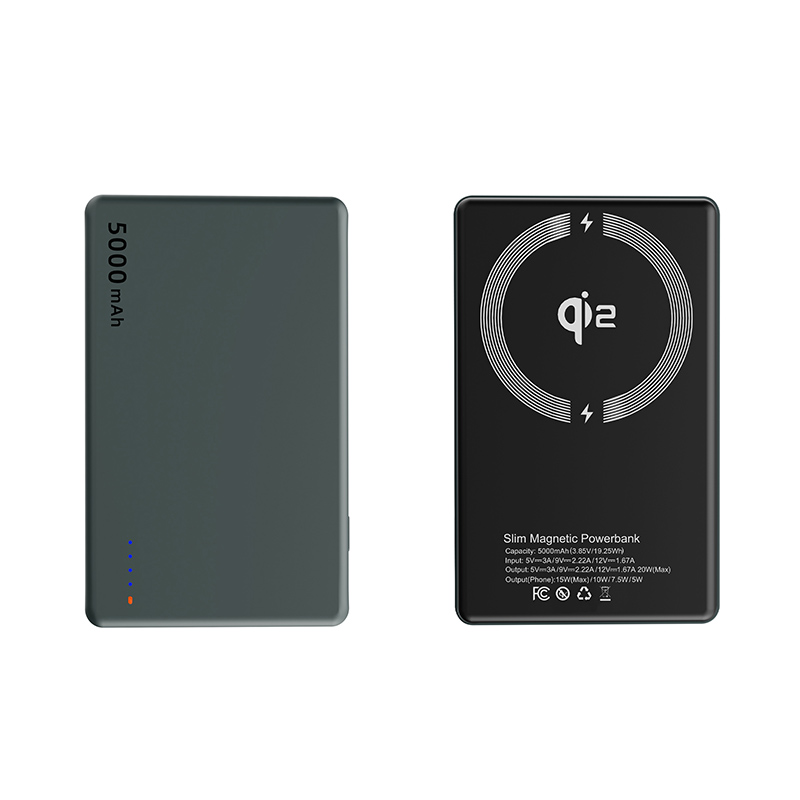
The same gallery photograph is useful as a teaching example: it shows both mAh and a calculated Wh on one housing. It is not evidence that a given production lot was marked, tested or offered for air under that figure. An OEM intake sample should be a unit from the lot, photographed with the carton marks that will actually ship.
Test summaries that should travel with the goods, and those that should stay on file
IATA’s guidance requires a test summary to be made available by the manufacturer and subsequent distributors, and it describes a website or QR as acceptable. That sentence is why a summary “on file at the factory” can be enough if a clerk can actually retrieve it, and why a paper copy in every inner box is not automatically required by that guidance. The practical rule for a buyer is simpler: if intake staff cannot open the summary in a minute, it is not available in the sense that stops a rejection. Put the retrieval path — URL, QR, or a copy in the booking file — on the receiving-dock checklist, and keep the master on file with the program documents, updated after any cell change.
Inner-pack versus outer-carton: two places labels go wrong
Marks go wrong in two different places. The outer carton is what a carrier and a warehouse see first; a missing or incorrect UN mark there stops the pallet. The inner pack or the battery case is what a retail-intake team or a passenger-facing inspector will look at later; a missing Wh on the battery is a different failure, and it is the one IATA’s passenger guidance flags when staff cannot verify the rating. Specifying “put the lithium label on the box” is not a complete instruction. The OEM artwork pack should show, for one SKU, the outer-carton marks, the inner-pack marks, and the battery or housing marks, and should say which official text each of them is answering.
A receiving-dock checklist a non-specialist can use
| Check | What “pass” looks like, in official terms | Typical fail |
|---|---|---|
| UN number on the outer carton | Agrees with the booking and with IATA’s current assignment for that article | UN 3481 on a standalone power bank, unexamined |
| Watt-hours | A figure staff can verify, consistent on battery, carton and file | mAh only, or three different numbers |
| Lithium handling mark | The current official mark, correctly sized and durable | A decorative print, or a mark that has already rubbed off |
| Test-summary access | A URL, QR or file that opens the current summary | “We have it at the factory,” with no retrieval path |
A non-specialist should be able to complete that list in a few minutes, and should have a named person to call when one line fails. The checklist is not a substitute for the DGR; it is how a power-bank program is received without inventing a second set of limits.
How this front-line article complements A036 without repeating the test regime
The document-pack article — UN 38.3, the UN assignment, SoC under PI 965, and the design-change stop — is a desk job for logistics and OEM teams. This page is the intake job: what is visible, what can be retrieved, and what a clerk will reject. The two should not copy each other. Because a companion document-pack URL on this site is not yet live, the official deep map for classification and SoC remains the IATA and FAA pages already cited. Product identity, including Qi2, remains on the published explainer for what a Qi2 certified MagSafe-style power bank is.
Training notes for a 3PL that has not shipped power banks before
A 3PL that has only shipped chargers will treat a power-bank carton as another accessory. It is not. Train three habits: do not assume the UN number already printed is correct; do not charge units “to 100% for a nicer unboxing” before a cargo flight; and do not reprint a mark at the dock without the program owner’s instruction and a record of why the original mark was wrong. Give the 3PL the official IATA cargo and passenger links, and FAA PackSafe, rather than a slide that restates limits from memory. Travel programs that share a warehouse with travel chargers or a travel-charger SKU should still keep a power-bank-specific intake sheet.

When a relabel at the dock is a legal problem, not a packaging inconvenience
Replacing a mark at the dock looks like a packaging fix. It can be a misdeclaration if the new mark changes the UN assignment, hides a damaged original, or is applied to goods already booked and offered under a different description. The honest path is to stop the offer, correct the file and the marks under the program owner’s control, and re-offer the goods against the current official text. A 3PL should not be authorised, in the contract, to invent a UN number or a Wh figure on the floor.
Official marks change — writers must open current UN/IATA guidance
Lithium marks, label specifications and passenger tables are edition-dated. The 2026 IATA guidance and passenger PDF used here, and the FAA PackSafe pages, must be re-opened before a new artwork pack is released. This article will not freeze a mark from memory, and it will not treat a 2026 table as permanent. When an airline or a retailer is stricter than the baseline, print that party’s current rule as a dated exhibit, not as “the IATA rule.”
Photographs: use generic examples, never fabricated WECENT certificates
The photographs on this page are catalog product images of a published L8 SKU. They are not UN 38.3 certificates, not test summaries, and not evidence that WECENT holds a named transport approval. This article will not fabricate a certificate, a Wh file, or a completed UN 38.3 report for WECENT, and it will not present a gallery print of 19.25Wh as a lot-verified transport figure. If you need a certificate, request the actual document for the lot you are buying.
Conclusion
Front-line lithium intake is a visible-mark job and a retrieval job: the correct UN number, a Wh figure staff can verify, a durable official mark, and a test summary that actually opens. It is not a second copy of the test regime, and it is not a licence to invent an 80/20 rule or a dock-side UN number.
If you are preparing a power-bank OEM shipment and want a sourcing discussion, a quotation or a sample plan — not an order — start from WECENT OEM and ODM and say which intake marks you already have artwork for.
FAQ
What are the restrictions on shipping lithium batteries?
Restrictions depend on whether the shipment is cargo or a passenger is carrying a device, and on the current IATA DGR, ICAO Technical Instructions, the airline and the destination authority. For cargo, IATA’s 2026 Lithium Battery Guidance requires UN 38.3 tests and a test summary, classifies standalone power banks as UN 3480 or UN 3090, and, for lithium-ion batteries packed by themselves under Packing Instruction 965, a state of charge not exceeding 30% unless approved under A331, with passenger-aircraft cargo only under A201. For passengers, FAA PackSafe and IATA’s 2026 passenger guidance do not currently read identically on 100–160 Wh power banks. This page will not collapse those official texts into one invented restriction.
What does UN3481 mean on a package?
In IATA’s classification, UN 3481 is the entry for lithium-ion batteries packed with equipment, or lithium-ion batteries contained in equipment. It is not the default entry for a standalone power bank. The same 2026 Battery Guidance states that power banks “designed to primarily provide power to another device” are classified as batteries and “must be assigned to UN 3480, lithium ion batteries, or UN 3090, lithium metal batteries, as applicable.” A carton marked UN 3481 should be checked against that description, not assumed to be correct because the number is familiar.
What is the 80/20 rule with lithium batteries?
The IATA 2026 Lithium Battery Guidance and the 2026 Passengers Travelling with Lithium Batteries PDF, as opened for this article, do not define an “80/20 rule” as a packing instruction. Informal 80/20 shorthand that circulates in freight or retail conversations should not be treated as a substitute for Packing Instruction 965, for the 30% state-of-charge figure those official texts actually use for PI 965, or for the watt-hour limits in the current passenger guidance. If a 3PL or retailer uses “80/20” in its own checklist, ask that party to point to the official clause it is restating, and keep a dated copy.
Can you print your own UN3481 label?
A mark or label offered for air transport has to meet the specification in the current IATA DGR and the UN Model Regulations the DGR implements — size, colour, durability and the correct UN number among them. “Printing it yourself” is not forbidden as a method if the finished mark meets that specification and is applied to the right assignment; it is a problem if the mark is the wrong UN number, the wrong size, not durable, or applied as a dock-side correction to goods already described under a different assignment. IATA classifies a standalone power bank as UN 3480 or UN 3090, not automatically UN 3481. Relabeling at the dock is discussed below as a legal question, not a printing convenience.