
Wireless Charging Pad Manufacturer: The Specification a Brand Should Send
Wireless Charging Pad Manufacturer: The Specification a Brand Should Send
This guide is part of our Travel & Wireless Charging. Read the full topic guide for the decisions that come before and after this step. A wireless charging pad manufacturer can only quote and build what the brand specifies, and four areas decide most of the product: the coil route, the thermal path, foreign object […]
This guide is part of our Travel & Wireless Charging. Read the full topic guide for the decisions that come before and after this step.
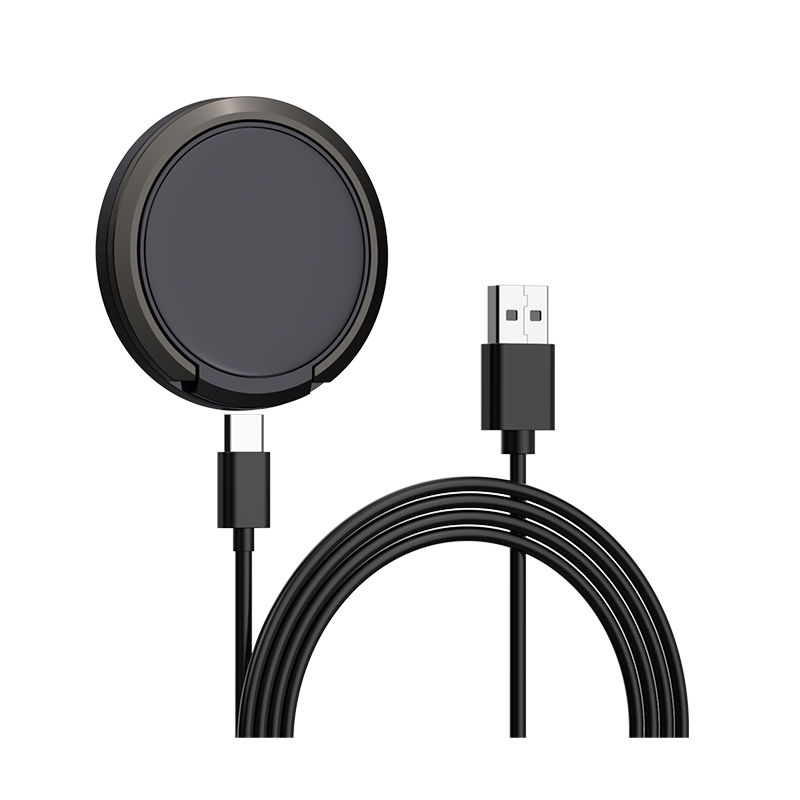
A wireless charging pad manufacturer can only quote and build what the brand specifies, and four areas decide most of the product: the coil route, the thermal path, foreign object detection (FOD) behaviour and the enclosure. Send those in writing, and two factories will quote the same product; leave them open, and you will compare two different pads.
This guide is written for brand buyers, wholesalers and distributors specifying a flat wireless charging pad for OEM or private-label supply. It covers what to specify and what evidence to ask for. It is not a guide to building or costing a production plant.
Choose the coil route first
The coil route decides how the pad behaves when a customer places a phone on it, and it drives cost, thickness and tooling.
| Route | How it behaves | What to specify |
|---|---|---|
| Single coil | Best results when the phone sits on the marked position; output falls off-centre | Usable area, locating mark, behaviour off-centre |
| Multi-coil | Wider usable area; coil selection logic decides which coil drives | Usable area, coil-switching behaviour, idle behaviour |
| Magnetic array | Magnets fix the phone position, giving repeatable alignment | Array type, holding behaviour, compatibility list, relevant certifications |
Specification area 1: coil and power
State the coil route, the target devices and the input adapter the pad will be sold with or recommended for. Ask for the delivered behaviour on your target devices at the marked position and at the edge of the usable area, rather than a single headline figure. Background: wireless charging coil design.
Specification area 2: thermal path
A flat pad has little room to move heat. The coil, the drive stage and the phone’s own battery all warm the same surface. Ask how heat leaves the enclosure, what the pad does when its temperature limit is reached, and whether the result was measured in the final enclosure with a phone in place. See charger thermal design.
Specification area 3: foreign object detection
Coins, keys and metal cards on a pad can heat up. The specification should state how the pad detects foreign objects, what it does when it finds one (stop, reduce, indicate) and how the user is told. Ask for the FOD behaviour to be demonstrated on the sample with common objects. More: wireless charger foreign object detection.
Specification area 4: enclosure and surface
Fix the surface material, the thickness, the anti-slip feature, the indicator light behaviour and the cable entry before tooling. Surface material affects both grip and heat; indicator behaviour affects bedside use. A change after tooling is a new tool, not an adjustment.
Compliance for the United States and Canada
A wireless charging pad intentionally produces a magnetic field, so its US FCC and Canadian ISED file should be confirmed for the exact model, together with electrical safety evaluation by a recognised laboratory for the pad and any bundled adapter. If you intend to use a Qi or Qi2 logo, the product must be certified through the Wireless Power Consortium’s programme. Ask which reports exist for the exact configuration you are buying.
FAQ
Which coil route should a first programme choose?
Single coil is simplest and cheapest; magnetic arrays give repeatable alignment for phones that support them; multi-coil suits pads used by many different phones. Choose by how customers will actually place the phone.
Can we change the surface material after samples?
Yes before tooling, but it should be re-tested, because surface material changes grip and heat. After tooling it usually means a new tool.
What should the FOD specification say?
How the pad detects metal objects, what it does when it detects one and how the user is told. Ask to see it demonstrated on the sample.
Does a wireless pad need FCC and ISED paperwork?
Confirm for the exact model with the lab or factory; wireless charging products generate a field and are assessed under the relevant US and Canadian rules. Keep the reports with the model number.
Next step
Send the coil route, target devices, surface and markets (US, Canada or both) to Wecent Group through the contact page. We reply with the proposed platform, the thermal and FOD behaviour, the enclosure options and the documents available for that model. Related guides: wireless charger assembly line, 3-in-1 wireless charger manufacturer, Qi2 magnetic charger manufacturer and wireless chargers. External references: Wireless Power Consortium: Qi wireless charging, US FCC Part 15 rules (eCFR), ISED Canada interference-causing equipment standards.