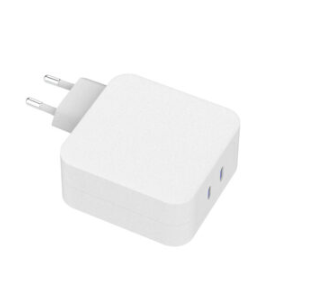
A charger range is easier to sell when the customer can see why the tiers differ, and easier to manage when the differences are real. A ladder built on features that customers do not value produces a range that competes with itself.
This article covers the feature ladders that justify price steps, the cost-to-price maths, and how to test a ladder before committing to a full line.
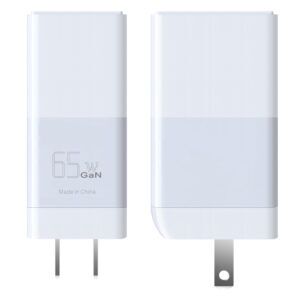
What separates the tiers of a charger range?
Four features justify most price steps: output tier, port count and split behaviour, display or convenience features, and the bundle (cable, pouch, packaging). Each is visible to the customer and verifiable in the specification.
Features that are invisible, such as a better internal component, justify cost but rarely justify a price step on their own.
Feature ladders that justify the price
A workable ladder moves one or two features per step rather than several, so the customer can see the progression. Moving everything at once makes the top tier look like a different product family.
The entry tier still has to meet the target device’s charging requirement, otherwise the ladder starts with a product that generates returns.
Cost-to-price maths: BOM, landed and margin stack
Pricing starts from landed cost, not from FOB, and includes packaging, certification amortisation and the expected return rate. The margin stack then defines the distributor and retail shares.
Building the stack per tier shows which tier carries the range’s profitability and which exists mainly to hold a price point.
Channel pricing: distributor, retail and marketplace
Different channels require different prices, and the relationships between them have to be deliberate: a distributor price that undercuts the retail channel damages the retail relationship.
Marketplace pricing adds a variable cost that is easy to omit from the plan.
MAP and promotion discipline
A minimum advertised price policy protects the ladder in channels where price competition is immediate. The policy needs a monitoring method and a consequence, or it becomes a statement of intent.
Promotions should be planned by tier and by season rather than applied across the range, so that the ladder survives the promotional period.
Checking the ladder for cannibalisation
Two checks are worth running: whether each tier’s specification is distinct enough to justify its price, and whether the step between adjacent tiers is large enough to prevent the lower tier being a substitute.
Where a step is too small, the range effectively has fewer tiers than it appears to.
Testing the ladder with a 200-piece trial
A pilot quantity spread across the tiers shows which price points sell, which is more useful than a forecast. The trial also tests the packaging and the bundle at the same time.
WECENT quotes low MOQ from 200 pcs per model, which allows a brand to run that trial before committing to a full line.
Aligning the ladder with the product programme
The ladder should name the configurations, plug variants and packaging for each tier, so that the pricing decision and the manufacturing plan describe the same product.
WECENT supplies charger programmes across the 20W–240W range through its OEM/ODM programme, with plug variants as configurations of one platform and per-batch records from the quality control gates; the range is listed in the product catalogue.
Programmes in this area are decided by documentation as much as by hardware. The practical discipline is to keep one file per model containing the specification, the test and inspection records and the market documents, and to review it whenever the bill of materials or the production site changes. WECENT produces per-batch inspection records at its quality control gates and provides model-level specifications and certification planning through its OEM/ODM programme, with the platform range listed in the product catalogue.
For pricing architecture, the same file answers most questions that arise during qualification, audit or listing review: which standard applies, which model was tested, and which batch the shipped units came from. Reference documents for the relevant requirements are published by the standards and regulatory bodies, including the official text and the related requirement, with the equivalent market rule and https://www.ista.org/ applying where the product is sold into those markets.
Two further habits keep the file usable over time. The first is to record the review date and the reviewer against each document, so that an outdated report is visible rather than assumed current. The second is to keep the commercial documents – quotation, agreed specification and packaging artwork – in the same folder as the technical evidence, because a question about a shipped unit usually requires both.
A further point concerns the production reality behind the paperwork. Claims that survive scrutiny are the ones a factory can reproduce batch after batch, which means the specification, the test method and the acceptance criteria have to travel together with the order. Where they do not, the same product can be built to two different understandings of the same document.
Finally, buyers should decide in advance what evidence they will need if a question arises later, and request it at the sampling stage rather than after the shipment. Requesting records retrospectively is possible, but it is slower and it removes the opportunity to correct a specification before tooling. WECENT supports programmes with model-level specifications and per-batch inspection records produced at its quality control gates, available under NDA through its OEM/ODM programme, with the platform range listed in its product catalogue catalogue.
Reference standards for this topic
Where a programme needs the primary documents, the relevant references for this topic are published by the standards bodies and regulators: USB-IF: USB Power Delivery, ISTA: transit test protocols.
FAQ
How many tiers should a charger range have?
Three tiers cover most markets: an entry tier that meets the device requirement, a middle tier that covers a second device, and a top tier for laptop-class or multi-device use. More tiers are harder to justify with distinct features.
What features justify a price step?
Output tier, port count and split behaviour, display or convenience features and the bundle. Each should be visible to the customer and verifiable in the specification rather than implied.
Should pricing start from FOB or landed cost?
From landed cost, because packaging, duty, freight, certification amortisation and the expected return rate all contribute. Pricing from FOB hides the lines that decide the margin.
How do I stop tiers competing with each other?
Make each tier’s specification distinct enough to justify its price, and keep the step between adjacent tiers large enough that the lower tier is not a substitute. Small steps reduce the effective tier count.
How can a brand test a pricing ladder cheaply?
By spreading a pilot quantity across the tiers and observing which price points sell, which also tests packaging and the bundle. WECENT quotes from 200 pcs per model, which suits that trial.
Planning a charger range?
Share the target price bands, device mix and volumes, and WECENT will confirm the platform options, packaging and MOQ for a tiered line.
{“@context”:”https://schema.org”,”@type”:”FAQPage”,”mainEntity”:[{“@type”:”Question”,”name”:”How many tiers should a charger range have?”,”acceptedAnswer”:{“@type”:”Answer”,”text”:”Three tiers cover most markets: an entry tier that meets the device requirement, a middle tier that covers a second device, and a top tier for laptop-class or multi-device use. More tiers are harder to justify with distinct features.”}},{“@type”:”Question”,”name”:”What features justify a price step?”,”acceptedAnswer”:{“@type”:”Answer”,”text”:”Output tier, port count and split behaviour, display or convenience features and the bundle. Each should be visible to the customer and verifiable in the specification rather than implied.”}},{“@type”:”Question”,”name”:”Should pricing start from FOB or landed cost?”,”acceptedAnswer”:{“@type”:”Answer”,”text”:”From landed cost, because packaging, duty, freight, certification amortisation and the expected return rate all contribute. Pricing from FOB hides the lines that decide the margin.”}},{“@type”:”Question”,”name”:”How do I stop tiers competing with each other?”,”acceptedAnswer”:{“@type”:”Answer”,”text”:”Make each tier’s specification distinct enough to justify its price, and keep the step between adjacent tiers large enough that the lower tier is not a substitute. Small steps reduce the effective tier count.”}},{“@type”:”Question”,”name”:”How can a brand test a pricing ladder cheaply?”,”acceptedAnswer”:{“@type”:”Answer”,”text”:”By spreading a pilot quantity across the tiers and observing which price points sell, which also tests packaging and the bundle. WECENT quotes from 200 pcs per model, which suits that trial.”}}]}