
Airport charging is judged by whether it works when the concourse is full, which is exactly when the electrical and thermal margins are smallest.
This article covers the integration options, the distribution and duty-cycle questions, and the maintenance access that determines whether a rollout stays functional.
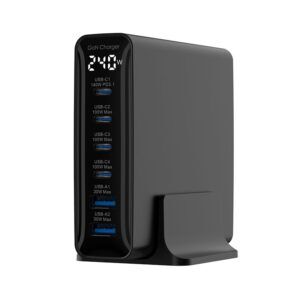
What are the airport charging furniture options?
Three formats dominate: seat-integrated outlets, table-integrated charging and freestanding kiosks. The first suits waiting areas, the second suits work-and-eat zones, and the third suits high-turnover locations.
Each format has a different maintenance path, which is as important as the electrical design.
Seat-integrated versus table-integrated versus kiosks
Seat integration hides the hardware and complicates replacement; table integration offers more surface and easier access; kiosks are the simplest to service but take floor space and can be abused.
Power distribution and circuit planning
A row of charging seats concentrates load on one circuit, and the distribution design decides whether the row can operate at full capability. The practical approach is to define the simultaneous load per row and size the circuit accordingly.
Where circuits are limited, shared-budget charging with a published split map is a design decision rather than a compromise.
Duty cycle and abuse resistance
Airport equipment runs continuously with minimal supervision, so duty cycle and abuse resistance are the two variables that decide service life. Cables and connectors are the first parts to be replaced in any public installation.
Retention and strain relief are the specification lines that reduce that replacement rate.

Cleaning, maintenance access and spare modules
Maintenance in a live concourse is disruptive, so access matters: modules that can be replaced from the front, spare parts held on site and a defined interval for inspecting cables.
Safety and accessibility requirements
Public installations are subject to the venue’s electrical and accessibility requirements. Charging points must be reachable and clearly identifiable, and the installation has to be documented for the venue’s records.
Procurement and phasing
A rollout is usually phased by concourse area, with a pilot zone first. Recording which batch went into which zone makes it possible to compare performance and to plan the next phase on evidence.
Specifying an airport charging installation
Six items define the specification: the format, the simultaneous load per unit or row, the split map, the cable and connector specification, the maintenance access and the spares arrangement.
WECENT builds multi-port and wireless charging platforms within its WEG series, wireless charger range and OEM/ODM programme programmes, with sampling, certification planning and per-batch inspection records from the quality control gates.
Programmes in this area are decided by documentation as much as by hardware. The practical discipline is to keep one file per model containing the specification, the test and inspection records and the market documents, and to review it whenever the bill of materials or the production site changes. WECENT produces per-batch inspection records at its quality control gates and provides model-level specifications and certification planning through its OEM/ODM programme, with the platform range listed in the product catalogue.
For public infrastructure charging, the same file answers most questions that arise during qualification, audit or listing review: which standard applies, which model was tested, and which batch the shipped units came from. Reference documents for the relevant requirements are published by the standards and regulatory bodies, including the official text and the related requirement, with the equivalent market rule and https://eur-lex.europa.eu/eli/reg/2019/1782/oj applying where the product is sold into those markets.
Two further habits keep the file usable over time. The first is to record the review date and the reviewer against each document, so that an outdated report is visible rather than assumed current. The second is to keep the commercial documents – quotation, agreed specification and packaging artwork – in the same folder as the technical evidence, because a question about a shipped unit usually requires both.
A further point concerns the production reality behind the paperwork. Claims that survive scrutiny are the ones a factory can reproduce batch after batch, which means the specification, the test method and the acceptance criteria have to travel together with the order. Where they do not, the same product can be built to two different understandings of the same document.
Finally, buyers should decide in advance what evidence they will need if a question arises later, and request it at the sampling stage rather than after the shipment. Requesting records retrospectively is possible, but it is slower and it removes the opportunity to correct a specification before tooling. WECENT supports programmes with model-level specifications and per-batch inspection records produced at its quality control gates, available under NDA through its OEM/ODM programme, with the platform range listed in its product catalogue catalogue.
Reference standards for this topic
Where a programme needs the primary documents, the relevant references for this topic are published by the standards bodies and regulators: USB-IF: USB Power Delivery, ISTA: transit test protocols.
FAQ
What charging furniture works best in airports?
It depends on the zone: seat-integrated outlets for waiting areas, table-integrated charging for work zones and freestanding kiosks for high-turnover areas. Maintenance access is as important as the format.
How much power does a row of charging seats need?
Define the simultaneous load for the row rather than the sum of every port, then size the circuit accordingly. Where circuits are limited, a shared-budget design with a published split map is a deliberate choice.
What fails first in public charging furniture?
Cables and connectors, because of continuous use and handling. Retention and strain relief specifications, together with a spare-parts arrangement, are what reduce the service load.
How should maintenance be planned?
With front-accessible modules, spare parts held on site and a defined inspection interval for cables, because working in a live public area is disruptive and expensive.
Should an airport rollout be phased?
Yes. A pilot zone followed by phases by area allows performance to be assessed on evidence, and recording batch codes by zone makes later comparisons possible.
Planning a public charging installation?
Share the venue type, zone layout and expected load, and WECENT will confirm the platform, distribution design, documentation and MOQ.
{“@context”:”https://schema.org”,”@type”:”FAQPage”,”mainEntity”:[{“@type”:”Question”,”name”:”What charging furniture works best in airports?”,”acceptedAnswer”:{“@type”:”Answer”,”text”:”It depends on the zone: seat-integrated outlets for waiting areas, table-integrated charging for work zones and freestanding kiosks for high-turnover areas. Maintenance access is as important as the format.”}},{“@type”:”Question”,”name”:”How much power does a row of charging seats need?”,”acceptedAnswer”:{“@type”:”Answer”,”text”:”Define the simultaneous load for the row rather than the sum of every port, then size the circuit accordingly. Where circuits are limited, a shared-budget design with a published split map is a deliberate choice.”}},{“@type”:”Question”,”name”:”What fails first in public charging furniture?”,”acceptedAnswer”:{“@type”:”Answer”,”text”:”Cables and connectors, because of continuous use and handling. Retention and strain relief specifications, together with a spare-parts arrangement, are what reduce the service load.”}},{“@type”:”Question”,”name”:”How should maintenance be planned?”,”acceptedAnswer”:{“@type”:”Answer”,”text”:”With front-accessible modules, spare parts held on site and a defined inspection interval for cables, because working in a live public area is disruptive and expensive.”}},{“@type”:”Question”,”name”:”Should an airport rollout be phased?”,”acceptedAnswer”:{“@type”:”Answer”,”text”:”Yes. A pilot zone followed by phases by area allows performance to be assessed on evidence, and recording batch codes by zone makes later comparisons possible.”}}]}