
Inside a USB-C Charger Factory: SMT, Assembly and Testing on the Floor
Inside a USB-C Charger Factory: SMT, Assembly and Testing on the Floor
Inside a USB-C charger factory: SMT, hand assembly, 100% functional test, aging, outgoing inspection and traceability, and what buyers should check at each stage.
Last updated:
This guide is part of our Charger Quality & Inspection. Read the full topic guide for the decisions that come before and after this step.
Inside a USB-C charger factory, every unit passes through the same chain: SMT board assembly, hand assembly and enclosure fit, 100% functional test, aging under load, outgoing inspection and packing, all linked by a traceability record. Each stage can create a defect that only shows up in the field, so each stage needs its own check.
This page is the factory-floor view of how USB-C chargers are built and tested. If you are deciding which manufacturer to work with, read how to evaluate a USB-C charger manufacturer first. Process parameters vary by product and are not given here.
The USB-C charger production chain in order
| Stage | What happens | What a buyer should check |
|---|---|---|
| SMT | Solder paste, component placement and reflow on the main board | Paste and placement inspection, first-article approval |
| Insertion and hand assembly | Larger parts, transformer, connectors, enclosure fit | Work instructions, ESD control, connector seating |
| Functional test | Output, protocol negotiation, protections | Whether every unit is tested and recorded |
| Aging | Units run under load for a defined period | Load and duration in the plan |
| Outgoing inspection and packing | Appearance, labels, accessories, sampling | Inspection plan and batch report |
| Traceability | Carton linked to date, tests and component lots | Example record from a recent batch |
SMT: where the electrical foundation is set
Solder paste printing, component placement and reflow determine the reliability of the board. Ask how paste and placement are inspected, how a first article is approved after changeover and how reels are verified against the bill of materials.
Hand assembly and mechanical fit
Through-hole parts, the transformer, the USB-C connector and the enclosure are assembled here. Connector seating and solder quality matter because the port carries power through repeated insertions. Ask for the work instructions and how ultrasonic welding or snap-fit closure is checked.
Functional test: every unit
A USB-C charger should be tested on every unit for output and for the negotiated USB PD profiles, and on multi-port models for the power-sharing rule. Protection functions are typically checked as part of the test plan. Ask whether results are recorded per unit.
Aging under load
Aging, or burn-in, runs units under load to screen early failures. The load and duration are defined in the quality plan; ask what they are for your model and how failures are analysed.
Outgoing inspection and packing
Outgoing inspection samples finished goods for appearance, labelling, accessories and function according to an agreed plan. Safety-related and functional checks remain on every unit; appearance can be sampled. See how to read an AQL batch report.
Traceability: from carton to component lot
A carton label should lead to the production date, the test records and the component lots used. That link is what turns a field complaint into a contained, targeted response.
What to see on a factory walkthrough
- SMT inspection and first-article records.
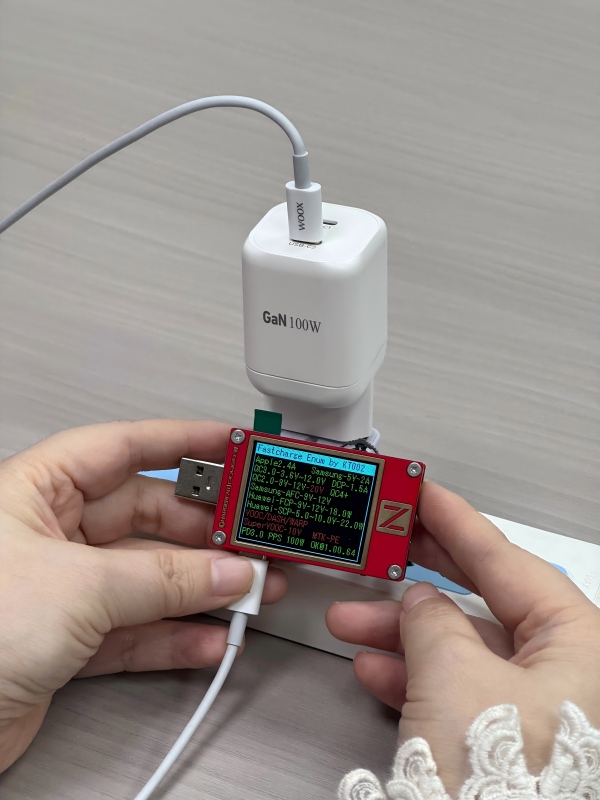
- The functional test station negotiating USB PD profiles.
- Aging racks with the load and duration posted.
- A batch record traced back to component lots.
- How component substitutions are approved.
FAQ
Is every USB-C charger functionally tested?
It should be. Functional and safety-related checks belong on every unit; appearance and packaging checks can be sampled.
What is the difference between this page and the manufacturer guide?
This page shows how the product is built and tested on the floor. The USB-C charger manufacturer guide covers how to evaluate and choose the manufacturer.
Can we audit the line remotely?
Yes, by video walkthrough of the stations listed above with records shown on screen. See charger factory audit checklist.
What happens when a component is substituted?
It should go through change approval, with re-test where it affects performance or safety, and be notified to the buyer.
Next step
Send your model, port layout and inspection requirements to Wecent Group through the contact page. We reply with the production and test plan for your model and the records you will receive with each batch. Related guides: USB-C charger manufacturer, inside our charger factory, charger inspection gates and charger quality control. External references: USB-IF: USB Charger (USB Power Delivery), USB-IF compliance program.