
USB-C Charger Manufacturer: How to Evaluate a USB PD Charger Factory
USB-C Charger Manufacturer: How to Evaluate a USB PD Charger Factory
A USB-C charger manufacturer is worth shortlisting when it can show, per model, the tested USB PD profile table, the power-sharing rule between ports, the cable it ships with, and the thermal result in the shipping enclosure. Brand buyers should evaluate a USB-C PD charger factory on that evidence, not on the wattage printed on […]
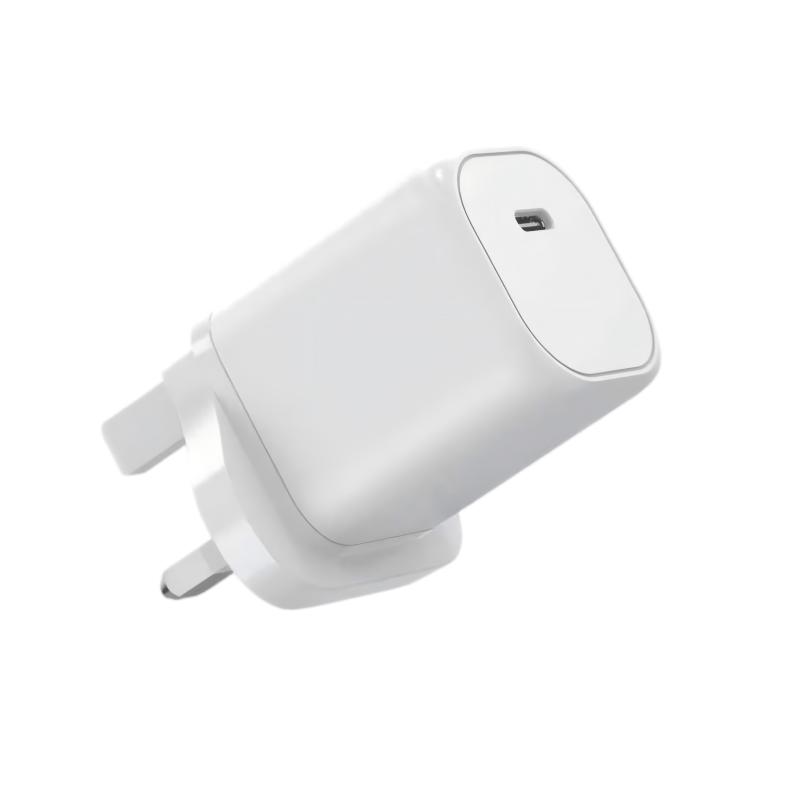
A USB-C charger manufacturer is worth shortlisting when it can show, per model, the tested USB PD profile table, the power-sharing rule between ports, the cable it ships with, and the thermal result in the shipping enclosure. Brand buyers should evaluate a USB-C PD charger factory on that evidence, not on the wattage printed on the box.
This guide is written for wholesalers, distributors and brand owners choosing an OEM or ODM partner for USB-C and USB PD chargers. It covers what to ask, what good evidence looks like and where programmes usually go wrong. It is about selecting a manufacturer, not about building or costing a factory of your own.
What a USB-C charger manufacturer actually does for a brand
A USB-C PD charger is a small power supply with a negotiation controller, and most of what the customer experiences is decided by engineering choices the factory makes: which profiles the controller offers, how a multi-port model splits its total, how heat leaves the enclosure, and how firmware is controlled between orders.
A manufacturer that owns those decisions can explain them in writing. A supplier that cannot is usually reselling a platform it does not control, which is a sourcing risk rather than a price advantage. For the floor-level view of how the same products are built, see inside a USB-C charger factory: SMT, assembly and testing.
Check 1: the USB PD profile table and fallback behaviour
Ask for the tested profile table per model rather than a list of protocol names.
The table should state the fixed PD voltages offered, whether programmable (PPS) steps are supported, any proprietary fast-charge protocols, and what the charger does when a device requests something it does not offer. Fallback behaviour is what customers experience as slow charging, so it belongs in the specification, not in support tickets. For the extended power range, see what a USB PD 3.1 charger is.
Check 2: the power-sharing rule on multi-port models
Two chargers with the same total rating can behave very differently when a second device is plugged in. One holds the main port and reduces the second, another splits evenly, a third renegotiates both ports.
Ask for the rule in writing, with the port combinations your customers will actually use, and confirm it on the sample with real devices. Where the rule is not stated, any packaging claim about simultaneous charging is a guess. More detail: charger power sharing.
Check 3: the cable and connector
The cable is part of the power path. If a cable ships in the box, its rating and any identification the higher power levels require belong in the specification, the compliance file and the packaging claim. If no cable ships, the required rating should be printed so the customer can match it. A charger paired with an under-rated cable will be blamed for the cable’s limit.
Check 4: thermal result and derating
The number that matters is the output the product holds during a long session, not the peak it reaches in the first minutes.
Ask for the temperature-rise result at full load in the shipping enclosure, at a stated ambient, and for a description of how and when the design reduces output. Reducing output under heat is normal behaviour; leaving it undocumented is the problem. See charger derating curves and charger thermal design.
Check 5: production test and firmware control
A test that only confirms an output voltage is not enough for a USB-C PD product. Ask how the line verifies the negotiated profiles and, on multi-port models, the sharing rule; whether results are recorded per unit or per batch; and how the firmware version is fixed and recorded per order. A firmware change between orders is a product change even when the hardware is identical.
Check 6: paperwork for the United States and Canada
For North American programmes, ask which test reports already exist for the exact model and port layout being quoted, and who holds them. Typical files cover electrical safety evaluation by a recognised laboratory, US FCC equipment rules and Canada’s ISED interference-causing equipment standards, plus labelling. Confirm the current status per model rather than relying on a general statement of relevant certifications, and ask what a change to the port layout or the bundled cable would require.
| What to evaluate | What good evidence looks like | Warning sign |
|---|---|---|
| USB PD profiles | A tested profile table per model, including fallback | A list of protocol logos only |
| Power sharing | A written rule for each port combination | “Smart allocation” with no table |
| Cable | Rating and identification stated in the spec | Cable treated as packaging |
| Thermal | Full-load result in the shipping enclosure at a stated ambient | Open-frame or bench-only results |
| Production test | Profile and sharing checks recorded per unit or batch | Output-voltage check only |
| Firmware | Version recorded per order, changes notified | No version control |
| US / Canada file | Reports naming the exact model and layout | “Certificates available” with no model match |
Manufacturer or trading company?
A trading company can be a reasonable partner, but it should say so. The quickest test is whether the supplier can answer checks 1 to 5 from its own engineering records and show the line that builds the product. If you want a structured approach, read factory vs trading company for chargers and PD charger manufacturer: the decisions that set your quotation.
FAQ
Is the wattage on the box enough to compare two USB-C chargers?
No. Wattage is the starting point. The negotiated profile, the port split, the cable and the held output under heat decide what the customer experiences, and those come from the manufacturer’s engineering choices.
If the sample charges our laptop, is the design proven?
It proves the port works. It does not prove the negotiated rate matches the target, that the rate holds with a second device connected, or that it survives a long session. Each is a separate check.
Does firmware matter when we are only buying?
Yes, from the second order onwards. A firmware revision can change the profile table and the sharing rule without any hardware change, so record the version in each purchase order and ask for change notification.
Can one cable specification cover a whole range?
Often, where the rating is adequate for the highest-power model. Higher-power models usually need a higher-rated cable, so state the rating per model on the packing list.
Next step
Send your device list, port layout and target markets (US, Canada or both) to Wecent Group through the contact page. We reply with the proposed platform, the tested profile table, the power-sharing rule, the cable specification and the documents available for that model. Related guides: USB-C charger factory floor, PD charger manufacturer, charger quality control and OEM and ODM manufacturing. External references: USB-IF: USB Charger (USB Power Delivery), US FCC Part 15 rules (eCFR), ISED Canada interference-causing equipment standards.