
What Is a USB PD 3.1 Charger? A Buyer’s Guide to the Extended Power Range
What Is a USB PD 3.1 Charger? A Buyer's Guide to the Extended Power Range
A USB PD 3.1 charger is a USB-C charger built to Revision 3.1 of the USB Power Delivery specification from the USB Implementers Forum (USB-IF). Its headline change is the Extended Power Range (EPR), which lets a compatible charger, cable and device negotiate more power than the earlier Standard Power Range allowed. For a buyer, […]
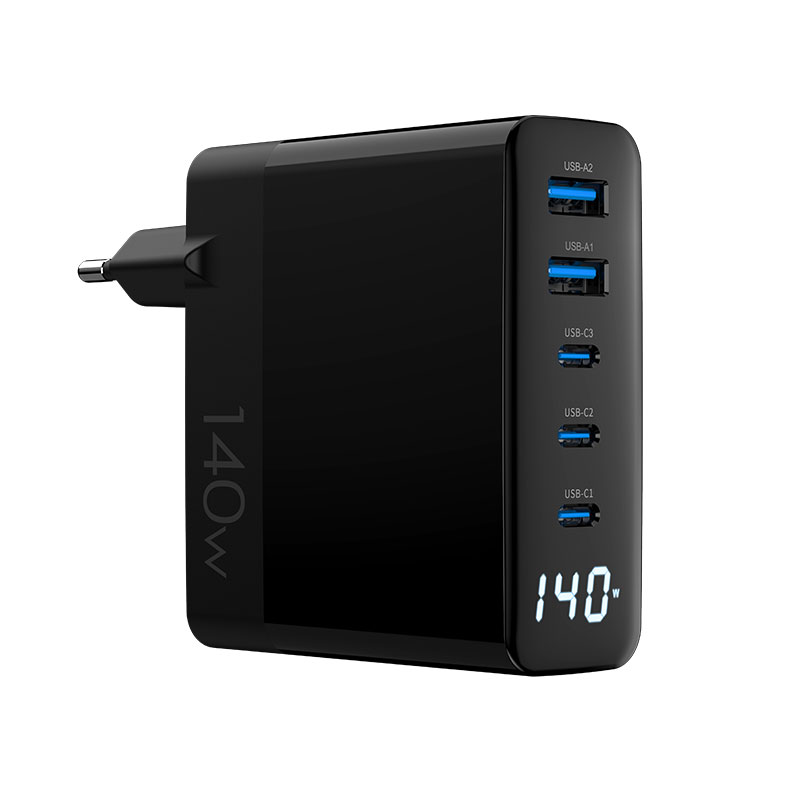
A USB PD 3.1 charger is a USB-C charger built to Revision 3.1 of the USB Power Delivery specification from the USB Implementers Forum (USB-IF). Its headline change is the Extended Power Range (EPR), which lets a compatible charger, cable and device negotiate more power than the earlier Standard Power Range allowed.
For a buyer, that means a USB PD 3.1 charger is not just a bigger number on the label: the cable, the connector, the thermal design and the compliance file all change with it. This page explains what the label means and how it differs at a buying level. If you need the detailed verification list for an extended-range claim, go to USB PD 3.1 EPR requirements.
What USB PD 3.1 adds, in USB-IF’s own words
According to USB-IF, USB PD Revision 3.1 was announced in 2021 to enable delivering up to 240W over a full-featured USB Type-C cable and connector; before that update USB PD was limited to 100W, based on 20V and Type-C cables rated at 5A. The update adds higher fixed voltages for the extended range and an adjustable voltage supply mode, and the USB Type-C specification was updated to define the cable requirements for the higher power. Source: USB-IF, USB Charger (USB Power Delivery).
Those are the ceilings the specification allows, not what a given product delivers. What a specific charger offers is set by the manufacturer’s design and should appear in its profile table.
USB PD 3.1 charger vs an earlier USB PD charger: the buyer-level difference
| Question | Earlier USB PD (standard range) | USB PD 3.1 charger using EPR |
|---|---|---|
| What sets the top output | Standard power range profiles | Extended range profiles, only when charger, cable and device all support them |
| Cable | A cable rated for the current offered | A cable that meets the Type-C requirements for extended power and identifies itself correctly |
| Thermal design | Sized for the standard range | Sized for sustained higher power; derating behaviour must be documented |
| Who benefits | Phones, tablets, most laptops | Higher-power laptops and devices that request the extended range |
| Risk for the brand | Fallback behaviour | A claim that only holds with a specific cable or device |
What it changes in the construction
Higher voltage inside a compact enclosure raises the stakes on spacing, insulation, connector rating and heat. A platform that was characterised for the standard range is not automatically ready for the extended range; the construction, the thermal path and the protection behaviour have to be confirmed for the higher operating point. Ask the factory which parts of the design are new for EPR and which carry over.
What it changes commercially
An extended-range model usually means a more demanding cable, more test work and a narrower set of devices that actually use the top profile. Before committing a range to USB PD 3.1, check how many devices in your channel request extended power. For many phone- and tablet-focused ranges, a well-specified standard-range charger is the better commercial choice; EPR earns its place where higher-power laptops are the target.
Who should stock a USB PD 3.1 charger
- Brands and distributors selling into channels with higher-power laptops that request extended power.
- Programmes that can ship and specify a matching cable, rather than leaving the cable to the customer.
- Buyers prepared to hold the thermal and derating evidence on file and to state honestly when the top output applies.
For a standard-range programme, USB PD PPS: how to specify it in an RFQ and how to evaluate a USB-C charger manufacturer are the better next reads.
FAQ
Is USB PD 3.1 the same as USB 3.1?
No. USB 3.1 is a data-transfer specification. USB PD 3.1 is a revision of the USB Power Delivery specification and concerns power negotiation. A charger can support USB PD 3.1 without having anything to do with USB 3.1 data rates.
Does every USB PD 3.1 charger use the extended range?
No. A product can implement the 3.1 revision and still offer only standard-range profiles. Check the profile table, not the revision number on the box.
Will a USB PD 3.1 charger work with older devices?
USB PD is designed so that charger and device negotiate a profile both support, so older USB PD devices normally negotiate a standard-range profile. Confirm behaviour with the devices in your channel during sample testing.
What should the packaging say?
State what the customer will get and under what condition, for example which cable is required for the top output. Avoid a single headline figure that only applies to one device and one cable.
Next step
Send the target devices, cable plan and markets (US, Canada or both) to Wecent Group through the contact page. We reply with whether a standard-range or extended-range platform fits, the profile table, the cable specification and the thermal evidence available. Related guides: USB PD 3.1 EPR requirements, GaN charger technology, e-marker cables and charger quality control. External references: USB-IF: USB Charger (USB Power Delivery), USB-IF compliance program.