
USB PD 3.1 EPR Requirements: What a Charger Programme Must Verify
USB PD 3.1 EPR Requirements: What a Charger Programme Must Verify
USB PD 3.1 EPR (Extended Power Range) requirements, at programme level, come down to five items: a construction rated for the higher voltages, a cable that meets the Type-C requirements for extended power, connectors rated accordingly, thermal evidence at the top of the range, and a test plan that covers the extended profiles. Verify all […]
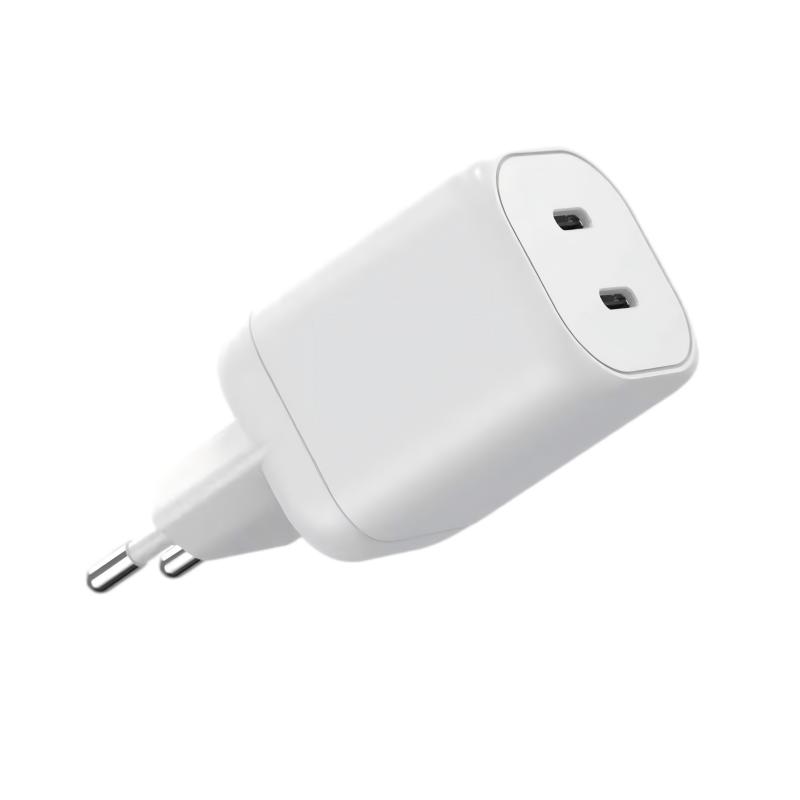
USB PD 3.1 EPR (Extended Power Range) requirements, at programme level, come down to five items: a construction rated for the higher voltages, a cable that meets the Type-C requirements for extended power, connectors rated accordingly, thermal evidence at the top of the range, and a test plan that covers the extended profiles. Verify all five before you build.
This page is the verification checklist. If you need the basics of what a USB PD 3.1 charger is and when to stock one, read what is a USB PD 3.1 charger first.
What EPR is, briefly
USB-IF describes USB PD Revision 3.1 as enabling up to 240W over a full-featured USB Type-C cable and connector, with new higher fixed voltages and an adjustable voltage mode, and an updated Type-C specification that defines the cable requirements for that power. Source: USB-IF, USB Charger (USB Power Delivery). Those are specification limits; a given product offers what its profile table says.
Requirement 1: a construction rated for the extended range
Higher voltage changes insulation, spacing and component ratings inside the charger. Ask the factory which parts of the design were changed or re-qualified for EPR, and whether the safety evaluation covers the extended operating point, not only the standard range.
Requirement 2: the right cable
Extended power needs a cable built and identified for it. If a cable ships in the box, it is part of the claim; if not, the packaging must state what cable is required for the top output. An under-rated cable will limit the charger to the standard range. See e-marker cables.
Requirement 3: connector rating
The output connector, its mounting and its solder joints carry the higher power for long sessions. Ask for the connector specification and whether it was assessed at the extended operating point in the final enclosure.
Requirement 4: thermal evidence at the top of the range
Ask for temperature-rise results at the highest extended profile, in the shipping enclosure, at a stated ambient, and for the derating behaviour above that point. See charger derating and charger thermal design.
Requirement 5: a test plan that covers the extended profiles
Production and sample testing should negotiate the extended profiles with a suitable load or device, not only check standard-range outputs. If you plan to use USB-IF logos, compliance testing and the USB-IF licensing requirements apply; check the USB-IF compliance program rather than relying on a supplier’s statement.
| Requirement | Evidence to ask for | Common gap |
|---|---|---|
| Construction | Which parts were re-qualified for EPR; safety scope | Safety file covers standard range only |
| Cable | Cable specification and identification | Cable left to the customer with no stated requirement |
| Connector | Connector rating and assessment in enclosure | Connector carried over unchanged |
| Thermal | Results at the top extended profile | Results only at standard-range load |
| Test plan | Extended profiles negotiated in test | Output-voltage check only |
FAQ
Is EPR the same as USB PD 3.1?
EPR is part of USB PD 3.1. A product can implement the 3.1 revision without offering extended-range profiles, so check the profile table.
Can an existing standard-range platform be upgraded to EPR?
Sometimes, but construction, connector, thermal path and test plan all need to be re-confirmed. Treat it as a design change, not a firmware update.
What does the US and Canadian paperwork need to cover?
The safety and equipment-authorisation files should name the exact model and its configuration, including the extended operating point. Confirm with the lab for the specific product.
Who should ship the cable?
Preferably the brand, so the claim and the cable match. If not, state the required cable clearly on the packaging.
Next step
Send the target devices, the intended top profile and the cable plan to Wecent Group through the contact page. We reply with the EPR evidence available for the platform: construction scope, cable specification, connector rating, thermal results and test plan. Related guides: USB PD 3.1 charger, USB PD PPS, USB PD certification tests and reports and GaN charger applications. External references: USB-IF: USB Charger (USB Power Delivery), USB-IF compliance program.