
Exclusivity is often requested in the first conversation and signed in the second, before either party has defined what it covers. That is why the clauses that cause trouble are usually the ones nobody drafted.
This article sets out the terms worth settling, and the information each party needs to make them workable.
What should exclusivity be tied to?
Four variables define an exclusive arrangement: territory, channel, product scope and duration. An agreement that specifies fewer than four leaves the remainder to interpretation.
The product scope is the one most often omitted, which is how a distributor claims exclusivity over products neither party discussed.
Territory, channel and product definitions
Territory is geographic, channel is the route to market, and product scope is the configuration list. Defining all three in the same schedule keeps the agreement operable when the range changes.
Online sales need an explicit statement, because they cross territories by default.
Minimum purchase commitments and review cycles
A minimum volume with a review point converts exclusivity into a managed arrangement. Expressing the minimum per product tier prevents the total being met while the tiers the brand needs distributed are neglected.
The review cycle should be short enough to act on and long enough to measure, typically annual with a mid-year check.
Price protection and currency clauses
Where prices are agreed in one currency and costs are incurred in another, a currency clause defines what happens when the rate moves. Price protection clauses define the period for which an agreed price holds.
Both are ordinary commercial terms, and both are frequently absent from first drafts.

Termination, run-off stock and post-term sales
Termination terms should cover notice, run-off stock, outstanding warranty obligations and post-term sales. Without them, ending an arrangement becomes a negotiation about stock rather than about the business.
The run-off provision is what protects the distributor’s inventory and the brand’s pricing discipline at the same time.
Dispute resolution and governing law
A dispute clause names the forum and the law, which matters more in cross-border arrangements than in domestic ones. Choosing it in advance is cheaper than negotiating it during a disagreement.
The clause should also define how technical disputes, such as a quality claim, are escalated separately from commercial ones.
Checklist before signing
Confirm the four exclusivity variables, the volume commitment per tier, the review cycle, the currency and price protection terms, the termination and run-off provisions and the dispute route.
Where several markets are involved, extending the same structure to each market rather than negotiating separately keeps the arrangement consistent.
Keeping the commercial terms aligned with the product programme
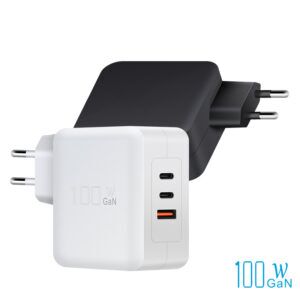
The agreement should name the product tiers, plug configurations and packaging variants covered, so that capacity planning and artwork follow the channel plan.
WECENT supplies charger programmes through its OEM/ODM programme, with plug variants as configurations of one platform and per-batch records from the quality control gates; the range is listed in the product catalogue.
Exclusive distribution agreement for chargers: the pre-signature checklist
An exclusive distribution agreement for chargers should name the territory, channel, product scope and duration, the minimum volume per tier, the currency and price protection terms, the termination and run-off provisions and the dispute route.
Reference standards for this topic
Where a programme needs the primary documents, the relevant references for this topic are published by the standards bodies and regulators: USB-IF: USB Power Delivery, ISTA: transit test protocols, Regulation (EU) 2019/1782, 10 CFR Part 430, 47 CFR Part 15.
FAQ
What should an exclusive distribution agreement cover?
Territory, channel, product scope and duration, plus a minimum volume with a review point, currency and price protection terms, termination and run-off provisions and a dispute route.
How long should exclusivity last?
Long enough for the distributor to build the market and short enough to review meaningfully, typically an annual term with a mid-year check tied to the volume commitment.
Should the volume commitment be a single number?
It is more workable per product tier, because a total can be met while the tiers the brand needs distributed are neglected. The tier structure also aligns with the forecast used for capacity planning.
What is a run-off clause?
It defines what happens to stock held at termination, including the period during which it may still be sold. It protects the distributor’s inventory and the brand’s pricing discipline simultaneously.
How are quality disputes handled under such an agreement?
Separately from commercial disputes, with a defined escalation path that references the batch records and failure analysis process rather than the commercial terms.
Structuring a distribution arrangement?
Share the target markets, product tiers and volumes, and WECENT will confirm the configurations, forecast support and documentation available for the programme.
{“@context”:”https://schema.org”,”@type”:”FAQPage”,”mainEntity”:[{“@type”:”Question”,”name”:”What should an exclusive distribution agreement cover?”,”acceptedAnswer”:{“@type”:”Answer”,”text”:”Territory, channel, product scope and duration, plus a minimum volume with a review point, currency and price protection terms, termination and run-off provisions and a dispute route.”}},{“@type”:”Question”,”name”:”How long should exclusivity last?”,”acceptedAnswer”:{“@type”:”Answer”,”text”:”Long enough for the distributor to build the market and short enough to review meaningfully, typically an annual term with a mid-year check tied to the volume commitment.”}},{“@type”:”Question”,”name”:”Should the volume commitment be a single number?”,”acceptedAnswer”:{“@type”:”Answer”,”text”:”It is more workable per product tier, because a total can be met while the tiers the brand needs distributed are neglected. The tier structure also aligns with the forecast used for capacity planning.”}},{“@type”:”Question”,”name”:”What is a run-off clause?”,”acceptedAnswer”:{“@type”:”Answer”,”text”:”It defines what happens to stock held at termination, including the period during which it may still be sold. It protects the distributor’s inventory and the brand’s pricing discipline simultaneously.”}},{“@type”:”Question”,”name”:”How are quality disputes handled under such an agreement?”,”acceptedAnswer”:{“@type”:”Answer”,”text”:”Separately from commercial disputes, with a defined escalation path that references the batch records and failure analysis process rather than the commercial terms.”}}]}
