
Why does a foldable wireless charger tilt and lose alignment?
Talk · Troubleshooting · Wireless & magnetic faults
Why does a foldable wireless charger tilt and lose alignment?
A foldable charger has hinges and lightweight parts that can flex, so a phone can shift and move off the coil.
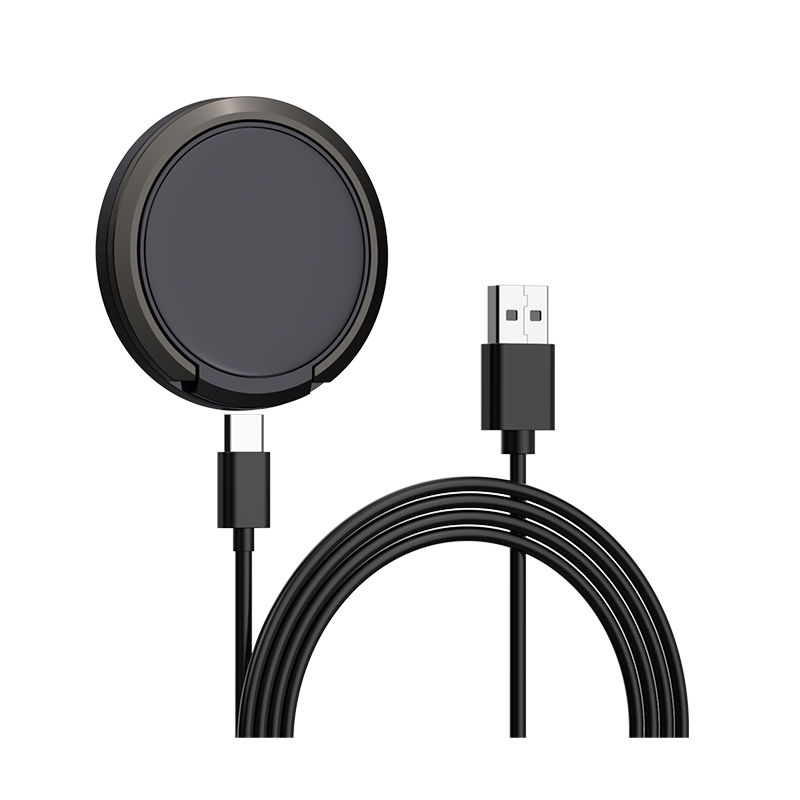
My foldable wireless charger lets the phone tilt, and charging keeps dropping out. Why does this happen, and how should designers prevent it?
Short answer: A foldable charger has hinges and lightweight parts that can flex, so a phone can shift and move off the coil. Causes include hinge play, an uneven surface, a heavy phone or case, a slippery pad and a stand angle that lets the phone slide. Better hinges, grip surfaces, a wider charging area and a lower centre of gravity keep it steady.
What happens
Wireless charging works best when the phone’s coil lines up with the charger’s coil. If the phone slides or tilts, even a few millimetres, the charging rate drops or stops. Foldable chargers are made compact, so they are more likely to flex and move.
Common causes
- Hinge play. Loose or worn hinges let the surface tilt.
- Light base. The charger moves or tips when the phone is placed on it.
- Uneven surface. A table that is not flat rocks the charger.
- Slippery pad. Smooth plastic lets the phone slide.
- Heavy phone or thick case. More weight and larger overhang increase tilt.
- Steep angle. Stands at steep angles need more grip or a lip.
- Small coil area. Little tolerance for movement.
User tips
- Use the charger on a flat, stable surface.
- Unfold it fully and check that it clicks into place.
- Place the phone in the centre and see whether the charging symbol appears.
- Remove thick cases that increase tilt.
- Do not touch or knock the phone during charging.
Design improvements
- Stronger, tighter hinges with stops at set angles.
- A heavier or wider base, and non-slip feet.
- A grip surface or a ledge for the phone.
- A larger coil area or multiple coils for more tolerance.
- A clear mark showing where to place the phone.
Testing
Test with several phones and cases, on a table that you tap lightly, and over many fold cycles. Note when alignment is lost and measure the amount of tilt.
Quick summary
Stable hinges, grip and a forgiving coil design keep a foldable charger working.
Everyday check
Tap the table lightly with a phone on the charger. If the charging symbol disappears, the design is too sensitive. A good foldable charger should recover on its own after a small knock, and should not need you to reposition the phone again and again.
Questions for the supplier
Ask how many fold cycles the hinge has passed, how the angle is held, what the coil tolerance is and which phones were used in tests. Written answers help you compare different foldable designs on a fair basis before you place an order.
Where this answer says to confirm with Wecent, the detail is not published on the product page and has to come from the datasheet or the factory. General facts come from the regulators, standards bodies or device makers named in the text.
Three more perspectives
Products discussed in this thread
Related articles & topics
Have a sourcing question about your own programme?