
What should users expect from fast charging after 80%?
Talk · Use · Everyday home & office use
What should users expect from fast charging after 80%?
Fast charging is fastest at low battery levels. Above roughly 50–80%, the phone reduces current to protect the battery, so the last part takes noticeably longer. That's normal and the same with any charger.
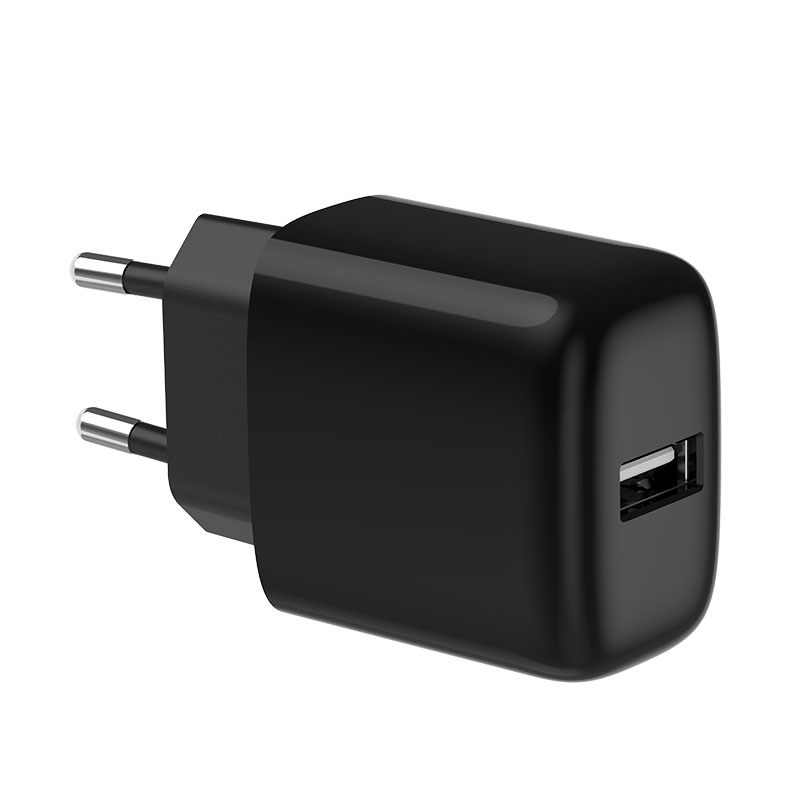
Customers say our fast charger takes a phone to 50% in about half an hour but then ‘slows down a lot’. How do we explain this?
Short answer: Phone batteries charge fastest when they’re low. As the battery fills, the phone reduces the current to limit stress on the battery and control heat. Above about 80% the final part is a slow top-up phase. Phone makers often quote figures like ‘up to 50% in about 30 minutes’ for this reason. Optimised charging may also pause near 80%. It’s normal and doesn’t mean the charger has a problem.
The charging curve
Lithium-ion charging typically has two phases. First, the phone draws high current, and the battery charge rises quickly. As the battery voltage approaches its maximum, the phone holds the voltage steady and lets the current taper off. That second phase, often from around 70–80%, takes longer per percent.
Why phones do this
- To protect the battery from stress near full charge.
- To manage heat, which builds up during fast charging.
- To preserve long-term battery capacity.
Typical expectations
Phone makers often state fast-charge times as “up to 50% in around 30 minutes” with a specified charger. The remaining 50% takes longer. A 20W charger on an iPhone, for example, gives fast early charging and a gradual finish.
Other factors
- Heat: a warm phone charges slower.
- Use while charging: gaming or video uses power and slows charging.
- Optimised charging: may hold at 80% overnight.
- Cable and port: a weak cable or shared port limits early charging speed too.
What a bigger charger changes
A higher-wattage charger can speed up the early phase if the phone supports more power, but it doesn’t change the slow top-up. Each phone has its own maximum; extra charger capacity beyond it isn’t used.
How to explain it
“Fast charging is fastest when your battery is low. Near full, your phone slows charging to protect the battery. This is normal for all phones and chargers.”
When to investigate
If charging is slow from a low battery level, not just near full, check the cable, port and device settings, and test with another charger.
Listings
Use phone makers’ style of claims, “up to 50% in about 30 minutes” with conditions, only when backed by testing on the stated phone. Confirm with Wecent any charge-time data before quoting it.
Where this answer says confirm with Wecent, the detail is not published on the product page and has to come from the datasheet or the factory. General facts come from the standards bodies, regulators or device makers named in the text.
Three more perspectives
Products discussed in this thread
Related articles & topics
Have a sourcing question about your own programme?