“Qi2-Ready” on a carton is not a safer halfway house than “Qi2 Certified.” The Wireless Power Consortium treats Qi2 and Qi2 Ready as distinct marks, each tied to a stated specification path and to a trademark licence. Informal “Qi2 style” wording on an unlisted transmitter is a third, and usually worse, legal risk. This page is a regulatory reading for OEM brands and their engineers who have to approve artwork. It complements existing Qi2 certification and selection articles; it does not replace them, and it will not invent licence fees or listing times.
Program context is in Qi2 certification and product selection and the Qi2 25W brand-and-distributor guide.
Qi2 Certified, Qi2-Ready, and informal “Qi2 style”: three different legal risks
Qi2 Certified, official Qi2 Ready and informal “Qi2 style” are three different legal risks. A Qi2 logo is for a licensed product listed against the applicable Qi2 specification. Official Qi2 Ready is a WPC mark for a stated accessory path, not a nickname for an unlisted charger. Informal “Qi2 style” is a trademark problem.
WPC states that only Qi Certified products may display the Qi or Qi2 logo, and that a trademark licence is granted only for products visible in the Qi Certified Product Database, with an exact match of brand name, type number and picture. No match means not licensed. A factory sell-sheet that says “Qi2-Ready” for a transmitter that is not on that path is not an official intermediate status. It is a claim the brand will have to defend.
| Wording on a carton | What it can lawfully be, on WPC’s public rules | Typical risk if it is used loosely |
|---|---|---|
| Qi2 (or Qi2 25W) logo | A licensed, listed product certified to the stated Qi2 specification, displayed per the Logo Display Guidelines | A premature logo before listing, or a logo on a SKU that does not match the database |
| Qi2 Ready logo | The official mark for the Qi2 Ready certification path WPC describes for certain receiver–accessory combinations and accessories | Using it as a synonym for “almost Qi2” on an unlisted transmitter |
| “Qi2 style,” “Qi2 compatible,” informal “Qi2-Ready” | Not a substitute for a licence or a listing | A retail or marketplace challenge, and a possible trademark objection |
Where logo and word-mark rules live — WPC brand guidelines, not a factory sell-sheet
Logo and word-mark rules live in WPC’s current documents, not in a factory quotation. The public starting points are the Trademark Licenses page, the WPC Logo Display Guidelines (revised 23 October 2025 in the file opened for this article), and the Brand Visual Guidelines. WPC states that members may accurately describe registered products as certified to the applicable specification, but that it does not grant other rights to use names such as “Qi” in connection with products, unless otherwise permitted by law. User-created changes to a WPC logo are forbidden. A sell-sheet is not those documents.
When a brand may print a mark: listing status, license, and artwork approval
A brand may print a Qi2 or Qi2 Ready mark when it has the licence, the product is the exact listed item, and the artwork follows the current display guidelines, including any required identifier WPC specifies for packaging. The Qi certification process is membership, authorised-lab compliance testing, interoperability testing, and a grant only when those steps and membership standing are met. This article will not invent how long that takes or what it costs. Artwork approval should cite the database entry and the guideline edition, not a verbal “it is fine.”
Retail and marketplace audits that pick up a premature Qi2 claim
Retailers and marketplaces can compare a carton, a listing title and a product photograph with the public certified-product record. A Qi2 word in a title, a logo on a silk screen, or a “Qi2-Ready” bullet that precedes listing is exactly the kind of claim those audits pick up. A take-down or a chargeback is then a brand problem, even if the factory offered the wording. The safer launch sequence is: listed and licensed, then printed.
Packaging, SILK, and digital-listing copy that must say the same thing
Packaging, the housing silk, the manual and the digital listing must say the same thing about Qi2, Qi2 Ready, and any wattage. A listing that says Qi2 Certified and a carton that says Qi2-Ready is two claims, not one. A housing that carries a logo the listing does not is still a use of the mark. Align the four surfaces against the database entry before a tool-go on the face, and again before a shipment.

How this complements existing Qi2 certification and selection articles
The existing certification and selection articles, and the Qi2 25W guide, address how a buyer chooses and qualifies a Qi2 product. This page addresses what may be printed after that qualification. One does not replace the other. A product can be technically capable of a Qi2 path and still be unlicensed for a logo. For manufacturing context, see wireless charger OEM and ODM and wireless charging.
A labeling review checklist for a private-label launch
Before a private-label launch, a reviewer should have: the current WPC guideline edition; the licence status; a database match for brand, type number and picture; a statement of which logo, if any, is allowed; aligned copy for carton, silk, manual and listing; and a written rule that a factory may not add a mark in production. The wireless charger category can supply catalog examples; it is not a licence. If official Qi2 Ready packaging language is required for a receiver or accessory on that path, use WPC’s current required wording, not a paraphrase invented in a marketing brief.
What to do if a factory offers “Qi2” on a SKU that is not listed
Refuse the artwork. Ask for the database entry, the exact brand and type number, and the guideline edition the factory claims to follow. If the SKU is not listed, the honest options are to complete certification and licensing before printing, or to ship without the mark and without Qi2 wording. A cheaper unit price that includes a premature logo is not a saving. It is a deferred retail problem.
Trademark conflict with MagSafe and similar marks — a caution, with a link to the IP article
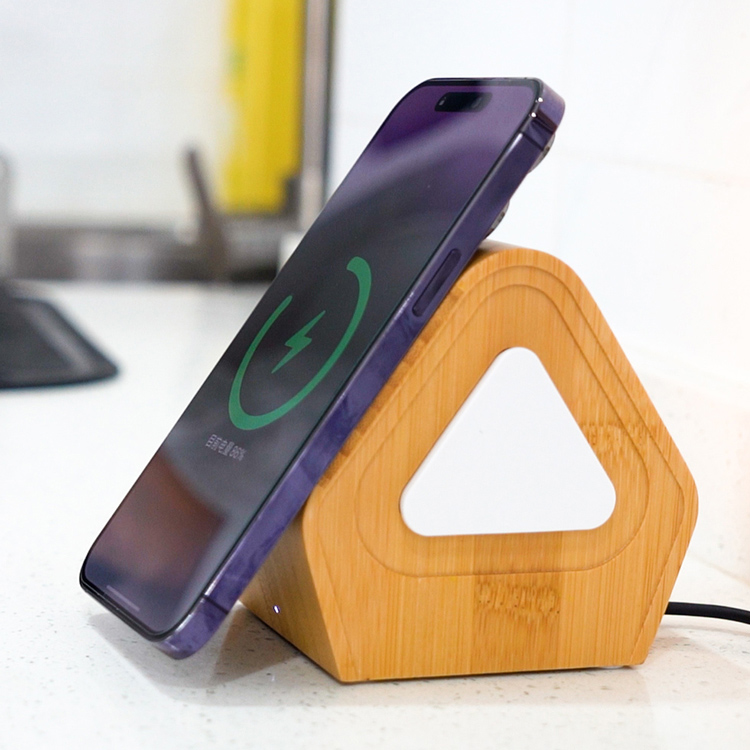
MagSafe is an Apple trademark. Using it on a carton, a silk or a product title is a separate legal question from Qi2 and from Made for iPhone, and it is not answered by a WPC listing. Some catalog titles, including a bamboo 3-in-1 page on this site, use that word; that is a fact about the page, not a licence this article can grant. The design-protection and non-disclosure questions that belong before a mark is used sit in the existing article on a supplier NDA and charger design protection. This page does not repeat that guidance. It only requires that Qi2, MFi and Apple marks be kept as separate files, each against its own official rules.
Claims this article will not make: license fees or invented listing times
This article will not publish WPC licence fees, laboratory prices, or a typical number of weeks to listing. Those figures, if they exist, belong in current official or contractual documents the buyer opens, not in a website estimate. The useful output is the three-way distinction above, the checklist, and the redline against a premature mark. WPC’s own Qi wireless charging pages remain the place to re-read the current public statement that only certified products may display the logo.
Conclusion
Treat Qi2 Certified, official Qi2 Ready and informal “Qi2 style” as three different risks. Print a mark only when a licence, a database match and current WPC guidelines support that exact SKU, and keep MagSafe and similar marks in their own legal file. Leave fees and listing times to official documents; refuse a factory offer of a Qi2 word on an unlisted product.
If your team is reviewing Qi2 labeling for a private-label wireless SKU and wants to discuss artwork against a specific product, you can send that scope through the wireless charger OEM and ODM page. This is a request for a project discussion, not a licence or a listing.
FAQ
May a brand print a Qi2 logo on a charger that is not in the Qi Certified Product Database?
No. Wireless Power Consortium trademark guidance, as opened for this article, requires a trademark licence and limits logo use to products that appear in the Qi Certified Product Database with an exact match of brand name, type number and picture. A factory email, a Qi2-looking housing, or a “Qi2 style” line on a carton is not that listing. Official Qi2 Ready is a separate WPC mark for a stated accessory path, not a nickname for an unlisted transmitter. Ask for the listing record and the artwork approval, and re-open the current WPC logo guidelines before print.
Is “Qi2-Ready” a safer way to describe a charger that is not yet certified?
Not if you mean an informal nickname. Official Qi2 Ready, in WPC logo guidance opened for this article, is a defined mark for a stated MCP accessory and receiver-combination path, with its own display rules. It is not a halfway house for an unlisted charger, and it is not a licence to modify a Qi2 logo. Informal wording such as “Qi2-Ready,” “Qi2 style,” or “Qi2 compatible” on a product that is not listed is a trademark risk. Use only the mark that the current listing and licence actually support, or stay silent on Qi2.
Who should approve Qi2 artwork before a private-label launch?
Artwork should be approved against the current WPC brand and logo guidelines, the licence, and the exact listing for that SKU — brand name, type number and picture. A factory sell-sheet is not a substitute. The brand owner should keep a dated print of the guidelines, a record of the listing, and a written instruction that silk, the carton and the digital listing must say the same thing. If the factory offers a Qi2 mark on a SKU that is not listed, stop the artwork and ask for the listing, rather than negotiating a weaker phrase.
Does a MagSafe-related word on a wireless carton follow the same file as Qi2?
No. MagSafe is an Apple trademark, with its own legal file, and Qi2 is a WPC mark. An article on this site about supplier NDAs and design protection is a starting point for an IP discussion; it is not a licence to print either mark. A catalog title that uses an Apple trademark should be reviewed separately from a Qi2 listing. This article will not grant a MagSafe licence, and it will not invent a WPC licence fee or a listing time.
{
“@context”: “https://schema.org”,
“@type”: “FAQPage”,
“mainEntity”: [
{
“@type”: “Question”,
“name”: “May a brand print a Qi2 logo on a charger that is not in the Qi Certified Product Database?”,
“acceptedAnswer”: {
“@type”: “Answer”,
“text”: “No. Wireless Power Consortium trademark guidance, as opened for this article, requires a trademark licence and limits logo use to products that appear in the Qi Certified Product Database with an exact match of brand name, type number and picture. A factory email, a Qi2-looking housing, or a “Qi2 style” line on a carton is not that listing. Official Qi2 Ready is a separate WPC mark for a stated accessory path, not a nickname for an unlisted transmitter. Ask for the listing record and the artwork approval, and re-open the current WPC logo guidelines before print.”
}
},
{
“@type”: “Question”,
“name”: “Is “Qi2-Ready” a safer way to describe a charger that is not yet certified?”,
“acceptedAnswer”: {
“@type”: “Answer”,
“text”: “Not if you mean an informal nickname. Official Qi2 Ready, in WPC logo guidance opened for this article, is a defined mark for a stated MCP accessory and receiver-combination path, with its own display rules. It is not a halfway house for an unlisted charger, and it is not a licence to modify a Qi2 logo. Informal wording such as “Qi2-Ready,” “Qi2 style,” or “Qi2 compatible” on a product that is not listed is a trademark risk. Use only the mark that the current listing and licence actually support, or stay silent on Qi2.”
}
},
{
“@type”: “Question”,
“name”: “Who should approve Qi2 artwork before a private-label launch?”,
“acceptedAnswer”: {
“@type”: “Answer”,
“text”: “Artwork should be approved against the current WPC brand and logo guidelines, the licence, and the exact listing for that SKU — brand name, type number and picture. A factory sell-sheet is not a substitute. The brand owner should keep a dated print of the guidelines, a record of the listing, and a written instruction that silk, the carton and the digital listing must say the same thing. If the factory offers a Qi2 mark on a SKU that is not listed, stop the artwork and ask for the listing, rather than negotiating a weaker phrase.”
}
},
{
“@type”: “Question”,
“name”: “Does a MagSafe-related word on a wireless carton follow the same file as Qi2?”,
“acceptedAnswer”: {
“@type”: “Answer”,
“text”: “No. MagSafe is an Apple trademark, with its own legal file, and Qi2 is a WPC mark. An article on this site about supplier NDAs and design protection is a starting point for an IP discussion; it is not a licence to print either mark. A catalog title that uses an Apple trademark should be reviewed separately from a Qi2 listing. This article will not grant a MagSafe licence, and it will not invent a WPC licence fee or a listing time.”
}
}
]
}