
A creator-laptop or mobile-workstation accessory program is awarded as a bundle, not as a wattage on a housing. For a 140W PD charger OEM project, the starting trio is the adapter, a cable that can carry the USB Power Delivery Revision 3.1 Extended Power Range (EPR) voltage the host will request, and the certification identities that name that pair. USB-IF’s USB Charger (USB Power Delivery) page states that PD Revision 3.1 enables up to 240W over a full-featured USB Type-C cable and connector, and that 28V, 36V and 48V fixed voltages enable up to 140W, 180W and 240W respectively. That is a specification fact, not a promise that every 140W label implements 28V.
This article is a program path for laptop-accessory and workstation OEM buyers who have to quote, sample and ship that trio as one line. It is not a ranking of 140W platforms by performance class; that work already lives on a separate 140W PD 3.1 EPR platform page. For protocol background, use the USB-C PD and PPS page rather than repeating it here.
What a 140W PD 3.1 EPR OEM bundle includes besides the brick
A 140W PD charger OEM bundle is the adapter, a cable that can carry the USB PD 3.1 Extended Power Range path the host will request, and the certification records for that pair, not the brick alone. USB-IF associates 28V with up to 140W; a mismatched cable or listing will not deliver that power.
Write the bundle as four items on one purchase line: the charger SKU, the cable SKU (length, jacket and finish included), the packaging that keeps them together, and the document pack that names which legal entity holds which listing. A spare-cable SKU belongs in the same forecast, because workstation users replace cables faster than bricks. This is a defined product pair, not a factory-wide “140W certified” atmosphere.
Creator and mobile-workstation hosts: the cable and PDO set they actually need
Creator laptops and mobile workstations that advertise 140W USB-C charging reach that figure only when the source offers the PDO the sink will request, and when the cable may carry that voltage and current. USB-IF’s 2021 USB PD Revision 3.1 announcement adds 28V as a fixed voltage for power above 100W, 36V above 140W, and 48V above 180W, plus an adjustable-voltage mode. The first question is which of those voltages this exact SKU advertises, and which the host negotiates — not whether the housing is GaN.
Ask the host vendor for the sink’s requested PDO set, including whether 28V is required for the 140W nameplate, and ask the charger vendor for the source PDO set of the SKU that will ship, not of a related family. If a 140W housing only publishes 20V at 5A, it is a 100W-class path with a 140W marketing name, or a multi-port total, until a report says otherwise. The cable must be specified to the same voltage and current; a premium length is still the wrong part if it was built to the older 20V / 100W USB Type-C definition.
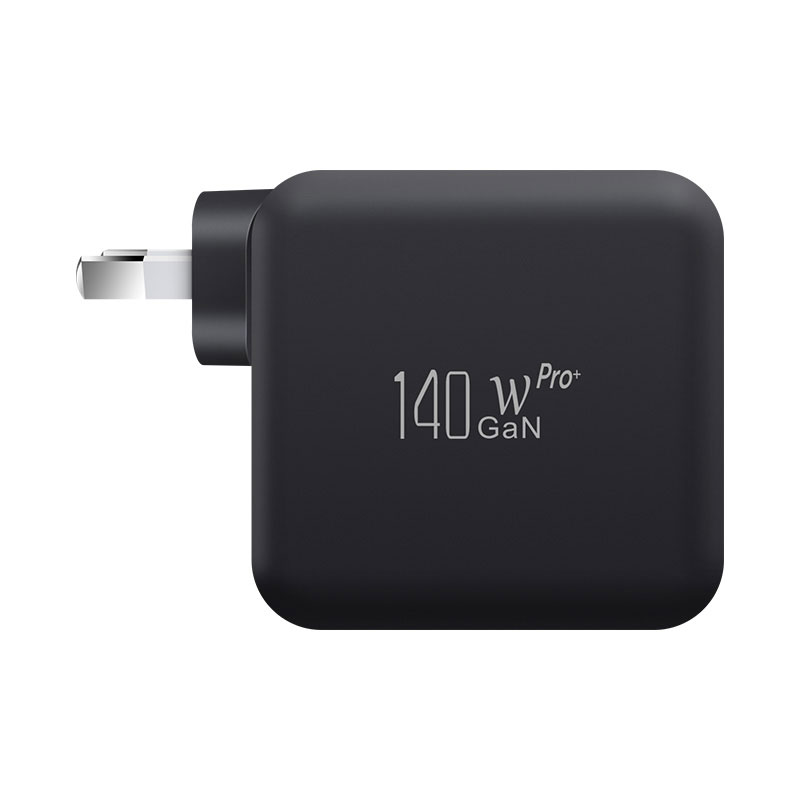
Why this is a program article, not another “best 140W platform” list — and how it links to those pages
A performance-class list and a bundle program answer different questions. A list compares electrical and mechanical families. A program decides how a brand will ship a charger, a cable and a claim on the same carton, and who owns the certificates when that carton carries a private-label name.
If you are still choosing a 140W architecture by port map or thermal class, start with the existing 140W PD 3.1 EPR charger platforms for workstation lines article and come back here to write the bundle. The two pages should not compete: one selects a platform, this one turns a selected platform into a quotable SKU pair. Catalog examples on the GaN charger category are inputs to that program, not substitutes for it.
EPR cable pairing, 28V operation and the failure mode when the cable is wrong
USB-IF is explicit that, before Revision 3.1, USB PD was limited to 100W on a 20V path using USB Type-C cables rated at 5A, and that USB Type-C Release 2.1 defines 240W cable requirements for the higher-power range. A cable moulded with a “5A” legend may be a 100W-class cable. That mark is not, by itself, evidence that the cable meets the 240W cable definition or may carry 28V.
The usual failure is quiet. The charger and the laptop may both be capable of a 28V 140W contract; the cable may only permit the older 20V contract; the session then completes at 100W and returns arrive as “slow charging.” Using a cable outside its rating is worse. The OEM remedy is to freeze the cable as a controlled SKU, require a listing where a logo or EPR claim will be made, and pack that cable with the brick unless the program has a documented reason not to. Selling the brick alone into a channel full of 60W USB-C cables is how a 140W nameplate becomes a support queue.
| Bundle element | What the RFQ should freeze | What a wattage label does not prove |
|---|---|---|
| Charger SKU | Exact model, port map, published PDO set, plug family | That 28V is present, or that 140W is a single-port figure rather than a multi-port total |
| Cable SKU | Length, rating against the current USB Type-C 240W cable requirements, listing identity if a logo or EPR claim will be used | That a “5A” moulding equals an EPR-capable cable |
| Certification pack | Legal names on safety, EMC and USB-IF (or equivalent) records; which SKU each record covers | That a factory atmosphere or a sibling SKU’s report covers this pair |
| Spare cable | Same controlled SKU, forecast and after-sales path | That a retail replacement cable will behave the same way |
Certification and USB-IF implications of a 140W family used in a laptop bundle
A 140W laptop bundle usually sits in three filing regimes: safety (typically IEC 62368-1 and national deviations), EMC, and — if the brand will print a USB-IF logo or a USB PD 3.1 / EPR claim — the USB-IF Compliance Program. A safety report does not create a USB-IF Test ID, and a TID does not replace a safety report.
USB-IF certifies a defined product under a named company; the charger and the cable are different products. If the box will show a USB-IF logo, the company named on that box needs a listing for the relevant product and a Trademark License Agreement. Treat logo rights as a contract line, not as something inherited from a factory brochure, and check the certified product list against the marketing name on the carton.
Thermal, noise and desk-use acceptance criteria for a 140W OEM SKU
A 140W brick that will sit on a creator’s desk for hours needs measurable acceptance criteria: case temperature at the published load, audible noise if a fan is used, and behaviour when the laptop is charging under a sustained CPU or GPU load. Put those criteria in the sample plan, with the host, the cable SKU and the ambient named.
Do not treat a trade-show demonstration as a thermal report. If the SKU is fanless, agree a temperature limit; if it has a fan, agree a noise method and the load at which the fan may run. Desk-use also includes plug strain, cable-exit direction and whether the housing blocks adjacent sockets — items that drive workstation returns even when the PDO set is correct. The GaN charger manufacturing page is context for an audit, not a substitute for the program’s acceptance sheet.

Using WEP/WEG 140W catalog models as examples after a product-page check
WECENT’s catalog includes 140W-class models in the WEP and WEG families, including the WEP-140-C 140W GaN charger and sibling port maps with EU, UK, US and AUS plug options. Those pages show how a SKU is published; they are not a substitute for the PDO set, the cable pairing or the reports a named program must file.
Before writing a 140W catalog model into an RFQ, open the live product page and the sample’s rating label together. Confirm whether 28V appears on that exact SKU’s published Type-C output, whether 140W is a single-port figure or a multi-port total, and which plug variants are offered. Sibling SKUs in the same family are not interchangeable sources for a 140W EPR claim if only one publishes 28V. This article does not assert that a given WECENT 140W model holds a USB-IF TID, a named safety certificate, or a 28V contract; those items are verified on the current page and in the report pack.
Forecast and spare-cable planning for a workstation accessory program
The brick and the cable do not wear at the same rate. A realistic plan states a spare-cable ratio, a replacement SKU identical to the in-box cable, and a rule for when a user fits a random USB-C cable. Do not invent typical industry rates; agree the figures for the account.
Freeze cable colour and length as controlled options so after-sales does not ship a visually different part into a branded kit. If some channels will sell the brick without a cable, the carton has to name the required cable, and support has to be ready for sessions that fall back to 100W.
How to write a 140W bundle RFQ that a factory can quote as one line
A factory can quote a 140W bundle as one line when the RFQ names a single charger SKU, a single cable SKU, the packaging, the plug set, the document pack and the spare-cable option, with quantities against each. Include the host’s requested PDO set, electrical, thermal and desk-use acceptance tests, the certification path and whose name will appear on listings, and change-control for a controller, firmware or cable-vendor swap.
The quotation should show the cable and the brick as controlled parts, then roll them up. If the factory cannot identify the cable it would pack, it is not yet quoting a bundle. The GaN chargers overview is a starting point for that conversation, not a catalogue of already-approved workstation kits.
Claims to keep off the sell-sheet until a report or product page supports them
Keep off the sell-sheet, until a current report or live product page supports them for the exact SKU: that the charger offers 28V; that 140W is a single-port figure rather than a multi-port total; that a USB-IF TID or logo applies to the buyer’s brand; that a named safety or EMC certificate is held; that a named laptop will charge at 140W with this pair; and any MOQ, lead time, warranty or price that has not been quoted for the program. USB-IF’s 28V / 140W relationship is a specification fact, not evidence about a given model.
The honest sell-sheet names the SKU, the published PDO set, the paired cable and the documents the buyer may inspect — enough for a sample decision, and more durable than a 140W headline a random cable can undo.
Conclusion
A 140W PD 3.1 EPR platform becomes an OEM product when the brick, the EPR-capable cable and the certification records are specified together. Use platform-comparison pages to choose a family; use this page to write the bundle. Verify 28V and 140W on the exact SKU, and treat a “5A” cable mark as a question, not an answer.
If your team is specifying a 140W PD charger bundle for a creator or mobile-workstation line, you can send the intended host, port map and cable scope to WECENT through the GaN charger manufacturing page. This is a request for a sourcing discussion, a quotation or a sample plan, not an order.
FAQ
Does every charger labelled 140W implement USB PD 3.1 at 28 V?
No. USB-IF’s USB Power Delivery page states that the 28V, 36V and 48V fixed voltages introduced with USB PD Revision 3.1 enable up to 140W, 180W and 240W respectively, and the May 2021 announcement places 28V in the range above 100W. That is a specification relationship, not a description of every retail or OEM product printed with “140W.” A 140W nameplate may be a multi-port total, a 20V design, or a 28V EPR source. A buyer should request the published PDO set and the matching test record for the exact SKU, and should not assume 28V is present until those documents show it.
Is a USB-C cable marked 5 A sufficient for a 140W EPR laptop bundle?
Not by itself. USB-IF’s 2021 PD 3.1 announcement recalls that, before this revision, USB PD was limited to 100W on a 20V path using USB Type-C cables rated at 5A, and that USB Type-C Release 2.1 defines 240W cable requirements for the higher-power range. A “5A” moulding may therefore refer to a 100W-class cable. For a 140W EPR program, specify a cable that meets the current USB Type-C requirements for the voltage and current in the PDO set, and, if a logo or EPR claim will be made, a listing that covers that cable. Pack that controlled SKU with the brick.
Can a factory USB-IF listing on the charger also cover the in-box cable?
No. USB-IF’s Compliance Program certifies a defined product under a named company. The charger and the cable are separate products, each with its own registration, Test ID path and, where used, listing and logo rights. A buyer who will print a USB-IF logo or a USB PD 3.1 claim on a workstation bundle should ask for the listing records that correspond to each item, and for a Trademark License Agreement in the name that will appear on the carton. A charger TID, a purchase order or a photograph of a logo on a factory sample is not a cable listing.
What must a 140W OEM bundle RFQ freeze before a factory can quote it as one line?
The RFQ should name one charger SKU and one cable SKU, including length and finish; the plug family; the packaging that keeps the pair together; the spare-cable option; the host’s requested PDO set; and the document pack (safety, EMC and, where claimed, USB-IF) with the legal names that will appear on listings. It should also state acceptance tests for electrical, thermal and desk-use behaviour, and a change-control rule for firmware, controllers and cable vendors. A wattage and a colour, without those items, is not a bundle a factory can quote as a single controlled line.
{
“@context”: “https://schema.org”,
“@type”: “FAQPage”,
“mainEntity”: [
{
“@type”: “Question”,
“name”: “Does every charger labelled 140W implement USB PD 3.1 at 28 V?”,
“acceptedAnswer”: {
“@type”: “Answer”,
“text”: “No. USB-IF’s USB Power Delivery page states that the 28V, 36V and 48V fixed voltages introduced with USB PD Revision 3.1 enable up to 140W, 180W and 240W respectively, and the May 2021 announcement places 28V in the range above 100W. That is a specification relationship, not a description of every retail or OEM product printed with “140W.” A 140W nameplate may be a multi-port total, a 20V design, or a 28V EPR source. A buyer should request the published PDO set and the matching test record for the exact SKU, and should not assume 28V is present until those documents show it.”
}
},
{
“@type”: “Question”,
“name”: “Is a USB-C cable marked 5 A sufficient for a 140W EPR laptop bundle?”,
“acceptedAnswer”: {
“@type”: “Answer”,
“text”: “Not by itself. USB-IF’s 2021 PD 3.1 announcement recalls that, before this revision, USB PD was limited to 100W on a 20V path using USB Type-C cables rated at 5A, and that USB Type-C Release 2.1 defines 240W cable requirements for the higher-power range. A “5A” moulding may therefore refer to a 100W-class cable. For a 140W EPR program, specify a cable that meets the current USB Type-C requirements for the voltage and current in the PDO set, and, if a logo or EPR claim will be made, a listing that covers that cable. Pack that controlled SKU with the brick.”
}
},
{
“@type”: “Question”,
“name”: “Can a factory USB-IF listing on the charger also cover the in-box cable?”,
“acceptedAnswer”: {
“@type”: “Answer”,
“text”: “No. USB-IF’s Compliance Program certifies a defined product under a named company. The charger and the cable are separate products, each with its own registration, Test ID path and, where used, listing and logo rights. A buyer who will print a USB-IF logo or a USB PD 3.1 claim on a workstation bundle should ask for the listing records that correspond to each item, and for a Trademark License Agreement in the name that will appear on the carton. A charger TID, a purchase order or a photograph of a logo on a factory sample is not a cable listing.”
}
},
{
“@type”: “Question”,
“name”: “What must a 140W OEM bundle RFQ freeze before a factory can quote it as one line?”,
“acceptedAnswer”: {
“@type”: “Answer”,
“text”: “The RFQ should name one charger SKU and one cable SKU, including length and finish; the plug family; the packaging that keeps the pair together; the spare-cable option; the host’s requested PDO set; and the document pack (safety, EMC and, where claimed, USB-IF) with the legal names that will appear on listings. It should also state acceptance tests for electrical, thermal and desk-use behaviour, and a change-control rule for firmware, controllers and cable vendors. A wattage and a colour, without those items, is not a bundle a factory can quote as a single controlled line.”
}
}
]
}
