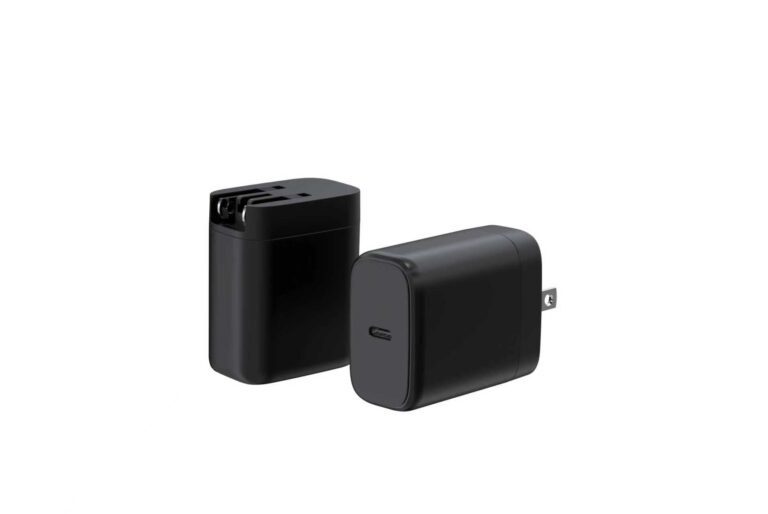
A Qi2 power bank is three products in one housing: a cell pack with a watt-hour figure the airline and the cargo file will read, a magnet array that has to align like any other Qi2 pad, and a charge path that is both USB Power Delivery and wireless. A program that only specifies “Qi2” and a milliamp-hour headline will fail at the first transport or claims review.
This page is for power-bank OEM and travel-retail buyers who have to hold those three products, and the claim limits, in one RFQ. It is distinct from the existing explainer what a Qi2-certified MagSafe power bank is; start there for the concept, and use this page for manufacturing and transport. Wireless context is on wireless charging, wireless charger OEM, and Qi2 certification and selection. The L8 Qi2 MagSafe power bank is a catalog example, used only with facts its current page actually publishes.
A Qi2 power bank as three products in one: cell pack, magnet array, and PD/Qi charge path
A Qi2 power bank is three products in one housing: a cell pack with a documented watt-hour rating, a magnet array that aligns a phone, and a charge path that is both USB Power Delivery and Qi2 wireless. Each needs its own evidence. A milliamp-hour headline, or a Qi2 logo alone, is not a specification.
Write the RFQ in those three blocks: a cell file (chemistry, watt-hours, UN 38.3 and the test-summary pack); a magnet plan (polarity, placement, a seating check); and a charge-path block (wired PD in and out, published wireless wattage, protection functions). If one block is missing, the factory is quoting a housing, not a power bank.
Cell documentation, energy (Wh) and what a buyer files for transport
IATA’s 2026 Battery Guidance Document — guidance based on the 2025–2026 ICAO Technical Instructions and the 67th Edition (2026) of the IATA Dangerous Goods Regulations, and not itself a substitute for those rules — states that watt-hour rating is calculated by multiplying rated capacity in ampere-hours by nominal voltage (Wh = Ah × V). The passenger guidance adds that lithium-ion batteries are required to have the watt-hour rating marked on the outside of the battery case. A buyer’s file should therefore contain the Wh figure, the calculation inputs, and a marking that matches.
Do not invent a Wh figure for a catalog model, and do not treat a milliamp-hour print as a completed transport file. If the live page does not publish Wh, ask for it in the cell documentation. Capacity, energy and UN 38.3 status of L8 or any other model remain items to verify from product documents.
UN38.3, UN3481 and airline rules — a short map, with a link to the deeper transport article
The short map is as follows, always to be confirmed against the current official texts. IATA’s guidance states that all lithium cell and battery types must have passed the applicable tests in Subsection 38.3 of the UN Manual of Tests and Criteria, and that a test summary as specified in that Manual must be made available by the manufacturer and subsequent distributors. For classification, the same guidance is explicit that power banks “designed to primarily provide power to another device” are classified as batteries, not as batteries contained in equipment, and “must be assigned to UN 3480, lithium ion batteries, or UN 3090, lithium metal batteries, as applicable.” UN 3481 is the entry for lithium-ion batteries packed with, or contained in, equipment — a different assignment, used when that description actually applies.
For lithium-ion batteries packed by themselves under Packing Instruction 965, IATA’s guidance states that they must be shipped at a state of charge not exceeding 30% of rated capacity, unless approved under Special Provision A331, and that they cannot be shipped as cargo on a passenger aircraft unless approved under Special Provision A201. Because IATA assigns power banks to UN 3480, a cargo program for Qi2 power banks should be written against that assignment and those packing instructions, not against a casual “UN 3481 equipment” assumption.
Passenger rules are a second, and currently shifting, map. The FAA PackSafe page on airline passengers and batteries states that lithium-ion batteries of 0–100 Wh are allowed on passenger aircraft, that 101–160 Wh require air-carrier approval, and that there is a two-spare-battery limit on the 101–160 Wh class, carry-on only. IATA’s 2026 Passengers Travelling with Lithium Batteries guidance, also based on the 67th Edition of the DGR, states that passengers are limited to a maximum of two lithium-ion power banks not exceeding 100 Wh, and its table treats power banks above 100 Wh and up to 160 Wh as forbidden. It also records proposed restrictions on in-flight use and storage, and notes that airlines may be stricter. Those two official documents do not read identically. An OEM sell-sheet should not pick one number and present it as a universal airline rule. Point buyers to the current IATA DGR, the ICAO Technical Instructions, the airline, and the destination authority, and keep the deeper official map on IATA’s batteries cargo page, the passenger dangerous-goods guidance page, and the passenger PDF just cited, together with FAA PackSafe. This article is a short map only.
| Topic | Official source, as checked | What an OEM file should not do |
|---|---|---|
| Classification of a power bank | IATA 2026 Battery Guidance: UN 3480 (lithium ion) or UN 3090 (lithium metal), not “contained in equipment” | Assume UN 3481 without reading the current text |
| UN 38.3 and test summary | Same IATA guidance, pointing to the UN Manual of Tests and Criteria, Subsection 38.3 | Ship without a test summary the manufacturer can make available |
| Cargo state of charge (PI 965) | IATA guidance: SoC not exceeding 30% of rated capacity, unless approved under A331 | Invent a different “typical” SoC |
| Passenger Wh limits | FAA PackSafe: 0–100 Wh; 101–160 Wh with airline approval, two-spare limit, carry-on. IATA 2026 passenger guidance: two power banks, each not exceeding 100 Wh; above 100 Wh to 160 Wh forbidden in its table | Print one figure as a universal airline rule, when the two official documents differ |
A Qi or Qi2 identity, if claimed, is a separate WPC matter and should be evidenced against the Wireless Power Consortium and, where used, the certified products database; it does not replace the transport file.
Magnet strength versus pocket risk, airline gates, and Qi2 alignment
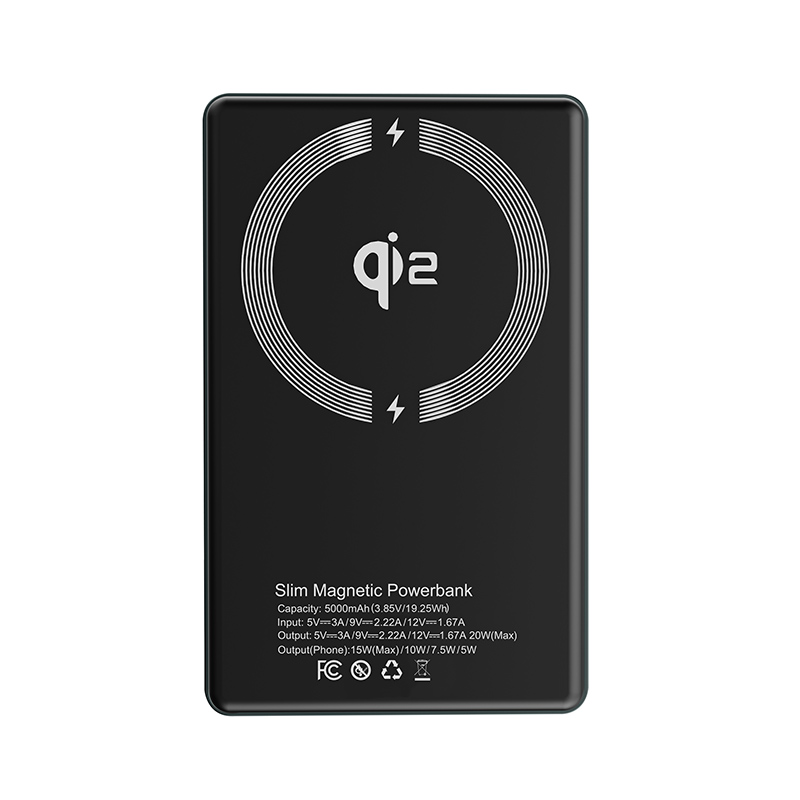
Magnet strength is a Qi2 alignment issue and a pocket-and-gate issue. An array that is too weak will miss alignment; an array discussed only as “strong” will attract keys, and will raise questions at a gate that the Wh file should already answer. Production checks are the same as on a Qi2 pad: polarity, placement, a seating check, with no unofficial WPC tolerance invented here.
Do not write magnet strength as a substitute for the watt-hour marking. A gate agent is instructed, in IATA’s passenger guidance, to look for a Wh rating they can verify. If staff cannot verify it, the operator may refuse carriage. Marking and a user card that states Wh are part of the OEM pack, not an afterthought for travel retail.
Claim limits: capacity, “MagSafe-compatible,” and wireless wattage
Three claims are routinely over-printed: capacity (mAh without Wh, or a Wh that does not match the cell file), “MagSafe-compatible” or a MagSafe-style trademark use without the rights and the technical basis, and a wireless wattage that is a family headline rather than a published SKU figure. Each belongs on the sell-sheet only with evidence. Apple’s MagSafe name is Apple’s; a Qi2 identity, if claimed, is a WPC identity and should be evidenced as such.
Wireless wattage should be the published Qi or Qi2 figure for the SKU, not a charger-family number. Wired PD input and output should be taken from the same page or report. This article will not invent any of those figures for L8 or for a generic “Qi2 power bank.”
Using the L8 catalog model only with verified product-page facts
The live L8 page describes a MagSafe wireless charger power bank with Qi2, and publishes a Type-C input and wireless output steps of 15W, 10W, 7.5W and 5W, with a 15W maximum, plus mechanical and material notes. Those are the facts this article will use. It will not add a watt-hour figure, a UN 38.3 status, an airline approval, or a cell configuration that the page does not state. Before an RFQ names L8, re-open the current page and the cell file together. Other models in the wireless charger category get the same reading.
How this differs from the existing “what a Qi2 MagSafe power bank is” explainer
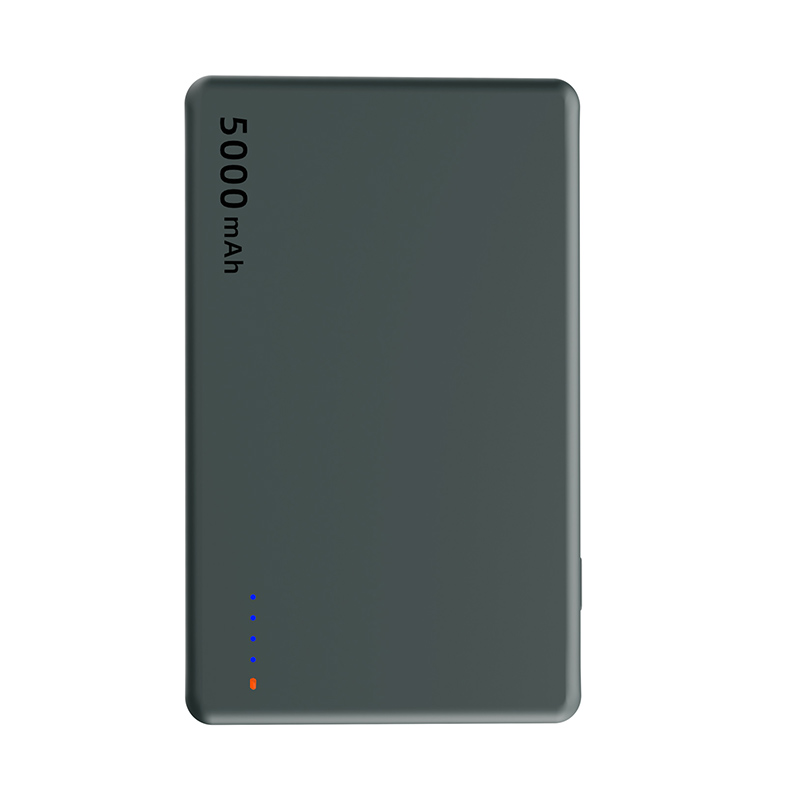
The existing explainer answers what the product category is. This page asks how a factory builds the cell pack, the magnet array and the charge path, and how a buyer files UN 38.3, the UN assignment and airline-facing marks without inventing limits. The two pages should be linked, not rewritten as each other.
Production tests: charge-path, magnet, and protection functions
Production should include a charge-path test (wired in and out, wireless out, against published figures), a magnet alignment check, and the protection functions the specification names — typically over-voltage, over-current, short-circuit and temperature, as evidenced, not as a slogan. A cell-lot trace and a Wh marking check belong on the same outgoing gate as those electrical tests.
A firmware or cell-vendor change reopens the charge-path and, where relevant, the UN 38.3 and construction file. It is not a packing-line substitution.
Packaging, state-of-charge at shipment, and label checks
For cargo, IATA’s guidance on Packing Instruction 965 requires a state of charge not exceeding 30% of rated capacity unless an approval under A331 is in hand. A UN 3480 program should write that SoC into the packing instruction, and should check Wh marking, UN marks and test-summary access (a website or QR, as IATA describes as acceptable). For passenger-facing retail, include a card that states Wh and points the traveller to the airline’s current rule, without printing one 100 Wh or 160 Wh sentence as if every carrier and every DGR edition were identical.
Do not invent a standard retail SoC or a standard carton mark. Take both from the agreed file and the current official texts.
When a magnetic power bank is the wrong OEM choice versus a pad plus a bank
A magnetic Qi2 power bank is the wrong OEM choice when the buyer cannot evidence UN 38.3 and a Wh file, when the magnet array would be specified only as a headline, when the channel cannot control airline-facing claims, or when a simple Qi2 pad plus a separately filed power bank would be easier to certify, to ship and to explain. A pad-plus-bank pair is two products, and two files, but each file is simpler. Honesty here is a program decision, not a lesser catalog.
Conclusion
A Qi2 power bank OEM program is a cell file, a magnet-production plan and a PD/Qi charge path, held together by UN 38.3 evidence, the correct UN assignment — UN 3480 for a power bank, on IATA’s current guidance — and claim limits on capacity, trademarks and wireless wattage. Use official IATA and FAA texts for Wh and passenger rules, note where they differ, and do not invent figures for a catalog model.
If you are specifying a Qi2 power bank OEM program, including the cell file and transport documents, you can send the intended SKU and documentation scope to WECENT through the wireless charger OEM page. This is a request for a sourcing discussion, a quotation or a sample plan, not an order.
FAQ
How does IATA classify a power bank for air transport?
IATA’s 2026 Battery Guidance Document, based on the 2025–2026 ICAO Technical Instructions and the 67th Edition of the IATA Dangerous Goods Regulations, states that power banks designed primarily to provide power to another device are classified as batteries, not as batteries contained in equipment, and must be assigned to UN 3480 (lithium ion) or UN 3090 (lithium metal) as applicable. UN 3481 is a different assignment, for lithium-ion batteries packed with or contained in equipment. IATA presents that guidance as an aid, not as a substitute for the DGR itself. An OEM cargo file for a Qi2 power bank should start from UN 3480 unless a current official text says otherwise for that exact configuration.
What watt-hour figures should an OEM print, and how is Wh calculated?
Print the watt-hour rating that matches the cell file, and mark it on the battery case. IATA’s guidance states that Wh is calculated as rated capacity in ampere-hours multiplied by nominal voltage (Wh = Ah × V). The 2026 passenger guidance adds that lithium-ion batteries are required to have that Wh rating marked on the outside of the case, and that staff who cannot verify it may refuse carriage. Do not invent Wh for a catalog model, and do not treat a milliamp-hour headline as a completed transport mark. If a product page does not publish Wh, obtain it from the cell documentation before artwork.
What state-of-charge limit applies when shipping lithium-ion power banks as cargo?
For lithium-ion batteries packed by themselves under Packing Instruction 965, IATA’s 2026 Battery Guidance Document states that they must be shipped at a state of charge not exceeding 30% of their rated capacity. A higher SoC requires approval of the State of Origin and the State of the Operator under Special Provision A331. Because IATA assigns power banks to UN 3480, a cargo program should write that 30% limit into the packing plan unless a current official text or a valid approval says otherwise. Passenger-carry preferences, including any airline request for a low SoC in the cabin, are a separate and carrier-specific matter.
Do FAA and IATA passenger rules on power-bank watt-hours currently read the same?
Not identically, on the official documents checked for this article. FAA PackSafe states that lithium-ion batteries of 0–100 Wh are allowed on passenger aircraft, that 101–160 Wh require air-carrier approval, and that a two-spare limit applies to that larger class, carry-on only. IATA’s 2026 passenger guidance limits passengers to two lithium-ion power banks not exceeding 100 Wh, and treats power banks above 100 Wh up to 160 Wh as forbidden in its table; it also notes further restrictions on in-flight use and that airlines may be stricter. An OEM carton should not declare a single universal rule. Point travellers to the airline and to the current IATA DGR and ICAO Technical Instructions.
{
“@context”: “https://schema.org”,
“@type”: “FAQPage”,
“mainEntity”: [
{
“@type”: “Question”,
“name”: “How does IATA classify a power bank for air transport?”,
“acceptedAnswer”: {
“@type”: “Answer”,
“text”: “IATA’s 2026 Battery Guidance Document, based on the 2025–2026 ICAO Technical Instructions and the 67th Edition of the IATA Dangerous Goods Regulations, states that power banks designed primarily to provide power to another device are classified as batteries, not as batteries contained in equipment, and must be assigned to UN 3480 (lithium ion) or UN 3090 (lithium metal) as applicable. UN 3481 is a different assignment, for lithium-ion batteries packed with or contained in equipment. IATA presents that guidance as an aid, not as a substitute for the DGR itself. An OEM cargo file for a Qi2 power bank should start from UN 3480 unless a current official text says otherwise for that exact configuration.”
}
},
{
“@type”: “Question”,
“name”: “What watt-hour figures should an OEM print, and how is Wh calculated?”,
“acceptedAnswer”: {
“@type”: “Answer”,
“text”: “Print the watt-hour rating that matches the cell file, and mark it on the battery case. IATA’s guidance states that Wh is calculated as rated capacity in ampere-hours multiplied by nominal voltage (Wh = Ah × V). The 2026 passenger guidance adds that lithium-ion batteries are required to have that Wh rating marked on the outside of the case, and that staff who cannot verify it may refuse carriage. Do not invent Wh for a catalog model, and do not treat a milliamp-hour headline as a completed transport mark. If a product page does not publish Wh, obtain it from the cell documentation before artwork.”
}
},
{
“@type”: “Question”,
“name”: “What state-of-charge limit applies when shipping lithium-ion power banks as cargo?”,
“acceptedAnswer”: {
“@type”: “Answer”,
“text”: “For lithium-ion batteries packed by themselves under Packing Instruction 965, IATA’s 2026 Battery Guidance Document states that they must be shipped at a state of charge not exceeding 30% of their rated capacity. A higher SoC requires approval of the State of Origin and the State of the Operator under Special Provision A331. Because IATA assigns power banks to UN 3480, a cargo program should write that 30% limit into the packing plan unless a current official text or a valid approval says otherwise. Passenger-carry preferences, including any airline request for a low SoC in the cabin, are a separate and carrier-specific matter.”
}
},
{
“@type”: “Question”,
“name”: “Do FAA and IATA passenger rules on power-bank watt-hours currently read the same?”,
“acceptedAnswer”: {
“@type”: “Answer”,
“text”: “Not identically, on the official documents checked for this article. FAA PackSafe states that lithium-ion batteries of 0–100 Wh are allowed on passenger aircraft, that 101–160 Wh require air-carrier approval, and that a two-spare limit applies to that larger class, carry-on only. IATA’s 2026 passenger guidance limits passengers to two lithium-ion power banks not exceeding 100 Wh, and treats power banks above 100 Wh up to 160 Wh as forbidden in its table; it also notes further restrictions on in-flight use and that airlines may be stricter. An OEM carton should not declare a single universal rule. Point travellers to the airline and to the current IATA DGR and ICAO Technical Instructions.”
}
}
]
}