An in-box charger program starts as a sequence, not as a catalogue search. A device OEM has to freeze what “in-box” means in the contract, write a specification the brick can be quoted against, qualify samples in a fixed order, and only then decide how a second factory can make the same part without colliding safety reports, USB-IF listings or cosmetic identity. The brick is a component of the device shipment. It is not a retail accessory chosen at the last minute.
This page is a program path for device-OEM product and sourcing managers. It sits next to the charger OEM, ODM and wholesale overview and the charger compliance and certification file a program will also need.
What “in-box” actually means in a device OEM contract: scope, cosmetics and spares
For a device OEM, an in-box charger is the brick specified to ship with a named device, in a named cosmetic and labeling state, with a stated spare and service path. It is not a generic wholesale adaptor, and EU common-charger rules do not automatically ban it from the carton.
The contract should say which device SKUs it travels with, which colours and marks it may carry, and how a replacement unit is supplied after the first shipment.
Scope is easy to leave vague. The useful freeze is: which device models take this brick; whether a regional plug variant is the same part or a related part; whether a spare in after-sales must match the in-box cosmetic; and whether the charger is also offered as a separately sold accessory. Those answers belong in the contract, because they later decide labeling, safety filings and second-source identity.
Specification items a device OEM should freeze before quoting a brick
A quotation is only as tight as the specification behind it. Before a factory is asked to quote, the device OEM should freeze input rating and plug set, output ports and protocol behaviour, enclosure material and colour, product and carton marks, the safety standard edition to be reported, and the USB-IF and regional filings the program expects. A specification that only says “100 W USB-C GaN, white,” leaves port counts, PD behaviour, firmware, label language and plug variants to be invented in the quote.
The electrical core should be written so that a second source can be compared against the same sheet. Protocol limits, derating with two ports active, thermal limits at the stated ambient, and the cable or retractable lead that ships in the box all belong on that sheet. Cosmetic and marking items should be frozen on a drawing, not only in an email. For platform and process context on GaN builds, see GaN charger manufacturing and sourcing.
Qualification gates: electrical, thermal, cosmetic and protocol, in that order
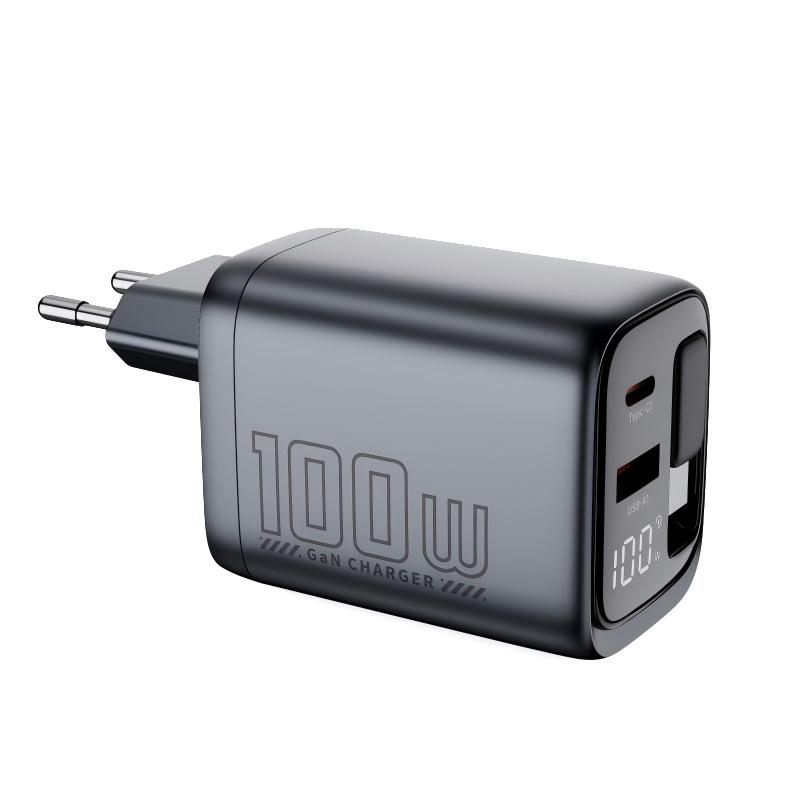
Qualification is more reliable when it has an order. Electrical and safety measurements should come first, then thermal behaviour at the specified load and ambient, then protocol checks against the frozen PD or charging profile, and only then cosmetic and marking gates. A pretty sample that has not yet passed electrical and thermal limits is not a qualified in-box part. A thermally acceptable sample that fails the protocol profile is not ready for artwork approval.
Each gate should leave a record: the sample identity, the firmware or hardware revision, the test conditions, and a pass or fail against the frozen specification. Cosmetic gates then compare colour, texture, logo placement and print against the approved drawing.
| Gate | What is frozen or measured | What a pass does not yet prove |
|---|---|---|
| Specification freeze | Electrical core, plug set, marks and intended filings | That any sample will pass |
| Electrical and thermal | Limits on the frozen specification sheet | Protocol behaviour or cosmetic identity |
| Protocol | The agreed PD or charging profile | Artwork or production readiness |
| Cosmetic and first article | Approved drawing and production revision | That a second factory is qualified |
Dual-sourcing without colliding TIDs, safety reports or cosmetic identities
A second factory is a second product record, not a courtesy copy of the first file. A USB-IF Test ID tracks a product accepted by an authorized lab under a named company; it is not a transferable atmosphere that two plants may share. If both sources will carry a certified logo, each source needs its own certification path, and any private-label use needs a formal OEM arrangement and a Trademark License Agreement, as set out on the USB-IF Compliance Program and logo license pages. Listings, when granted, appear on the certified product list. Safety reports, including a CB file and any national registration, are likewise tied to a named manufacturer and a named factory. Two plants should not print the same report number.
Cosmetic identity is the third collision. If the two sources are meant to be interchangeable in the device carton, the approved drawing must say so, and first-article units from the second plant must be compared against the first, not only against a rendering. If they are not meant to be indistinguishable, the carton and spare path must say which source the user will receive. A dual-source plan that is silent on TID, safety identity and housing will produce mixed cartons that no file can explain.
Labeling, carton and in-box literature that follow the device, not the charger catalog
In-box marks follow the device program, not a charger catalogue default. For radio equipment in the scope of Directive (EU) 2022/2380, the pictogram, the charging-capability information and the unbundling offer attach to the listed device; they are not a reason, on their own, to drop the brick from every carton. The Commission guidance records that a device may still be offered with a charging device if it is also offered without one. The device OEM should therefore write carton and literature so that they match the offer that will actually be placed on the Union market, and so that a charger label does not contradict the device label.
Outside that EU file, the same discipline applies: the language, the model name, the regulatory marks and the spare-part number on the charger should be the ones the device program has approved, including for regions that are not the factory’s home market.
Change-control: who may approve a resistor, a firmware or a colour
Once samples are qualified, a change is a program event. A resistor in a safety-critical position, a PD firmware revision, or a colour that was not on the approved drawing should have a named approver on the device-OEM side, and a named path back through electrical, protocol or cosmetic gates as the change requires. USB-IF treats some differences as significant for certification; a national registration, including a BIS file, may also have to be informed when a circuit, design or safety-critical component changes. The program plan should say who may approve each class of change, and what evidence follows, before a factory treats a running change as a courtesy.
Forecast, buffer and second-source triggers that belong in the program plan
Capacity planning belongs in the program file alongside the specification. The useful items are a forecast the factory can build against, a buffer rule the device OEM is prepared to hold, and written triggers for opening or loading a second source — for example a missed first-article date, a quality escape, or a demand step that the first plant cannot cover. This page does not invent typical lead times, minimum quantities or prices. Those figures, if they are used, should come from the quotation in front of the team, not from a generic industry claim.
How to treat regional plug variants as one program rather than four SKUs of chaos
Regional plugs should be variants of one frozen electrical core, not four unrelated products. The specification should state which plug faces the program will ship, which markings change with each face, and which filings follow the region. Incoming inspection then checks that the carton for a market contains the plug that market requires. Treating each plug as a new design, with a new firmware and a new housing that was never compared, is what turns a single in-box program into four unmanageable SKUs. Treating them as undocumented options on one drawing is the opposite error: the factory will ship whichever plug is in the bin.
Handover from engineering samples to mass-production FAI
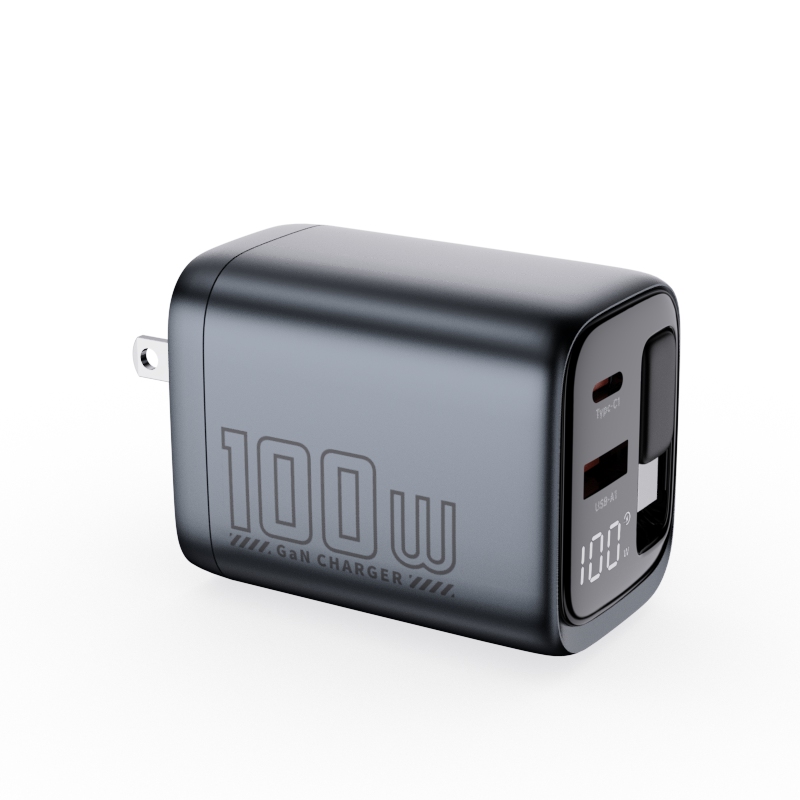
Engineering samples qualify a design. First-article inspection qualifies a production process. The handover should freeze the revision that passed qualification, compare first-article units against that revision and against the approved cosmetic drawing, and record any difference in components, firmware, labelling or process. A first-article pack that only repeats the engineering-sample tests, without checking that production markings and packing match the device carton, is incomplete. A pack that only checks cosmetics, without repeating the electrical and protocol gates on production units, is equally incomplete.
Questions a device OEM should ask before awarding a second factory
Before a second factory is awarded, the useful questions are specific. Which legal entity will hold the safety reports and any USB-IF listing? Will the second plant use a new TID and a new national registration, and how will those numbers appear on the label? Can the plant match the approved housing, or will a visible difference need a carton rule? Who approves a running change? What first-article evidence will be issued before mass production, and which forecast and buffer triggers will actually load this source? A charger-supplier due-diligence checklist and the document-and-sample evaluation page can carry the rest of the commercial file.
Conclusion
An in-box charger program is a specified, qualified and change-controlled part of the device shipment. Dual-sourcing works when TIDs, safety reports and cosmetics are planned as separate records that the carton can still treat as one part. Regional plugs stay inside that program when they share a frozen electrical core. The work starts with the contract definition of “in-box,” not with a last-minute adaptor from a catalogue.
If your team is specifying or dual-sourcing an in-box charger for a device program, you can send the intended scope to WECENT through the charger OEM, ODM and wholesale page. This is a request for a project discussion.
FAQ
Does the EU Common Charger Directive prohibit a device OEM from shipping an in-box charger?
No. Directive (EU) 2022/2380 requires that where an economic operator offers listed radio equipment together with a charging device, it must also offer that equipment without any charging device. Selling a device with a charger in the box remains possible; making the bundled offer the only offer does not. The Commission guidance in the Official Journal treats the charging device as the external power supply, and records the pictogram duty that shows whether a charging device is included. An in-box program for the Union market should therefore plan two offers and matching labels, not a last-minute deletion of every brick.
Can two factories in a dual-source plan share one USB-IF TID?
No. A USB-IF Test ID is assigned when an authorized Independent Test Lab accepts a registered product for testing, and it tracks that product's test record under a named company. It is not a transferable factory atmosphere. If both sources will use a certified logo, each source needs its own certification path, and any private-label use needs a formal OEM arrangement and a Trademark License Agreement, as set out on the USB-IF Compliance Program and logo-license pages. Safety reports and national registrations are likewise tied to a named manufacturer and factory, and should not be printed as shared.
Should regional plug variants be run as four separate in-box programs?
They should be variants of one frozen electrical core, not four unrelated products and not undocumented options on a single drawing. The specification should state which plug faces will ship, which markings change with each face, and which regional filings follow. Incoming inspection then checks that a market carton contains the plug that market requires. Treating each plug as a new design, with a new firmware and an uncompared housing, is what turns one in-box program into four unmanageable SKUs. The opposite error is a factory that ships whichever plug is in the bin.
Who may approve a resistor, firmware or colour change after qualification?
A named approver on the device-OEM side, with a path back through the gates the change affects. A resistor in a safety-critical position, a PD firmware revision, or a colour that was not on the approved drawing should not be treated as a factory courtesy. USB-IF treats some differences as significant for certification. A national registration, including a BIS file, may also have to be informed when a circuit, design or safety-critical component changes, as MeitY's Compulsory Registration FAQ describes. The program plan should say who approves each class of change before mass production begins.
{
“@context”: “https://schema.org”,
“@type”: “FAQPage”,
“mainEntity”: [
{
“@type”: “Question”,
“name”: “Does the EU Common Charger Directive prohibit a device OEM from shipping an in-box charger?”,
“acceptedAnswer”: {
“@type”: “Answer”,
“text”: “No. Directive (EU) 2022/2380 requires that where an economic operator offers listed radio equipment together with a charging device, it must also offer that equipment without any charging device. Selling a device with a charger in the box remains possible; making the bundled offer the only offer does not. The Commission guidance in the Official Journal treats the charging device as the external power supply, and records the pictogram duty that shows whether a charging device is included. An in-box program for the Union market should therefore plan two offers and matching labels, not a last-minute deletion of every brick.”
}
},
{
“@type”: “Question”,
“name”: “Can two factories in a dual-source plan share one USB-IF TID?”,
“acceptedAnswer”: {
“@type”: “Answer”,
“text”: “No. A USB-IF Test ID is assigned when an authorized Independent Test Lab accepts a registered product for testing, and it tracks that product’s test record under a named company. It is not a transferable factory atmosphere. If both sources will use a certified logo, each source needs its own certification path, and any private-label use needs a formal OEM arrangement and a Trademark License Agreement, as set out on the USB-IF Compliance Program and logo-license pages. Safety reports and national registrations are likewise tied to a named manufacturer and factory, and should not be printed as shared.”
}
},
{
“@type”: “Question”,
“name”: “Should regional plug variants be run as four separate in-box programs?”,
“acceptedAnswer”: {
“@type”: “Answer”,
“text”: “They should be variants of one frozen electrical core, not four unrelated products and not undocumented options on a single drawing. The specification should state which plug faces will ship, which markings change with each face, and which regional filings follow. Incoming inspection then checks that a market carton contains the plug that market requires. Treating each plug as a new design, with a new firmware and an uncompared housing, is what turns one in-box program into four unmanageable SKUs. The opposite error is a factory that ships whichever plug is in the bin.”
}
},
{
“@type”: “Question”,
“name”: “Who may approve a resistor, firmware or colour change after qualification?”,
“acceptedAnswer”: {
“@type”: “Answer”,
“text”: “A named approver on the device-OEM side, with a path back through the gates the change affects. A resistor in a safety-critical position, a PD firmware revision, or a colour that was not on the approved drawing should not be treated as a factory courtesy. USB-IF treats some differences as significant for certification. A national registration, including a BIS file, may also have to be informed when a circuit, design or safety-critical component changes, as MeitY’s Compulsory Registration FAQ describes. The program plan should say who approves each class of change before mass production begins.”
}
}
]
}